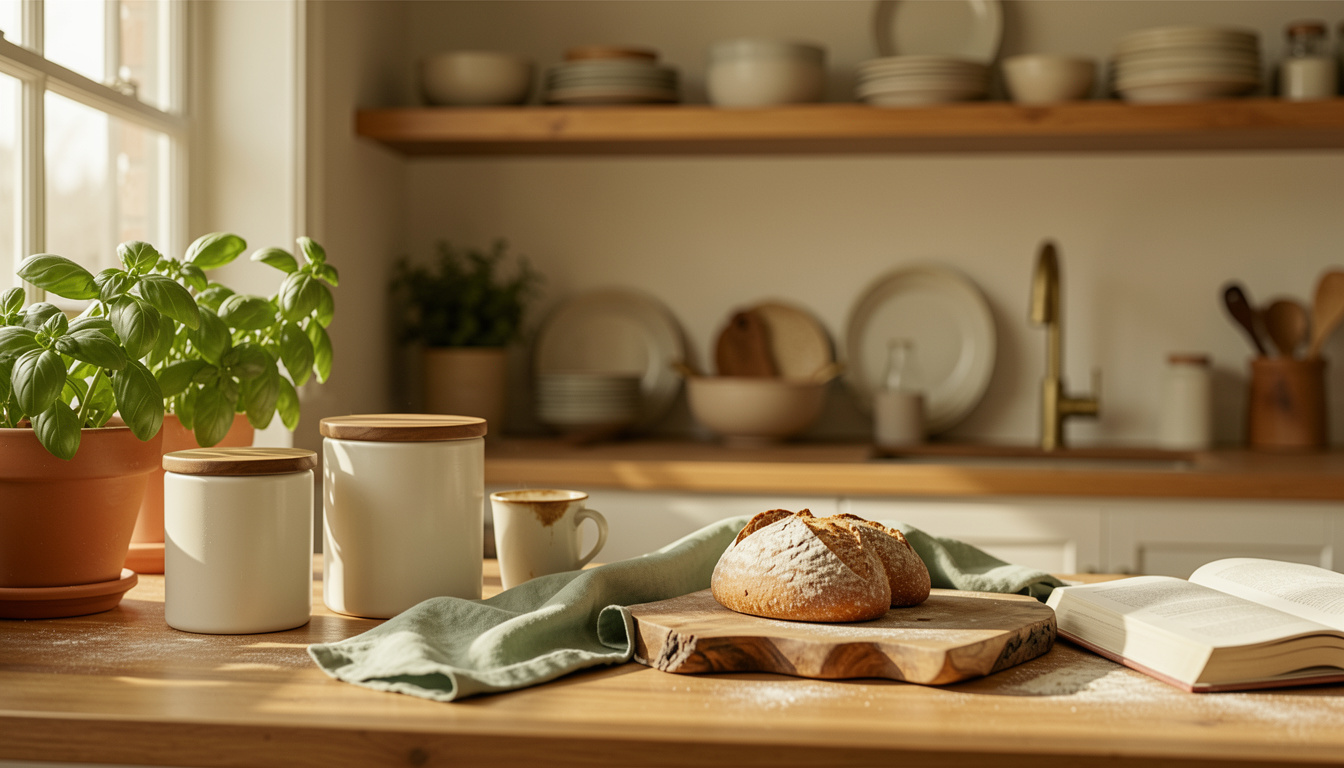
I learned how to decorate a 1900s kitchen the hard way: I spent $400 and ended up with a room that looked like a movie set. It had props but no personality.
What helped was choosing one honest result and building toward it. In this guide I’ll show you that plan, with budget tiers around $200 to $800 depending on how much you replace.
My approach fits small historic kitchens with original trim, wide-plank floors, or built-in nooks. I’m leaning modern farmhouse with collected pieces and one surprising modern touch I use in every room. I’ve noticed more people mixing vintage hardware with matte black fixtures lately.
1. Start with the Foundation: Counter and Cabinet Reset
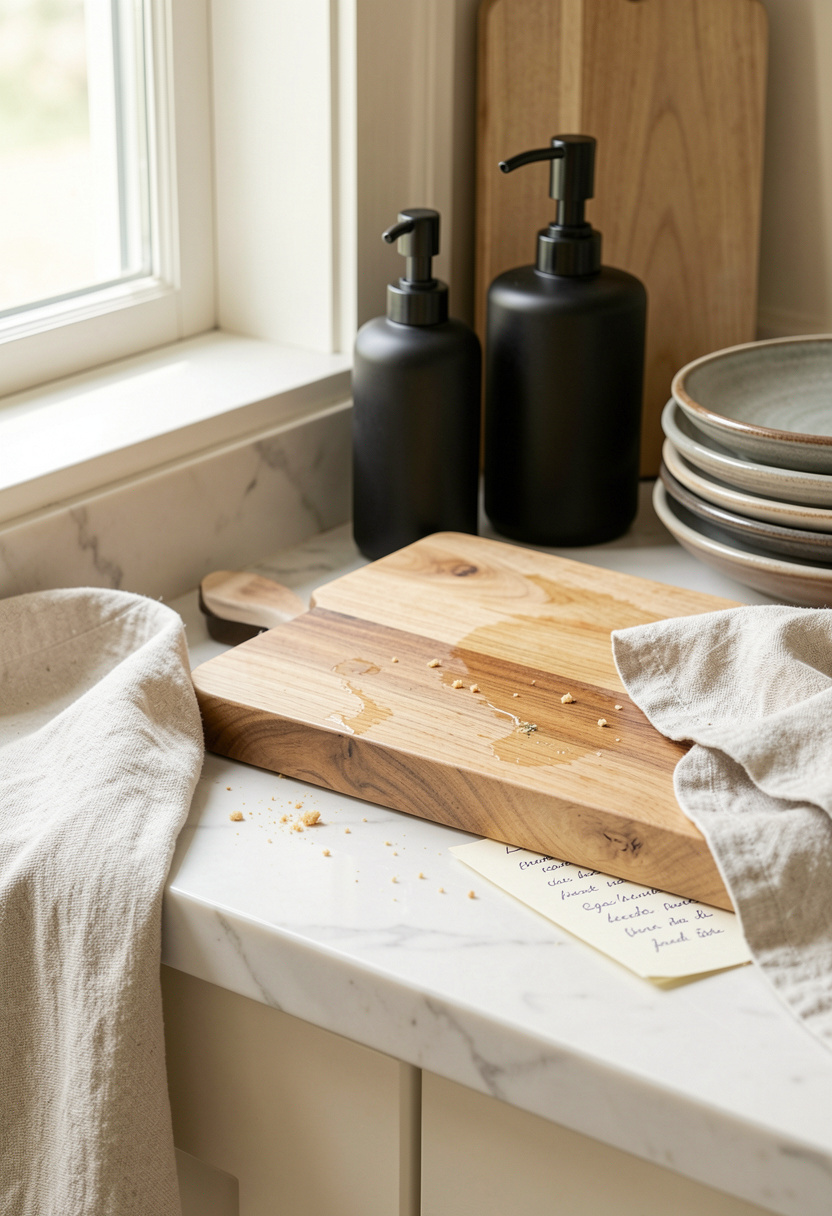
Begin here because counters and cabinets are what your eye reads first. I started by stripping clutter and picking two anchor pieces: one large cutting board and one statement bowl.
Choose a large acacia board as your visual anchor. I picked a 18 by 14 inch acacia cutting board and left it leaning vertically against the backsplash. Use a Large acacia cutting board 18×14 inch around $25 to $60 and a Matte black hand soap dispenser stainless steel approx $15 to $30 for contrast.
The visual principle is scale and contrast. Big warm wood next to matte black creates a focal point. Leave 8 to 12 inches of clear counter on each side so the board reads as a deliberate object, not clutter.
Most people scatter small items across the counter. Ugly truth: that reads as busy, not lived-in. Instead, group three items in an odd number: board, dispenser, and a medium stoneware bowl for fruit. The result feels curated, not staged.
2. Layer Warmth with Wood and Linen Textures
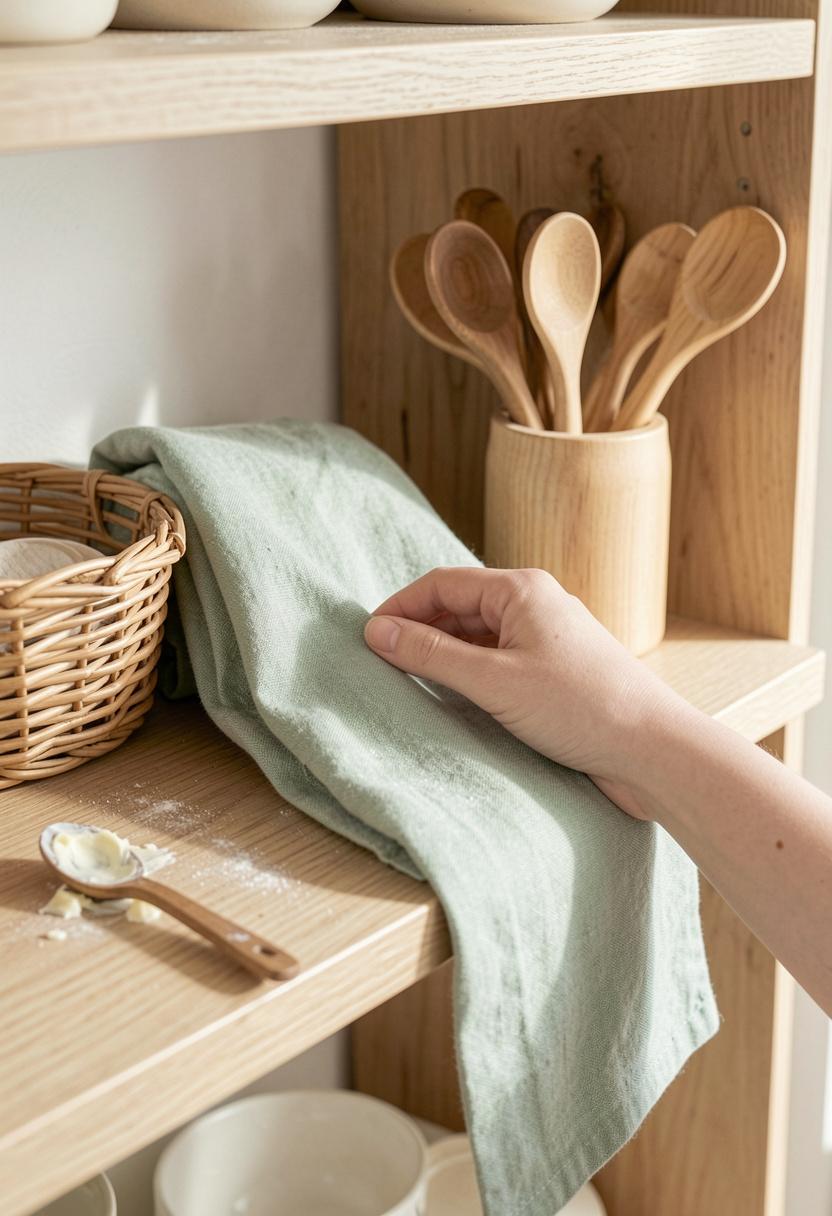
Wood and linen are what make a 1900s kitchen feel human. I added a few oak and rattan pieces and suddenly the room stopped looking like a film prop.
Start with one raw oak shelf or large wooden bowl. I use an Acacia wooden fruit bowl 12 inch around $25 to $60 and a Sage linen tea towels set of 4 approx $20 to $40 to soften surfaces.
The principle is texture layering. Mix one hard wood, one soft linen, and one woven element. Place the bowl slightly off-center on the counter and drape one towel over the board edge so the eye moves in an L shape. That keeps things relaxed.
Mistake people make: matching every wood tone. It looks synthetic. Instead, pair warm honey oak with lighter acacia and a neutral linen to create depth. The space feels collected, like pieces were found over time.
3. Add Height and Drama with Open Shelving
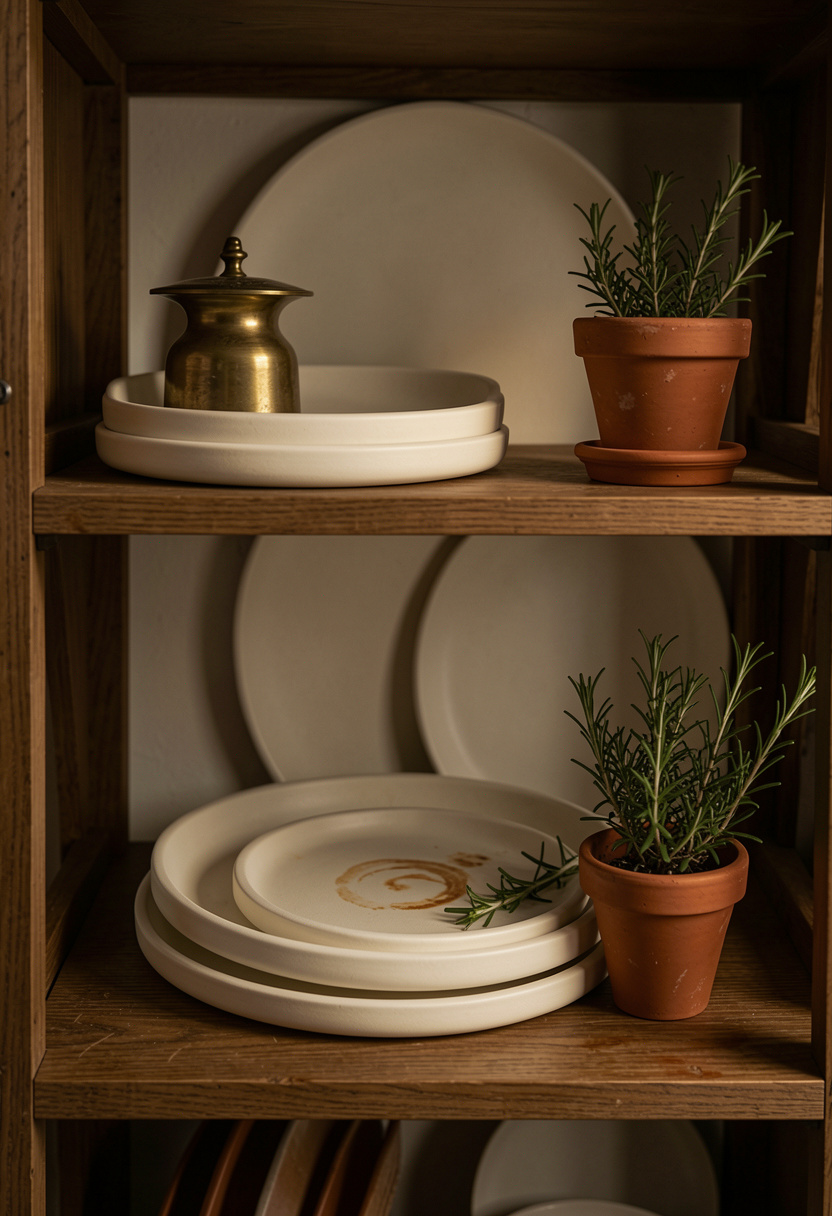
Open shelving is the trickiest choice in an older kitchen. Done right, it highlights original trim. Done wrong, it looks like a set.
I installed one shallow shelf 16 to 18 inches above the counter. Keep shelving depth to 8 to 10 inches to avoid visual clutter. Use Acacia floating shelf 24 inch approx $30 to $70 and style with Matte white stoneware dinner plates set of 4 around $25 to $50 plus a small Terracotta herb pot 4 inch approx $8 to $20.
Use the visual principle of rhythm. Place plates in a vertical stack on one side, a brass pinch bowl on the other, and one living plant in the middle. Keep spacing 6 to 8 inches between clusters so the eye rests.
Ugly truth: many people fill shelves with identical items. That reads as photo styling. Mix heights and materials and leave negative space. The shelf should look used the way your grandmother left hers.
4. Create Ambiance with Warm Diffused Lighting
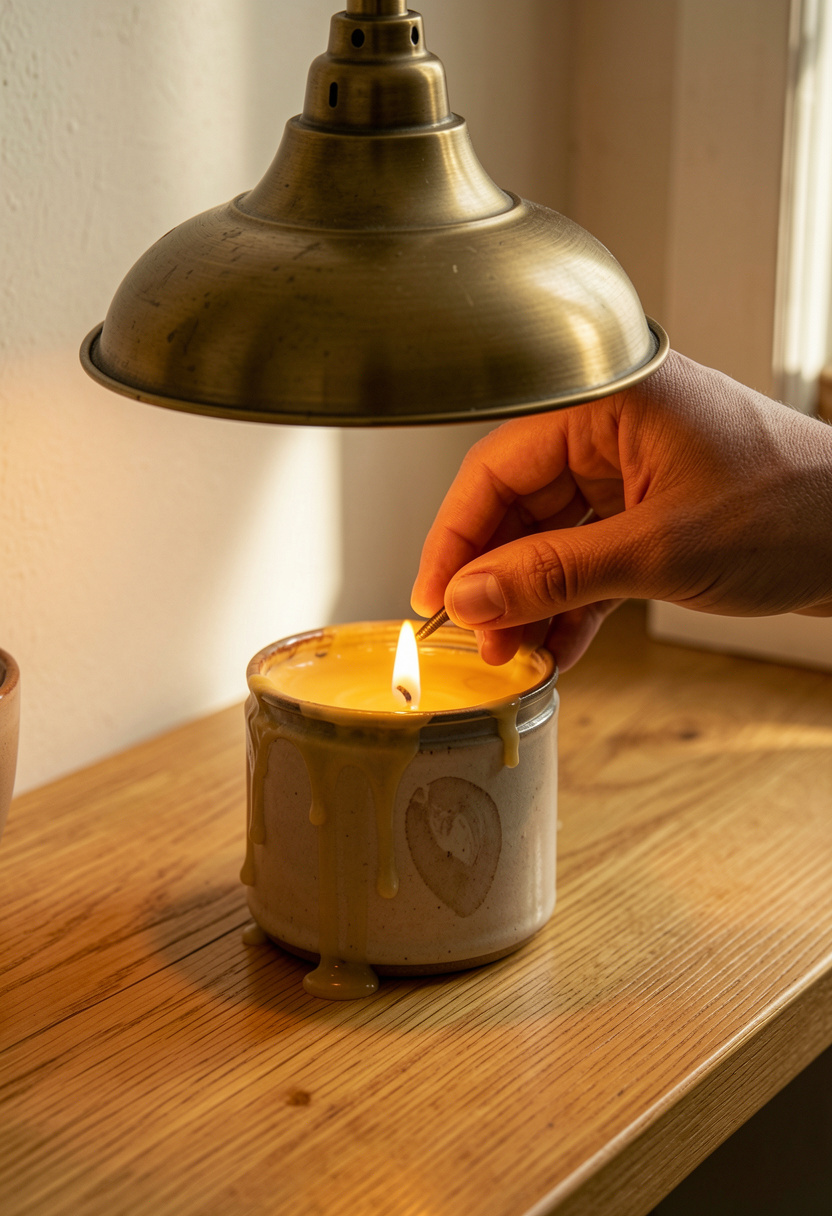
Lighting makes a 1900s kitchen read warm and lived-in. I added a small brass pendant and under-cabinet strips to get both atmosphere and task light.
Pick one small brass pendant 10 to 12 inch and warm LED under-cabinet lights. I like a Brass pendant light 12 inch approx $60 to $140 plus Warm under cabinet LED light strip 12 inch around $15 to $40.
Visual principle: layered light. Pendant adds drama and anchors the space. Under-cabinet strips give even glow across counters. Aim the pendant so its lowest point sits 28 to 32 inches above the counter for balance.
Most people either overdo bright fixtures or ignore soft light. Ugly truth: harsh white overhead makes everything feel clinical. Add a small beeswax candle or ceramic lamp on a corner to create that lived-in glow.
Common Styling Mistakes to Avoid
Mistake: Matching every accessory to the cabinet color
Why it doesn't work: The space flattens, and details vanish.
Do this instead: Mix a Matte black soap dispenser approx $15 to $30 with warm wood accents.
Mistake: Filling open shelves edge-to-edge with plates
Why it doesn't work: It reads as staged, not lived-in.
Do this instead: Use odd-numbered groupings with a Terracotta herb pot 4 inch approx $8 to $20 and a small brass bowl.
Mistake: Too many small decor pieces on counters
Why it doesn't work: Visual noise, no focal point.
Do this instead: Limit to three anchors: a Large acacia cutting board 18×14 inch around $25 to $60, a stoneware bowl, and a towel.
What You'll Need for This Look
Foundation Pieces
Large acacia cutting board 18×14 inch around $25 to $60
Matte black soap dispenser stainless steel approx $15 to $30
Acacia wooden fruit bowl 12 inch around $25 to $60
Textiles & Soft Goods
Sage linen tea towels set of 4 approx $20 to $40
Neutral woven kitchen runner 24×72 inch around $35 to $80
Oven mitts cotton linen pair approx $12 to $25
Lighting
Brass pendant light 12 inch approx $60 to $140
Warm under cabinet LED light strip 12 inch around $15 to $40
Finishing Touches
Matte white ceramic canister set with acacia wood lids around $35 to $50
Matte white stoneware dinner plates set of 4 around $25 to $50
Terracotta herb pot 4 inch approx $8 to $20
Budget Swaps
Vintage brass bowl lookalike approx $12 to $30 (thrift great for originals)
Acacia cutting board alternative bamboo 16×12 inch around $10 to $25
Shopping Guide for This Look
Buy in season: Updated linens and small decor hit discounts in late spring; pick linen tea towels approx $20 to $40 then.
Thrift hack: Hunt for vintage brass at estate sales and pair with a brass pendant lookalike approx $60 to $140 for coherence.
2025 trend to use: People are mixing matte black fixtures with warm wood; grab a matte black soap dispenser approx $15 to $30.
Splurge vs save: Splurge on one good wooden board like an acacia cutting board 18×14 inch around $25 to $60; save on canisters with a matte white ceramic canister set around $35 to $50.
Seasonal timing: Buy herbs and terracotta pots in spring; terracotta herb pot 4 inch approx $8 to $20 are cheapest then.
Conclusion
Start with one high-impact item: a large acacia cutting board or a small brass pendant. That single choice will guide color, texture, and scale.
My last tip: leave room for imperfection. A slightly chipped plate or a thrifted brass pinch bowl tells the story. Which corner of your kitchen will you start with?