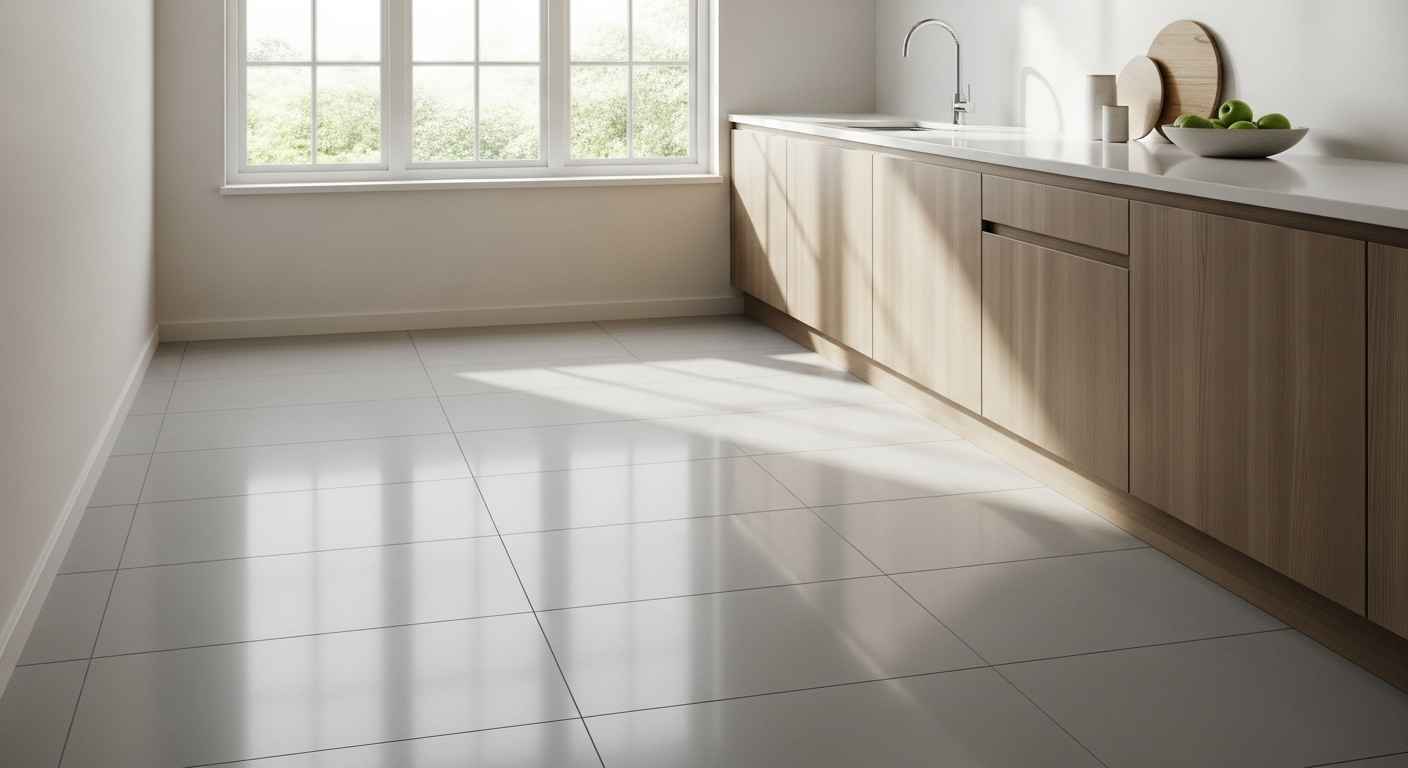
Choosing the right floor can change how your small kitchen feels. The right color, pattern, and material can make the space appear larger and brighter. This guide offers many stylish options to create that open, airy feeling you want.
1. The Power of Light-Colored Planks
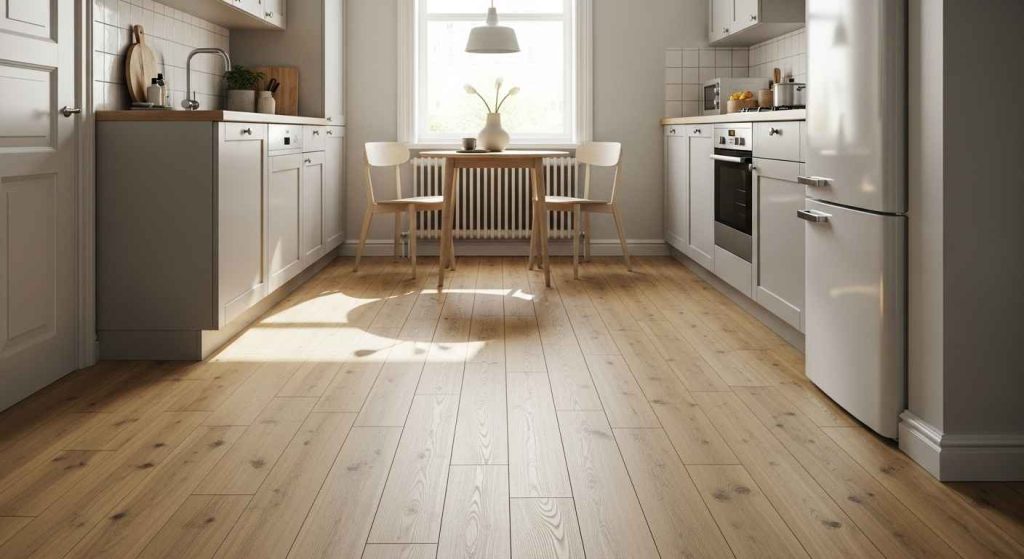
Light wood floors reflect light beautifully, making a room feel more open. They create a bright and welcoming base for your kitchen. Choose long planks to enhance the feeling of length. Lighter shades like maple or ash are perfect for this. Lighter tones make a space feel larger. For a budget-friendly option, look for laminate or luxury vinyl plank (LVP) that mimics light wood. These materials are durable and easy to install yourself with a click-lock system.
2. Go Grand with Large-Format Tiles
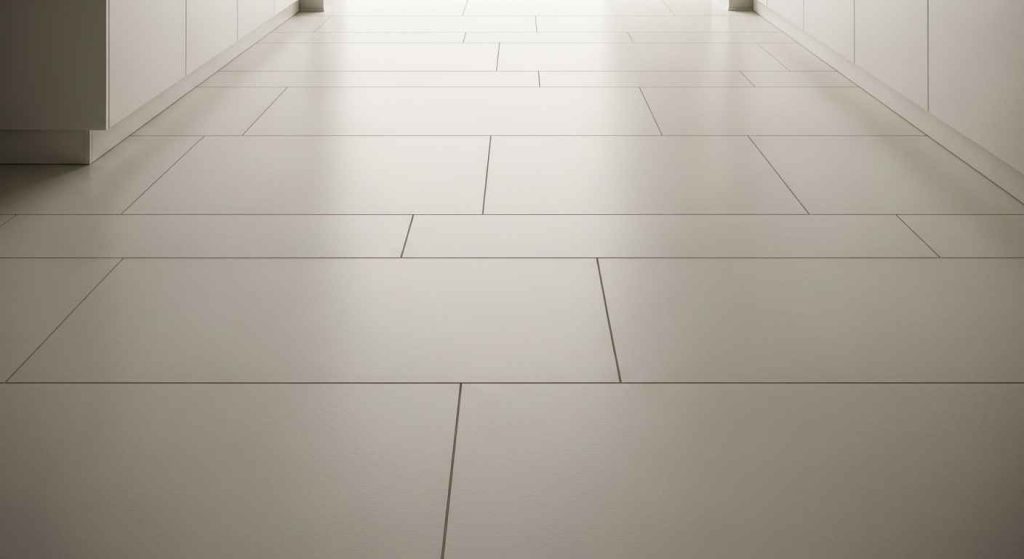
Big tiles mean fewer grout lines. This creates a cleaner, less cluttered look that expands the visual floor space. Porcelain or ceramic tiles in 24×24 inches or larger work well. Fewer grout lines create visual flow. You can find large-format tiles at home improvement stores at various price points. For a DIY approach, use a tile leveling system to help achieve a flat, professional-looking installation, even as a beginner.
3. The Illusion of Herringbone
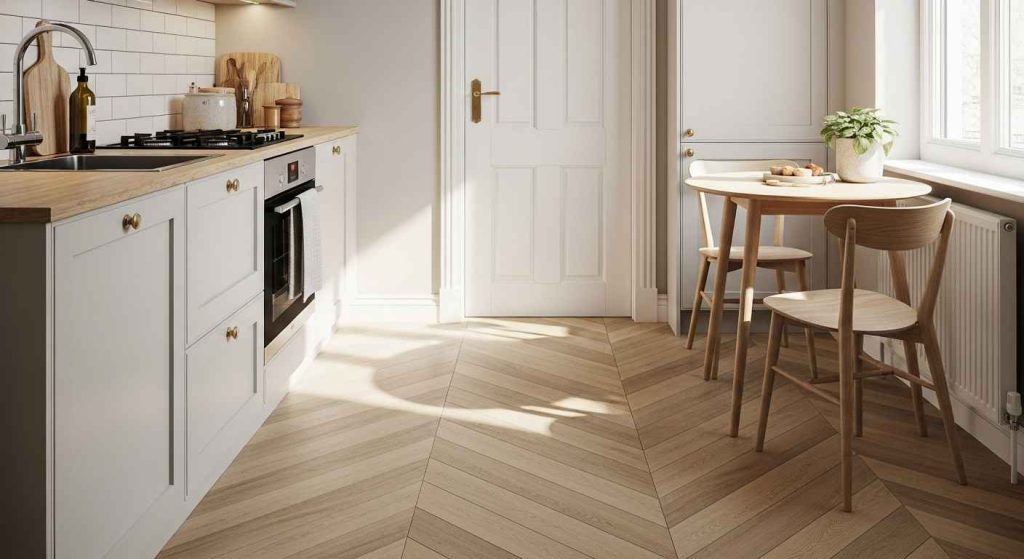
A herringbone pattern adds dynamic energy and direction. The zig-zag lines guide the eye diagonally, which can make the floor area seem wider than it is. This works with wood, laminate, or tile. The pattern creates a sense of movement. Using herringbone vinyl plank tiles is a great DIY project. The peel-and-stick or click-together options make this intricate pattern achievable without specialist skills.
4. Sleek & Seamless Polished Concrete
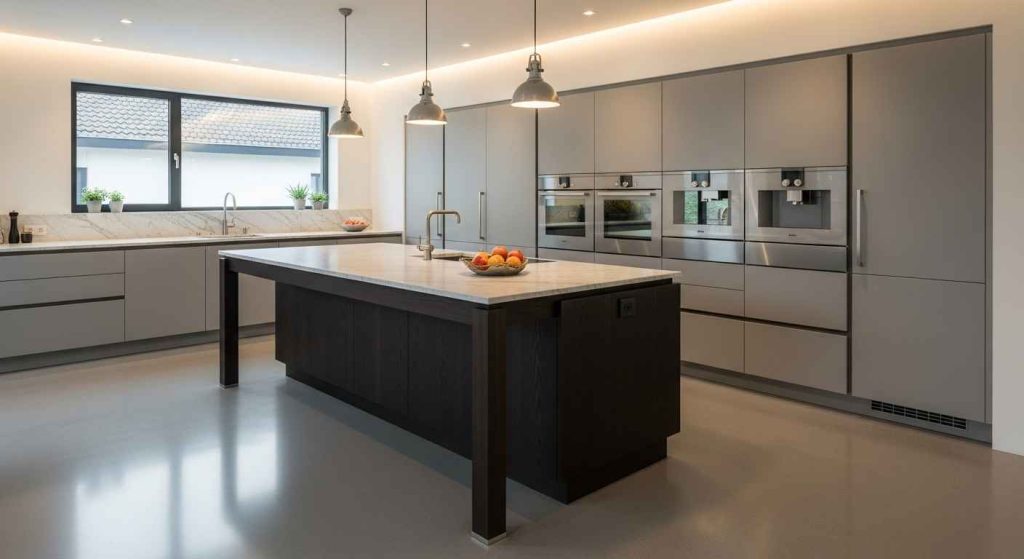
Polished concrete offers a continuous, reflective surface. It has a modern, minimalist feel that eliminates visual breaks. The slight sheen helps bounce light around the room. A seamless surface expands boundaries. If you have a concrete subfloor, polishing it can be a cost-effective option compared to new flooring. For a similar look, consider large-format polished porcelain tiles that mimic concrete.
5. Continuous Flooring Flow
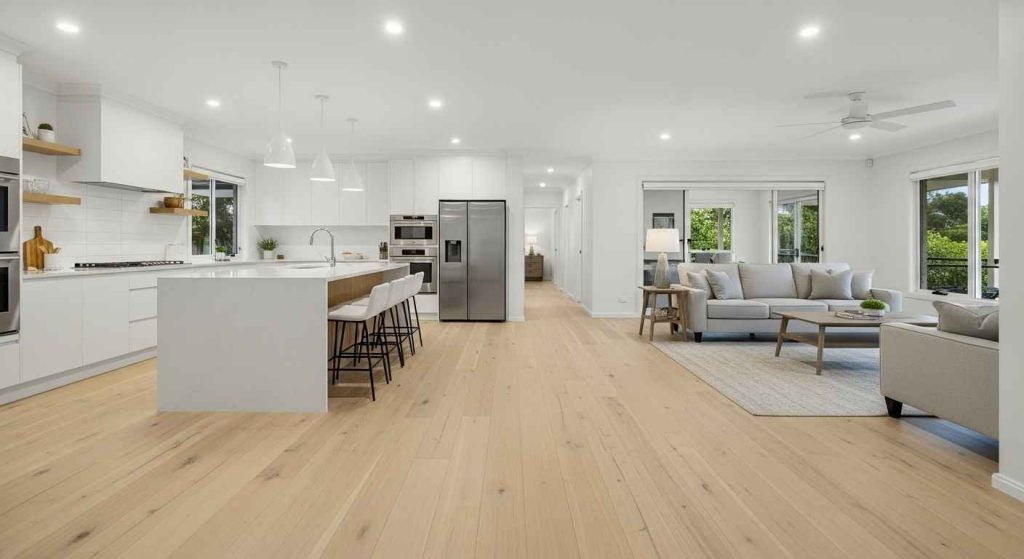
Using the same flooring material from your kitchen into adjoining rooms removes visual stops. This makes the entire area feel like one cohesive space. It tricks the eye into perceiving more square footage. Connect spaces for a larger feel. This is a simple planning decision that costs no extra. When installing new floors, just plan for the material to run continuously through the open-plan area.
6. Diagonal Layouts for Dynamic Space
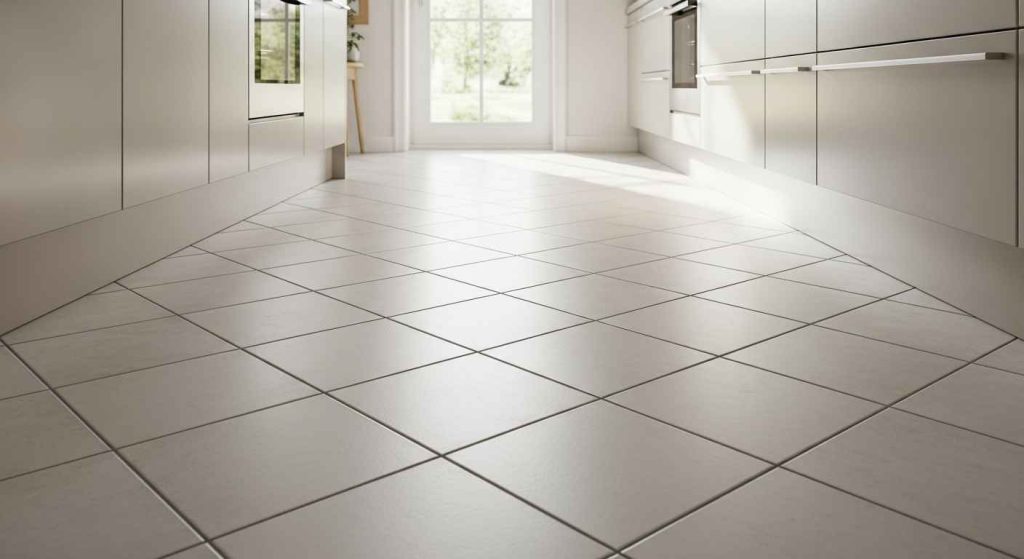
Laying tiles or planks on a 45-degree angle breaks from the standard grid. This creates longer lines that stretch toward the corners of the room. It adds interest and can make the floor feel wider. Diagonal lines add visual width. You can achieve this with standard square tiles. It requires more cutting, but the material cost is the same, making it a smart design choice.
7. Reflect Light with High-Gloss Finishes
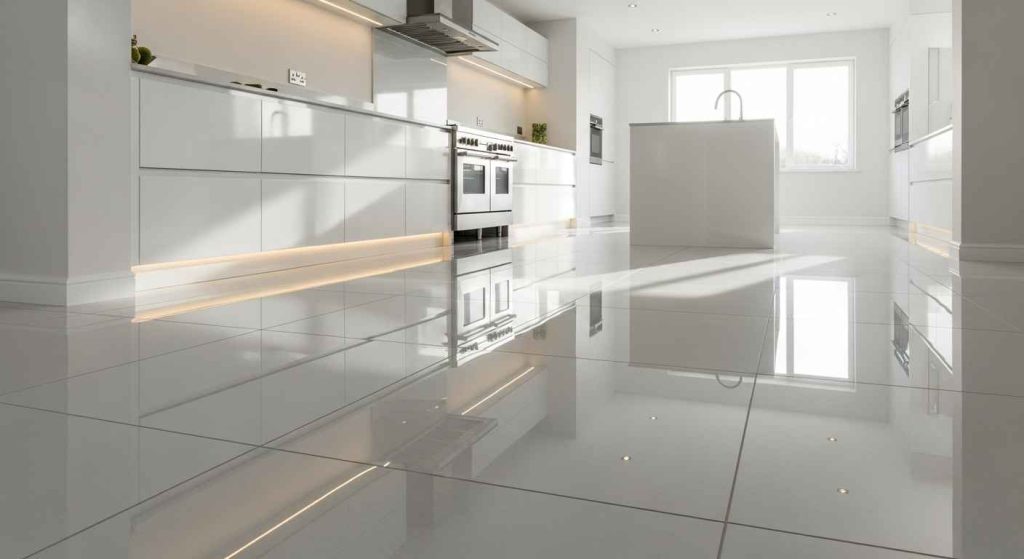
Shiny floors act like a mirror, amplifying the light in your kitchen. This is especially helpful in rooms with few windows. High-gloss ceramic tiles or polished surfaces are great for this effect. Glossy surfaces bounce light around. Be mindful that these floors can be slippery when wet. For a similar reflective quality with more grip, look for high-gloss finishes with a slight texture.
8. Monochromatic Magic
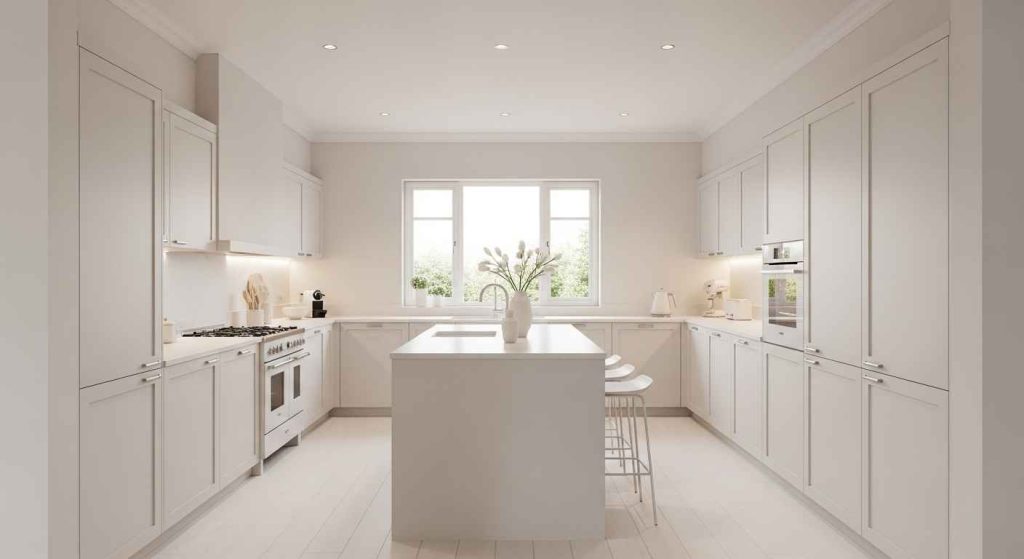
Stick to one color family for your floors, cabinets, and walls. This lack of contrast makes the space feel seamless and larger. For example, use light grey floors with off-white cabinets. A single color palette simplifies the space. This is a free design strategy. You can achieve it with paint and your choice of flooring without spending extra on complex materials.
9. Subtle Texture with Brushed Wood
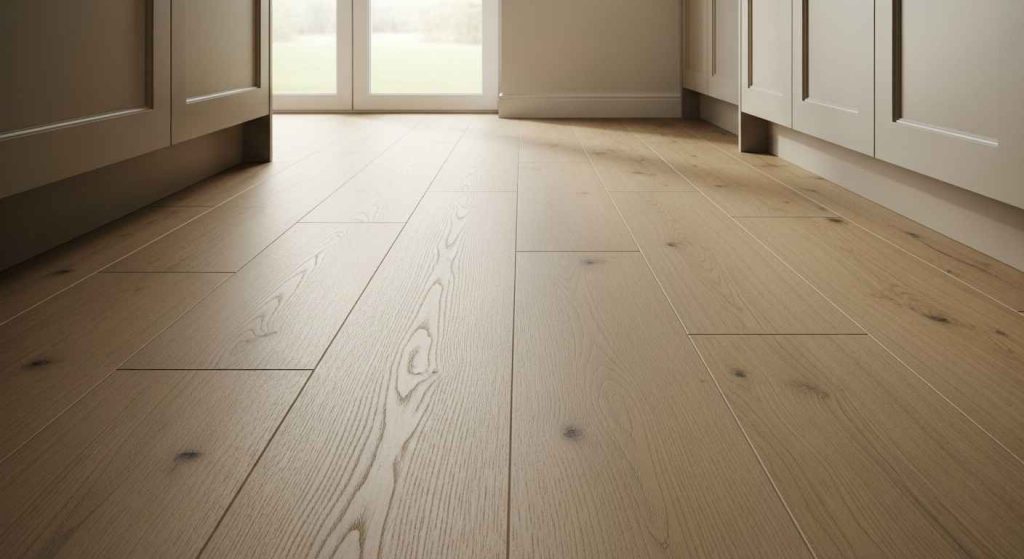
Textured floors like brushed wood add character without dark colors or busy patterns. The texture catches the light in subtle ways, adding depth. It helps hide small scratches and wear, which is practical. Texture adds depth without clutter. Many engineered wood and laminate products offer this brushed finish. They are often more affordable than solid hardwood and are very durable for a busy kitchen.
10. Visually Expanding Light Grey Tiles
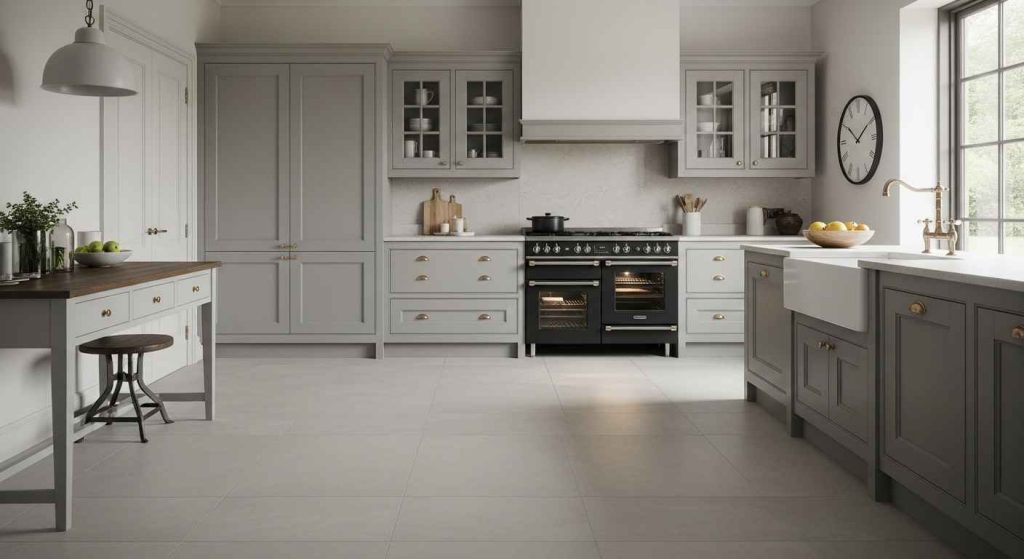
Light grey is a neutral, receding color. It doesn’t demand attention, allowing the eye to focus on the room’s dimensions instead of the floor itself. It pairs well with almost any cabinet color. Neutral colors make walls feel farther away. Light grey is a very common color for tiles and vinyl, making it easy to find budget-friendly options. It also hides dust well.
11. The Warmth of Wide Plank Vinyl
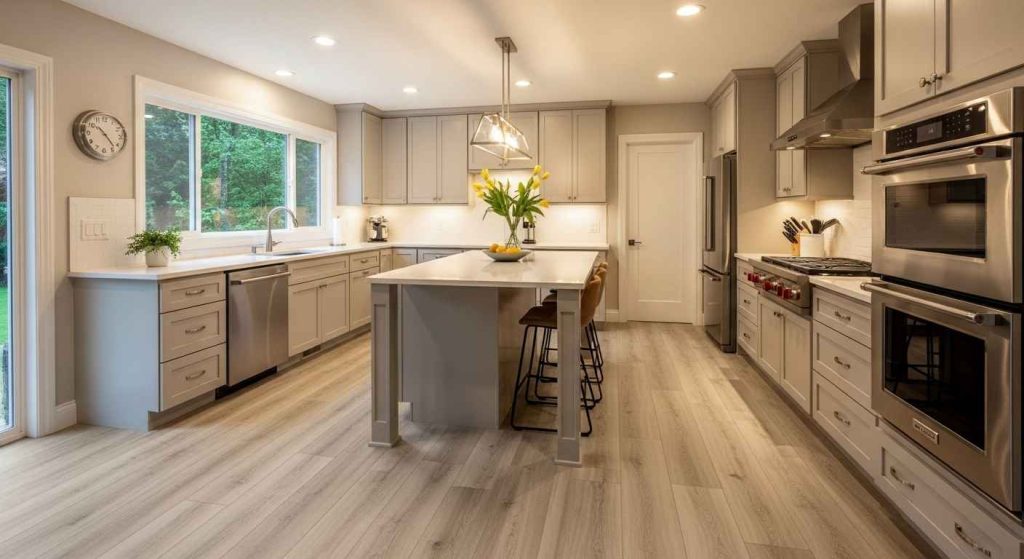
Wide vinyl planks offer the look of wood with practical benefits. They are water-resistant and comfortable underfoot. The wider the plank, the fewer seams, which contributes to a more open look. Wide planks mean fewer seams. Luxury vinyl plank is a cost-effective and DIY-friendly choice. Many options feature a click-lock installation that doesn’t require glue or nails.
12. Unify with a Consistent Material
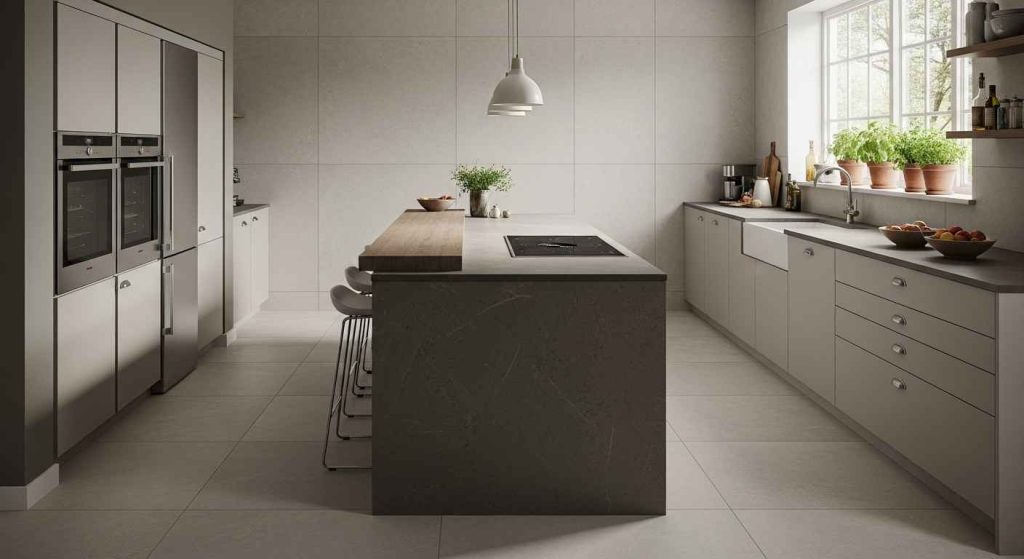
Using one material for the floor and another element, like a backsplash, creates harmony. This repetition is pleasing to the eye and makes the design feel intentional and uncluttered. Repetition creates visual harmony. You can often use leftover floor tiles for a small backsplash area. This saves money and reduces waste, making your design project more efficient.
13. Graphic Cement Tiles (Used Sparingly)
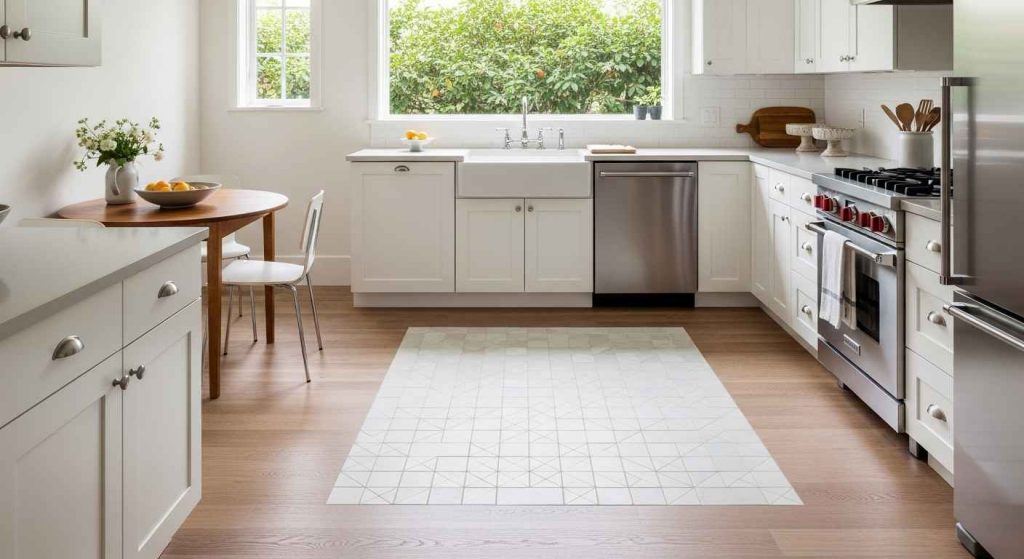
Bold patterns can work in a small kitchen if used as an accent. Consider creating a “rug” effect with patterned tiles in the center of the floor, bordered by a plain material. This adds personality without chaos. Use pattern as a focused accent. This approach uses fewer expensive patterned tiles, saving money. You can mix and match with a more affordable plain tile for the border.
14. Stone-Look Porcelain Slabs
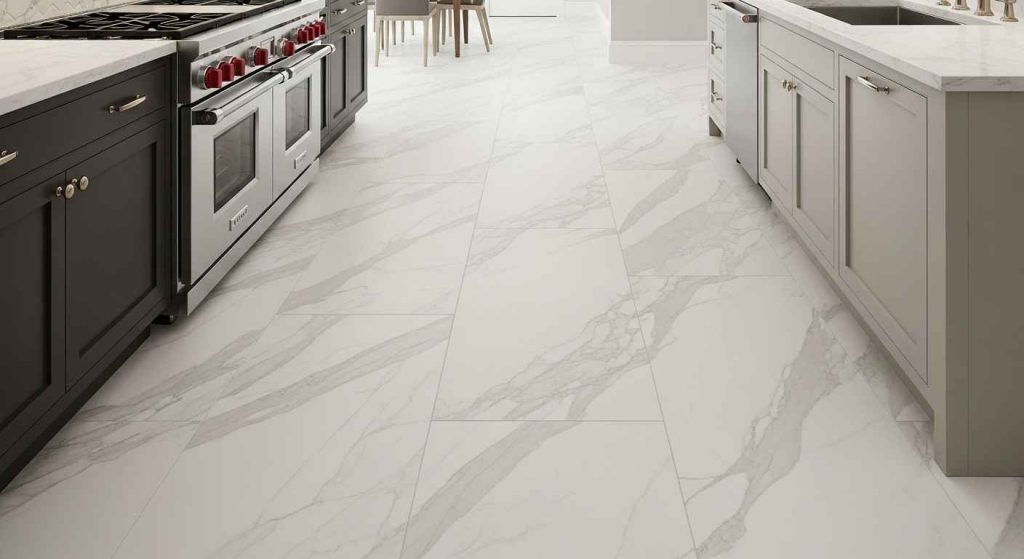
Large porcelain slabs replicate the beauty of natural stone without the high cost or maintenance. The realistic veining and minimal grout lines create a high-end, expansive look. Get a luxury look for less. Stone-look porcelain is much more affordable and durable than real marble. It is also stain-resistant and easy to clean, perfect for a kitchen.
15. Timeless White Subway Tile Floors
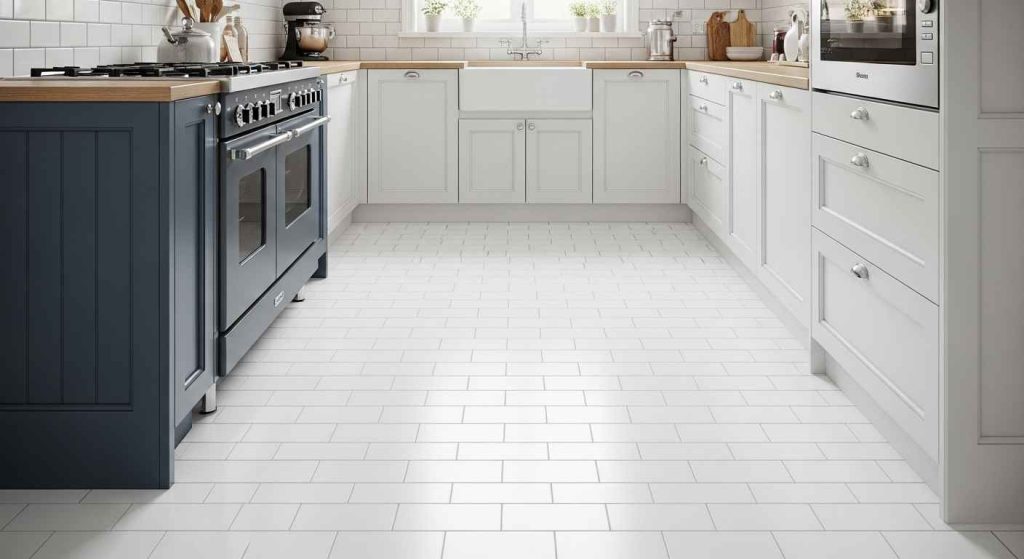
White subway tiles are a classic choice that always looks bright and clean. Their simple, rectangular shape is timeless. The light color reflects light, helping to open up the space. White reflects the most light. For a budget-friendly and DIY-friendly option, use ceramic subway tiles. They are inexpensive and easy to cut, making them a good project for a first-time tiler.
16. Barely-There Grout Lines
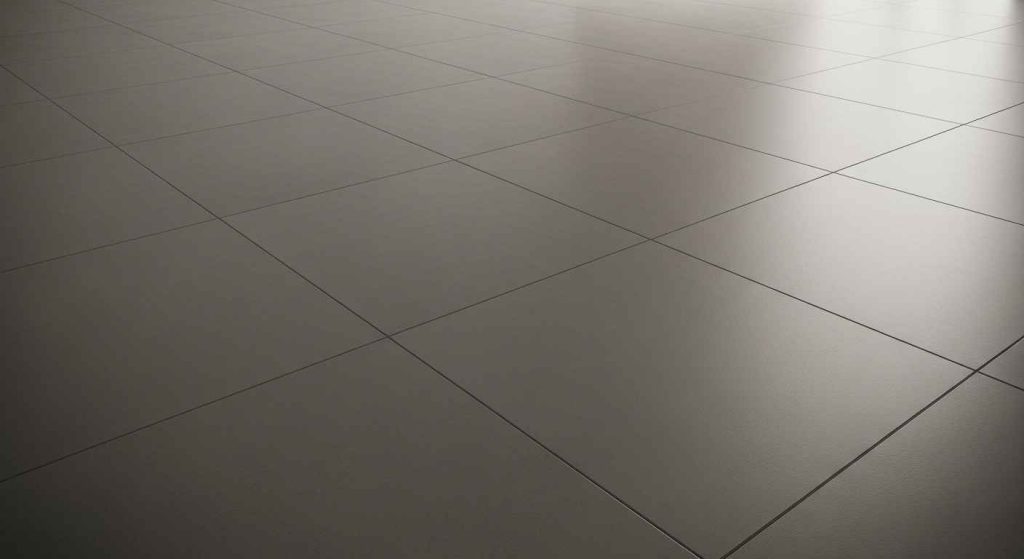
The color and width of your grout lines matter. Use a grout color that closely matches your tile. Thin grout lines make the floor look like one continuous surface. Matching grout minimizes visual breaks. Using a grout that is the same color as your tile is a simple, no-cost upgrade during installation. Epoxy grout in a matching color is also more stain-resistant.
17. Rustic Charm of Light-Washed Oak
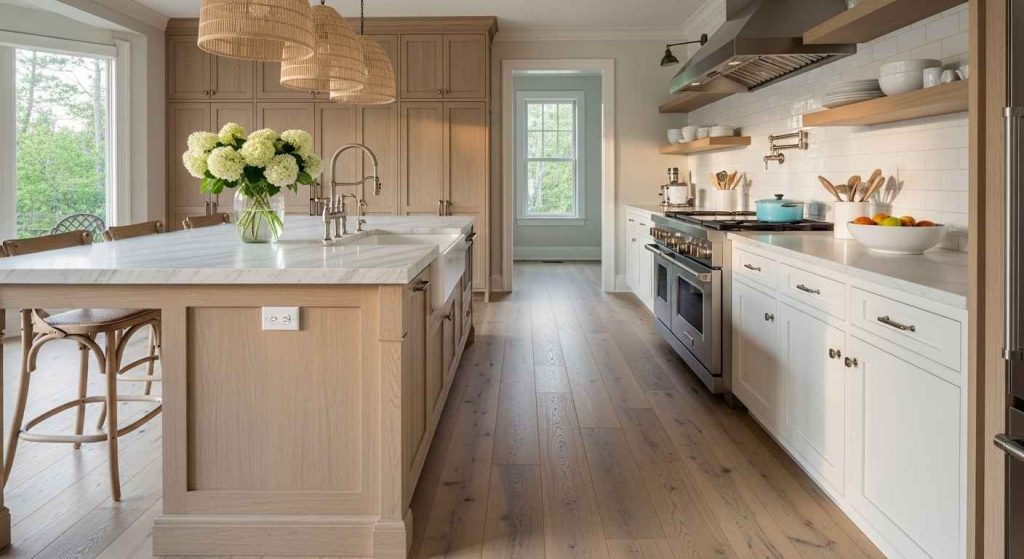
Light-washed wood has a rustic, beachy feel. It provides texture and warmth while keeping the color palette light and airy. This finish helps the wood grain show through softly. A light wash keeps things bright. You can achieve this look yourself on existing wood floors with a whitewashing kit. It’s a transformative DIY project that doesn’t require sanding down to bare wood.
18. The Clean Lines of Microcement
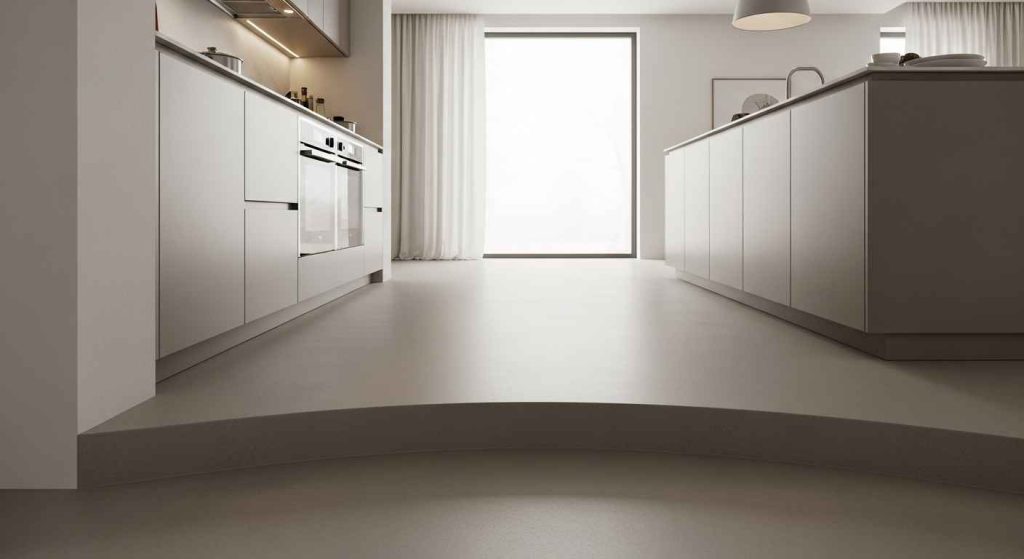
Microcement is a cement-based coating applied seamlessly over existing floors. It creates a modern, continuous surface with no joints. It can be tinted to any light, neutral color. A jointless finish feels larger. While professional application is best, kits are available for experienced DIYers to try on a small area. It can be a cost-effective way to cover an old tile floor.
19. Patterned LVT for a Focal Point
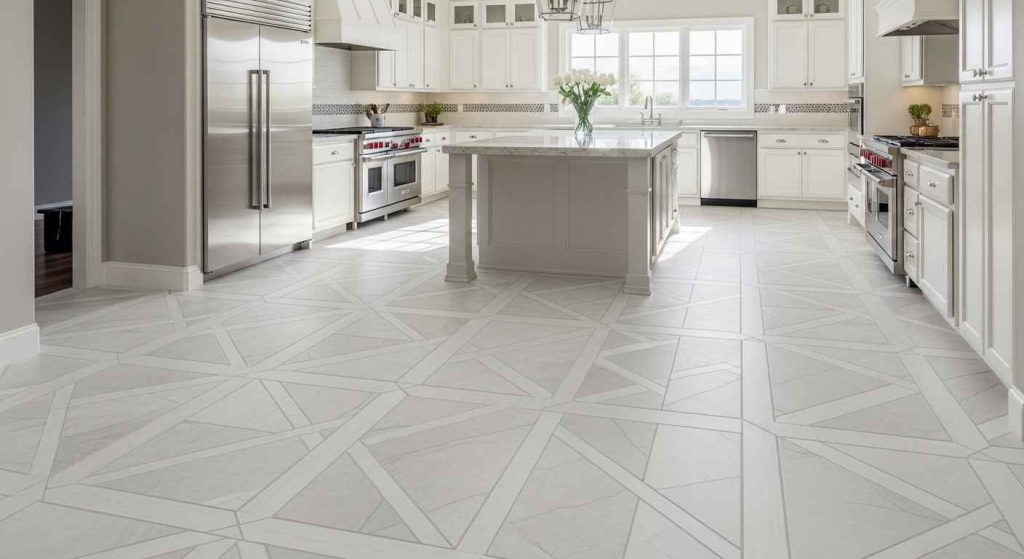
Modern patterned LVT offers endless designs. Choose a pattern with a light background and soft contrast. This can create a beautiful focal point without shrinking the space. Make the floor a subtle feature. LVT is a budget-friendly way to get a custom look. Many are designed for simple DIY installation with a click-together system, saving on installation costs.
20. Terrazzo for a Playful, Unified Look
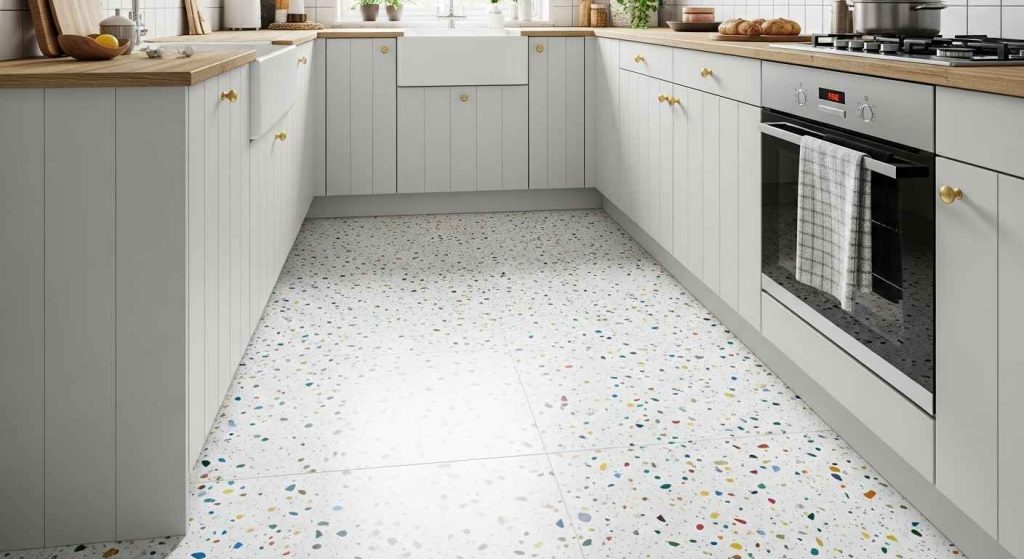
Terrazzo consists of chips of marble or glass set in a cement or epoxy base. It’s a single, unified material with built-in speckled interest. This avoids a busy look while adding fun detail. Speckles add interest without pattern. Terrazzo-look porcelain tiles are an affordable and low-maintenance alternative to real terrazzo. They offer the same visual effect with easier installation and care.
21. Bleached and Blanched Wood Tones
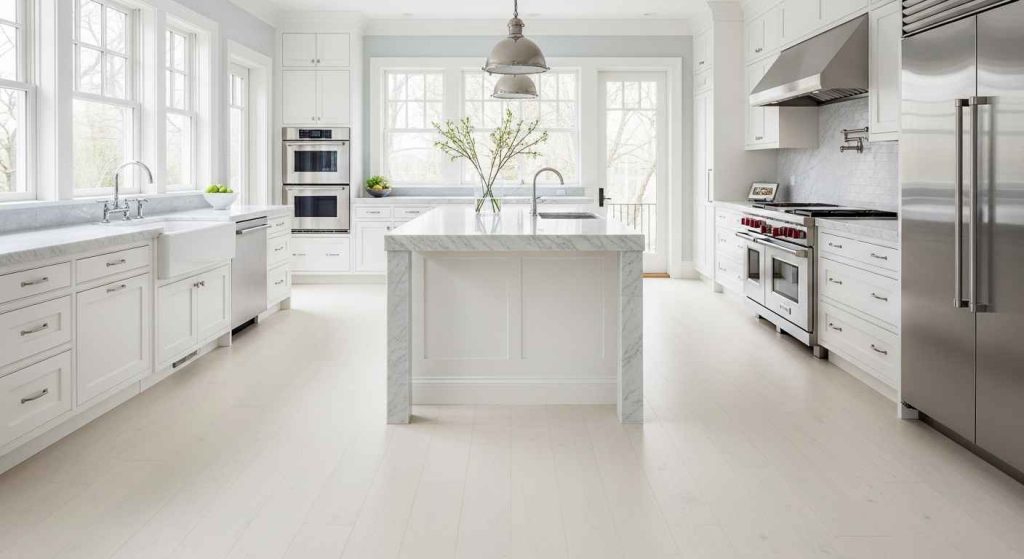
Bleached or blanched wood has most of its color removed. The result is a very pale, almost white floor that maximizes light reflection. It has a modern, Scandinavian feel. Nearly white floors maximize light. You can find engineered wood and laminate products with this bleached finish. They are a practical way to get this light-drenched look without the cost of custom bleaching solid wood.
22. Matte Finish for a Seamless Look
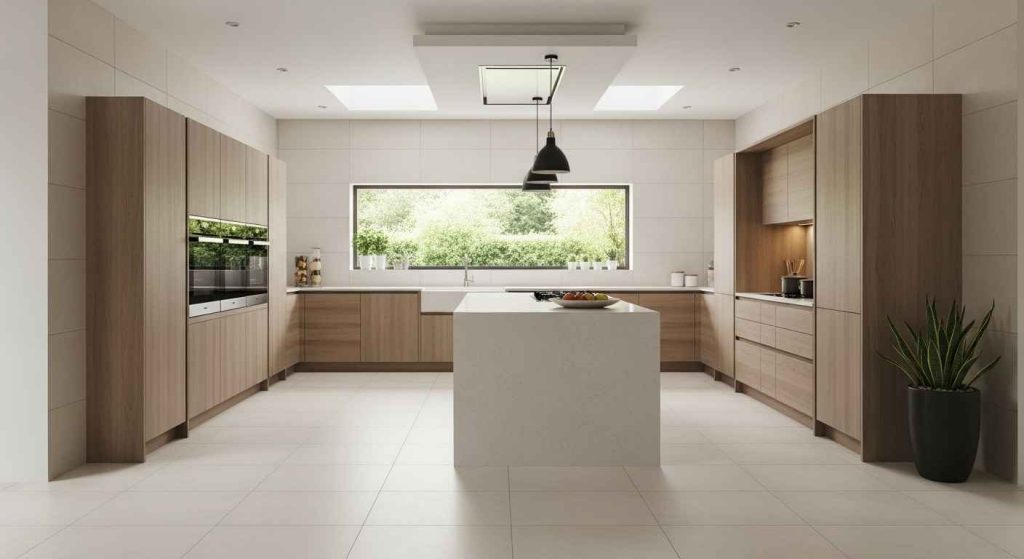
Matte finishes don’t reflect light like glossy ones, but they have their own advantage. They create a smooth, uniform appearance that hides scratches and dust better. This can make the floor look like one solid piece. A matte finish hides imperfections. Matte finish tiles and vinyl are very common and often priced the same as their glossy counterparts. They are a practical choice for a busy kitchen.
23. The Classic Checkerboard, Reimagined
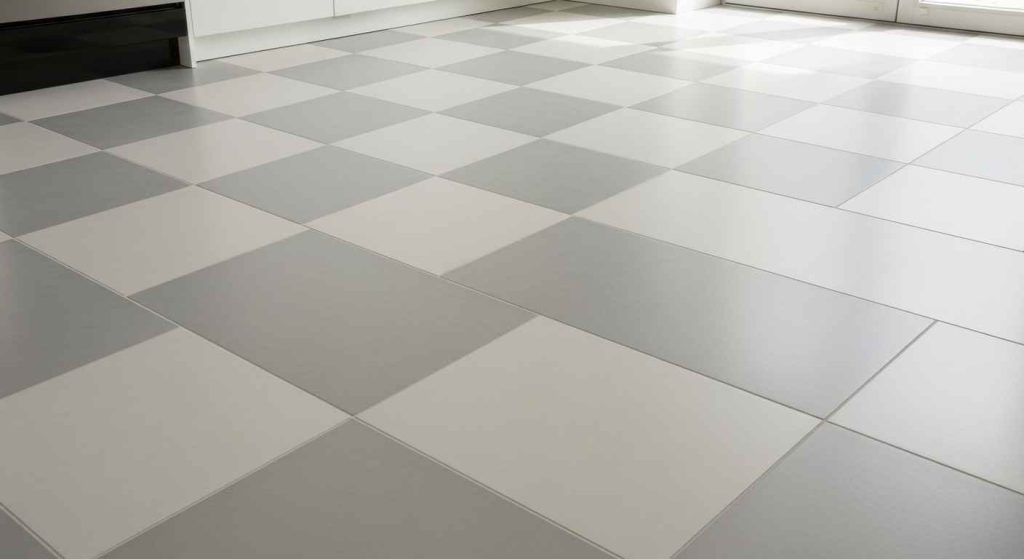
A checkerboard floor doesn’t have to be black and white. Use low-contrast colors, like light grey and white, or beige and cream. Using large tiles keeps the pattern scale grand and less busy. Soften the contrast for a modern take. This is easy to achieve with standard square tiles in two light colors. The installation is straightforward, making it a feasible project for a confident DIYer.
Start with one change. Pick a light-colored, durable option that fits your style and budget. Even a small update can make your kitchen feel more open and inviting.