



Modern kitchens are more than just places to cook. Their shape directly affects how you move and work. A good layout makes daily tasks smooth and keeps the space feeling open. This guide shows different kitchen shapes to help you find one that fits your home and habits.
1. The Single-Wall Minimalist Layout


This layout uses one wall for all appliances, cabinets, and the sink. It is perfect for small homes and open-plan studios. This design saves space and creates a very clean look. Keep the countertop clear to maintain the minimalist feel. You can install open shelving instead of upper cabinets for a lighter look. Use a rolling cart for extra prep space that you can tuck away. A simple track light system provides good task lighting without a major renovation.
2. The Classic Galley Kitchen Shape


A galley kitchen has two parallel counter runs with a walkway in between. This shape is highly efficient for cooking. Everything is within easy reach. It works well in narrower spaces. To avoid a cramped feeling, use light colors on cabinets and walls. Install pull-out cabinets to make use of every inch of storage. You can update cabinet hardware for a quick, low-cost refresh. Good overhead lighting is key to making the space feel open.
3. The Efficient L-Shaped Kitchen


This layout uses two adjacent walls to form an “L”. It is a very popular and flexible design. The L-shape opens up the room and works well with a dining table. It creates a natural work triangle between the sink, fridge, and stove. You can add a small island or a cart to the open side. Repaint your existing cabinets to give the space a new look without a full remodel. Use the corner for a lazy Susan to access deep cabinets easily.
4. The Social U-Shaped Kitchen Design


A U-shaped kitchen has counters and cabinets on three walls. This design offers a lot of storage and counter space. It surrounds the cook, making everything accessible. This shape is great for people who love to cook and entertain. To keep it from feeling closed off, use open shelving on one wall. Add a colorful tile backsplash for a personal touch that does not cost much. A pendant light over the sink can become a nice focal point.
5. The Spacious G-Shaped Kitchen


This is a U-shaped kitchen with a connected peninsula, forming a “G”. It provides even more counter and storage space than a U-shape. The peninsula acts as a casual eating spot or a extra prep area. It defines the kitchen space without closing it off completely. This layout suits larger families. You can use the peninsula to hide small appliances. Build a simple butcher block top for the peninsula as a DIY project. This adds a warm, practical surface.
6. The Inviting Peninsula Layout


A peninsula is a connected counter that extends from a wall or a cabinet run. It functions like an island but is attached on one end. This is a great solution for rooms where a full island will not fit. It provides extra seating and work space. The back of the peninsula can be used for extra storage or open shelving. Use secondhand bar stools and repaint them to match your decor. This is a simple way to add seating.
7. The Hub of the Home: The Island Kitchen


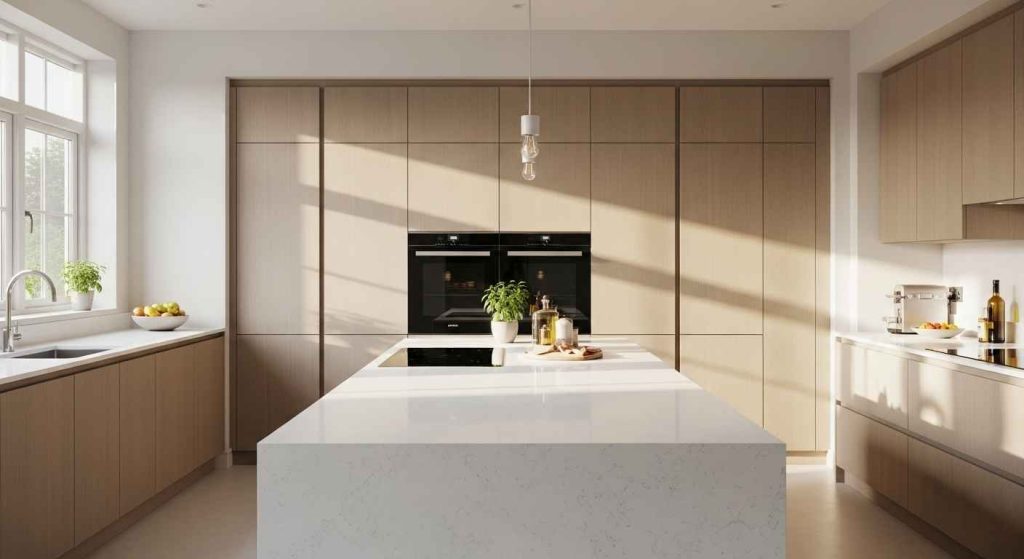
A kitchen island adds a central work station and social spot. It provides extra storage, seating, and prep space. Islands are perfect for open-plan living. They allow the cook to interact with guests or family. Ensure there is enough space to walk around it comfortably. You do not need a custom-built island. A repurposed vintage table can serve as a unique and affordable island. Look for one with storage underneath.
8. The Open Plan Kitchen Layout


This layout removes walls to connect the kitchen with other living spaces. It creates a sense of openness and is ideal for entertaining. The kitchen becomes part of the main living area. Use a consistent floor material to visually expand the space. Define the kitchen zone with a different color on the cabinets or a rug. A large area rug can help define the living space without building a wall. This is a simple, non-permanent solution.
9. The Conversational Galley Layout


This is a galley kitchen that opens to another room on one side. Instead of a wall, a countertop allows for conversation. It combines the efficiency of a galley with the social benefits of an open plan. It is perfect for smaller homes that still want a connected feel. You can achieve this by removing upper cabinets on the open side. Install open shelving on that wall to keep things feeling light and accessible.
10. The One-and-a-Quarter Island Kitchen


This design features a primary island and a smaller, secondary work surface. The smaller piece is often on wheels or is a fixed table. It provides dedicated zones for different tasks, like baking or drink preparation. This is great for serious cooks and large families. The secondary piece can be used as a baking station or a coffee bar. A sturdy wooden cart can act as your quarter island and be moved as needed.
11. The Kitchen with a Functional Butler’s Pantry


A butler’s pantry is a small room or alcove between the kitchen and dining area. It is used for storage, food prep, and cleaning up. It hides clutter from the main kitchen, keeping it looking clean. You can use it as a coffee station or bar. You do not need a large space. Convert a deep closet near your kitchen into a mini butler’s pantry with some shelving. This adds valuable storage.
12. The Efficient Work Triangle Layout


The work triangle connects the three main work areas: the sink, fridge, and stove. A good triangle keeps the path between them clear and not too long. This makes cooking faster and safer. The triangle should not be interrupted by traffic flow. When planning your kitchen, arrange your major appliances first to create this efficient path. Even in a small kitchen, this principle makes a big difference.
13. The Zoned Kitchen Layout for Multiple Cooks


This layout creates separate areas for different tasks, like prep, cooking, and cleaning. It is ideal for households with more than one cook. Each person can have their own space to work without getting in the way. Zones can be created with dual sinks or separate counter runs. Designate a “baking zone” with a marble slab and all your baking tools stored nearby. This makes the process much smoother.
14. The Open-Plan Kitchen with a Scullery


A scullery is a separate utility room for the messy work of the kitchen. It houses the dishwasher, extra storage, and small appliances. The main kitchen stays clean and presentation-ready. This is a classic idea that is making a comeback. If you do not have a separate room, use a tall cabinet with closing doors to hide your microwave, toaster, and coffee maker. This creates a similar, hidden effect.
15. The Circular “Runway” Kitchen Layout


This layout features a central island with clear walking space on all sides. It creates a circular traffic flow around the kitchen. This is excellent for entertaining, as people can move freely. It prevents bottlenecks during parties. The island becomes the central anchor of the room. Make sure the walkways are wide enough. Use a round rug under the dining table to reinforce the circular flow in the space.
16. The Kitchen with a Casual Dining Peninsula


This design uses a peninsula primarily for casual meals and quick snacks. It is more integrated than a separate table. It is perfect for busy mornings and for kids to do homework. The overhang should be deep enough for comfortable knee space. Choose stools that can be tucked completely underneath. Look for stools with backs for more comfort during longer sits. This makes the spot more usable.
17. The Adjoining Kitchen and Dining Room Layout


The kitchen is in a separate but connected room to the dining area. They are often divided by a doorway or an arch. This layout contains cooking smells and noise while keeping the spaces linked. It offers a more formal feeling than a completely open plan. Use a consistent color to tie the rooms together. A large mirror in the dining room can reflect light back into the kitchen, making both spaces feel brighter.
18. The Eat-In Kitchen with a Banquette


A banquette is a built-in bench that creates a cozy eating nook. It is a space-saving way to add seating to your kitchen. It makes the room feel warm and settled. This is perfect for family meals and reading the paper. You can build a banquette along any empty wall. Build a simple bench frame and add comfortable cushions for a custom breakfast nook. Use the space under the seat for storage.
19. The Kitchen Layout with a Integrated Desk


A small desk built into the kitchen cabinetry creates a command center. It is a place for managing schedules, paying bills, or using a laptop. It keeps paperwork contained and off the main counters. This is very helpful for family organization. The area can be as small as a single cabinet width. Repurpose a narrow, wall-mounted shelf as a mini-desk for charging devices and holding a notepad.
20. The Biophilic Kitchen with Outdoor Flow


This design connects the kitchen directly to the outdoors. Large doors or big windows bring in natural light and views. It makes the space feel larger and improves well-being. You can grow herbs on a windowsill for a fresh, green touch. Hang a small indoor herb garden near a sunny window. This is a simple way to add life and fresh flavors to your cooking.
21. The Split or Dual-Kitchen Layout


This layout divides kitchen functions into two separate areas. One might be a “clean” kitchen for presentation, and the other a “dirty” kitchen for actual cooking. This is common in larger homes and for serious entertainers. It keeps the main kitchen spotless. You can create a smaller version by designating a corner for a “messy” prep station with a cutting board and compost bin.
22. The Kitchen with a Walk-In Pantry Zone


A walk-in pantry provides massive storage for food and appliances. It frees up cabinet space in the main kitchen. Having a dedicated room for groceries helps with organization and bulk buying. Even a small closet can be converted. Use uniform jars and baskets to make your pantry look tidy and make items easy to find. Label everything for quick identification.
23. The Compact and Efficient Corridor Kitchen


This is a narrower version of the galley kitchen, often found in apartments. It uses every inch of space wisely. The key is to avoid clutter and use light colors to prevent a tunnel-like feeling. Choose slim appliances designed for small spaces. Install a magnetic knife strip on the wall to free up counter space. Use the inside of cabinet doors for storing spice racks or measuring cups.
Think about how you really use your kitchen day to day. Choose one small change from these ideas, like adding a cart or reorganizing a cabinet. A better kitchen shape makes everyday life just a little bit easier.