


My open-concept barndominium kitchen used to feel cavernous and unfinished. I learned the hard way that a big space needs a few bold anchors, not a scatter of tiny decor.
If you want to know how to design an open concept barndominium kitchen that does not feel empty, I’ll show you the exact order I used, realistic budgets, and the pieces that actually help a barndo feel lived-in and intentional.
This approach works whether you have high 10–14 foot ceilings or a lower lofted barndo. Expect to spend about $300 to $1,200 for a full styling refresh depending on splurges.
1. Start with the Foundation: Counter and Cabinet Reset
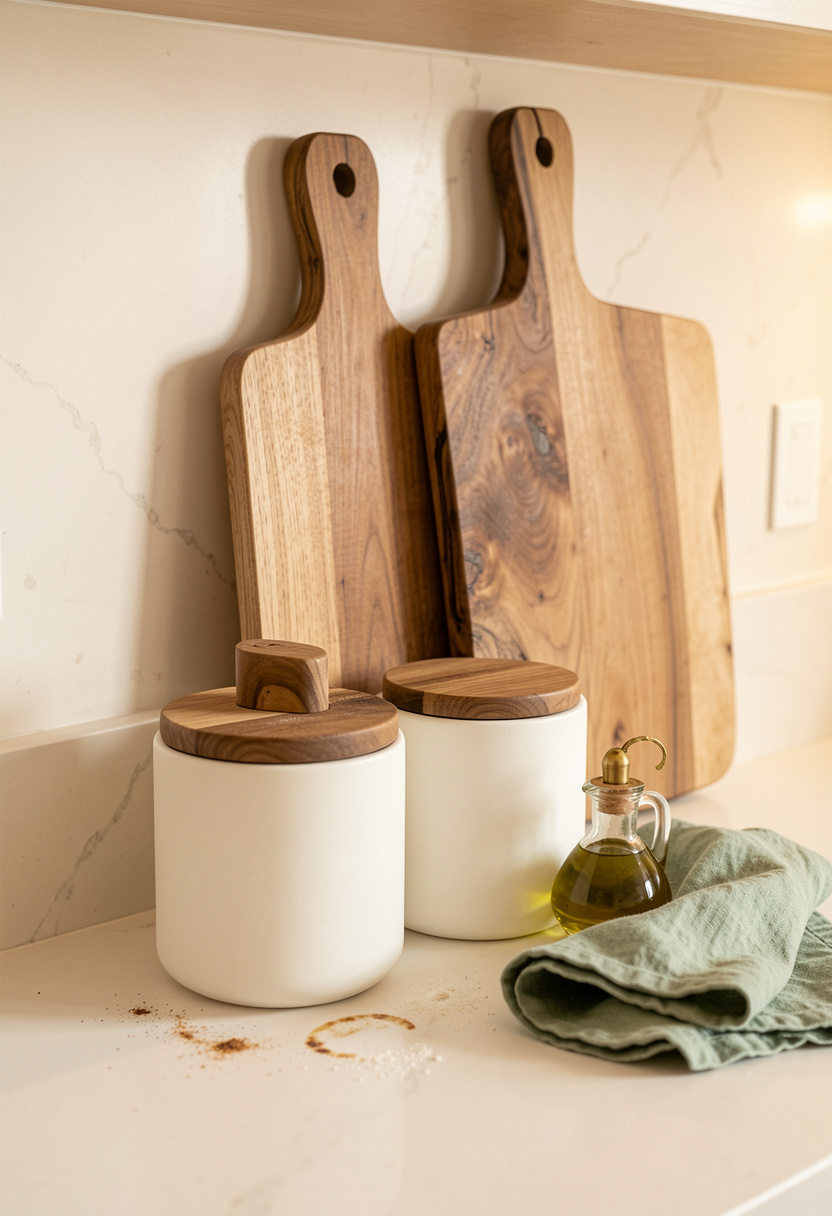

Clear counters first. I removed mismatched jars, duplicate gadgets, and the cereal boxes that snuck onto the island.
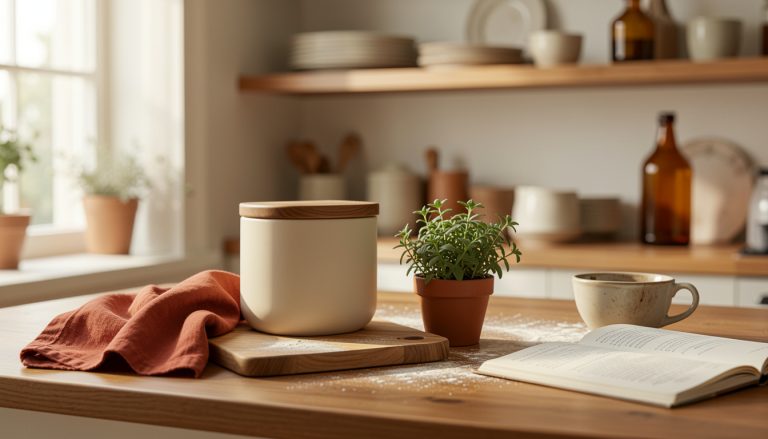
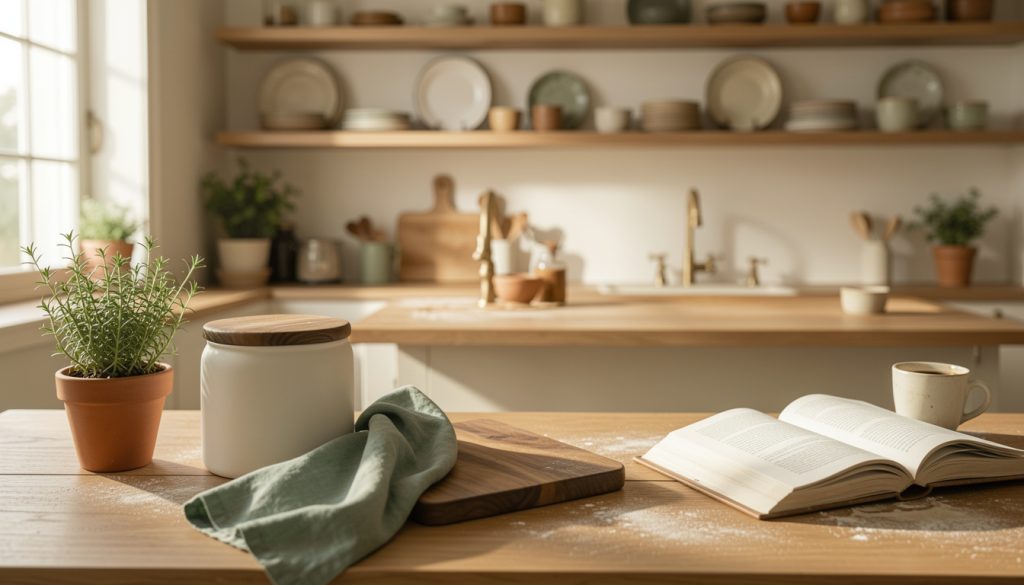
Then add three anchor pieces in an odd-numbered vignette: a large Acacia cutting board with juice groove 18 inch, a Matte white ceramic canister set with acacia wood lids, and a low Large acacia fruit bowl on the island.
Visual principle: scale and negative space. Leave at least 12 to 18 inches of clear surface on either side of your vignette so the eye settles.
Common mistake: styling on top of clutter. Remove everything, then add the three pieces. Swap cabinet hardware to a unified finish like Matte black cabinet pulls 5 inch center to center to make built-ins read higher-end.
2. Layer Warmth with Wood and Linen Textures


Cold metal and tile can leave a barndo feeling like a workshop. I warmed mine by repeating natural wood and linen.
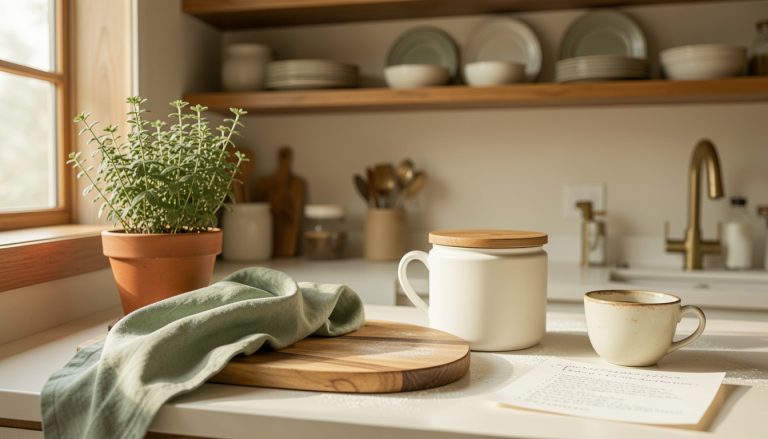
Add a Stoneware utensil crock in cream, an Oak wood utensil holder, and a set of Sage linen tea towels set of 4.
Visual principle: texture contrast. Put one tall, one medium, one low piece together. On counters, stack the cutting board vertically behind the crock; place the towel folded under the bowl to soften the base.
Common mistake: using too many small mismatched woods. Pick one dominant wood tone (I chose acacia/oak) and echo it in shelves, bowls, and stools.
3. Add Height and Drama with Open Shelving—But Curate


Open shelves make tall rooms feel intentional, not cavernous—if you curate. I keep two shelf runs max and style each run with a consistent palette.
Install Floating wood shelves with black brackets about 18 inches above the counter. On each shelf use the rule of three: a stack of plates, a tall vase, and a small plant.
Pick one finish to repeat—mine was aged brass in a small vase and on a framed print. A Stoneware canister set in sage green doubles as storage and decor.
Common mistake: filling every shelf. Leave negative space and rotate items seasonally.
4. Create Ambiance with Layered Lighting and Greenery
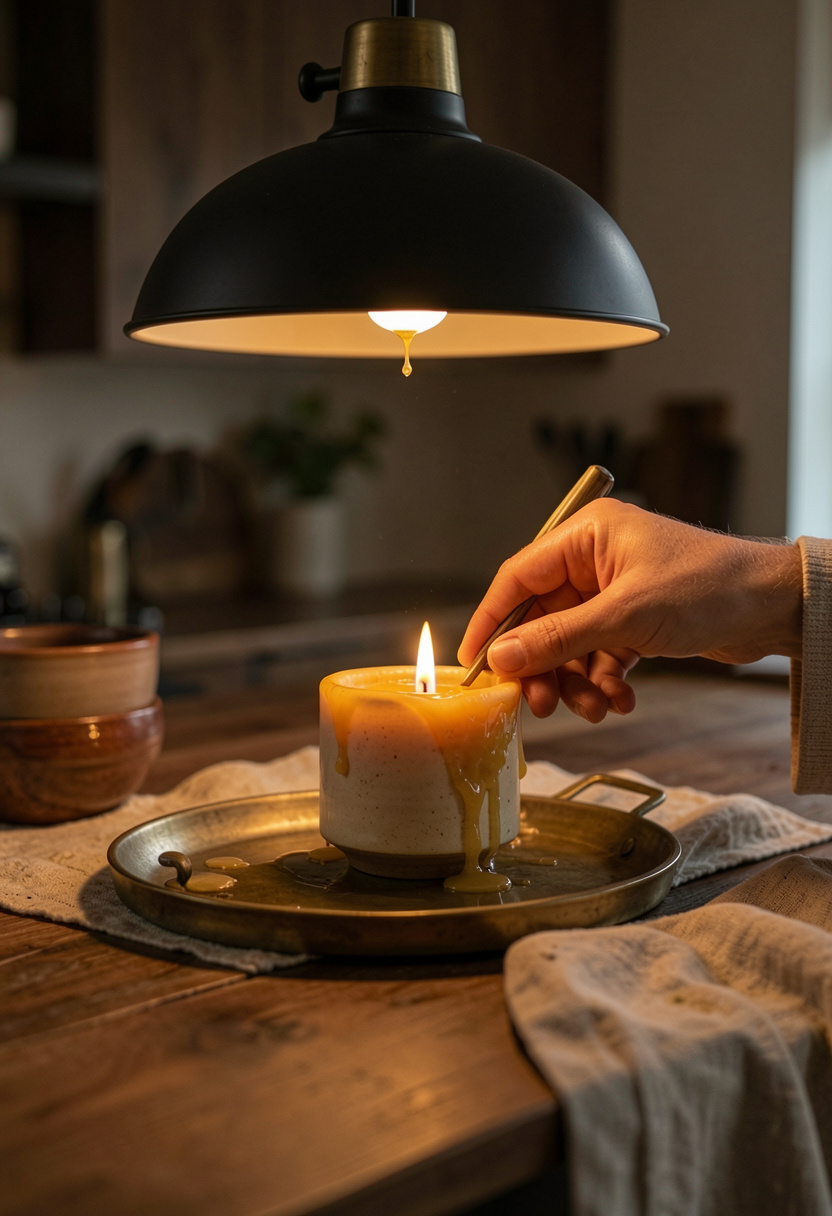

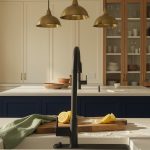
Tall ceilings call for layered light. I paired two Matte black industrial pendant lights over the island with Warm LED under cabinet light strips and a corner planter.
Add life with a Faux olive tree 4 foot in cement pot or three small potted herb plants along the windowsill to soften sightlines to the living area.
Visual principle: height variation and ambient glow. Layer lights at eye level, task level, and ceiling level.
Common mistake: one lone pendant. It underlights the space and makes the ceiling feel higher in an unhelpful way.
Common Styling Mistakes to Avoid
Mistake: Piling many tiny items across the island
Why it doesn't work: The eye has nowhere to land; the island reads cluttered.
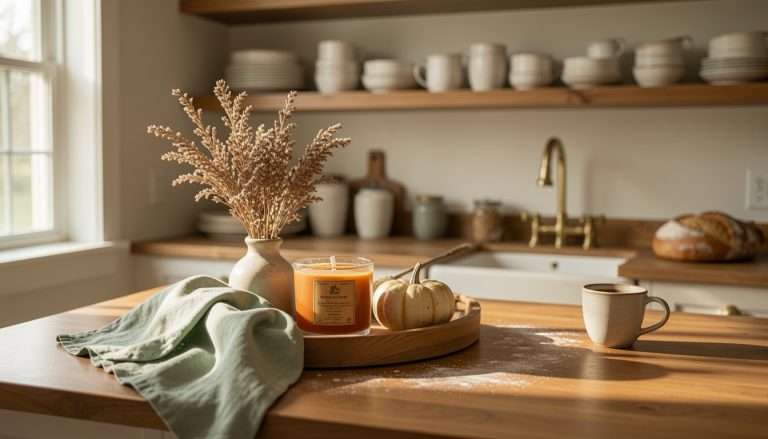
Do this instead: Use one large tray with an acacia cutting board and a stoneware bowl.
Mistake: Open shelves full of everyday dishes
Why it doesn't work: They look busy and collect grease.
Do this instead: Display curated ceramics like a stoneware canister set and keep daily dishes in closed cabinets.
Mistake: Mixing too many metal finishes
Why it doesn't work: The space feels visually fragmented.
Do this instead: Pick one finish for hardware and repeat it in small accents such as a brass cone pendant light.
What You'll Need for This Look
Foundation Pieces
Acacia cutting board with juice groove 18 inch around $35 to $90
Matte white ceramic canister set with acacia wood lids around $35 to $50
Large acacia fruit bowl around $25 to $60
Textiles & Soft Goods
Sage linen tea towels set of 4 around $20 to $40
Neutral striped runner rug 2×6 ft around $35 to $120
Lighting
Matte black industrial pendant light around $80 to $250
Warm LED under cabinet light strips around $20 to $60
Finishing Touches
Stoneware canister set in sage green around $30 to $80
Faux olive tree 4 foot in cement pot around $70 to $110
Budget Swaps
Reclaimed wood floating shelf 36 inch similar pieces often cheaper at HomeGoods or thrift.
Shopping Guide for This Look
Buy the island pieces first: Start with a large acacia cutting board and a tray to anchor the island; they set the tone.
Seasonal swap: Rotate one shelf item each season—a brass vase in fall, a terracotta pot in spring. Brass cone pendant light works year-round.
Thrift hack: Score chunky wood bowls and frames at thrift stores, then buy one matching new piece like Matte white ceramic canister set to tie it together.
Splurge vs save: Spend on lighting or hardware; save on textiles and seasonal decor. A good pendant changes how the whole room reads.
Conclusion
Start with clearing counters, then add one large functional object, one natural texture, and one source of warm light.
A barndominium kitchen looks finished when the eye finds clear anchors and repeated materials. Which corner of your kitchen will you tackle first?