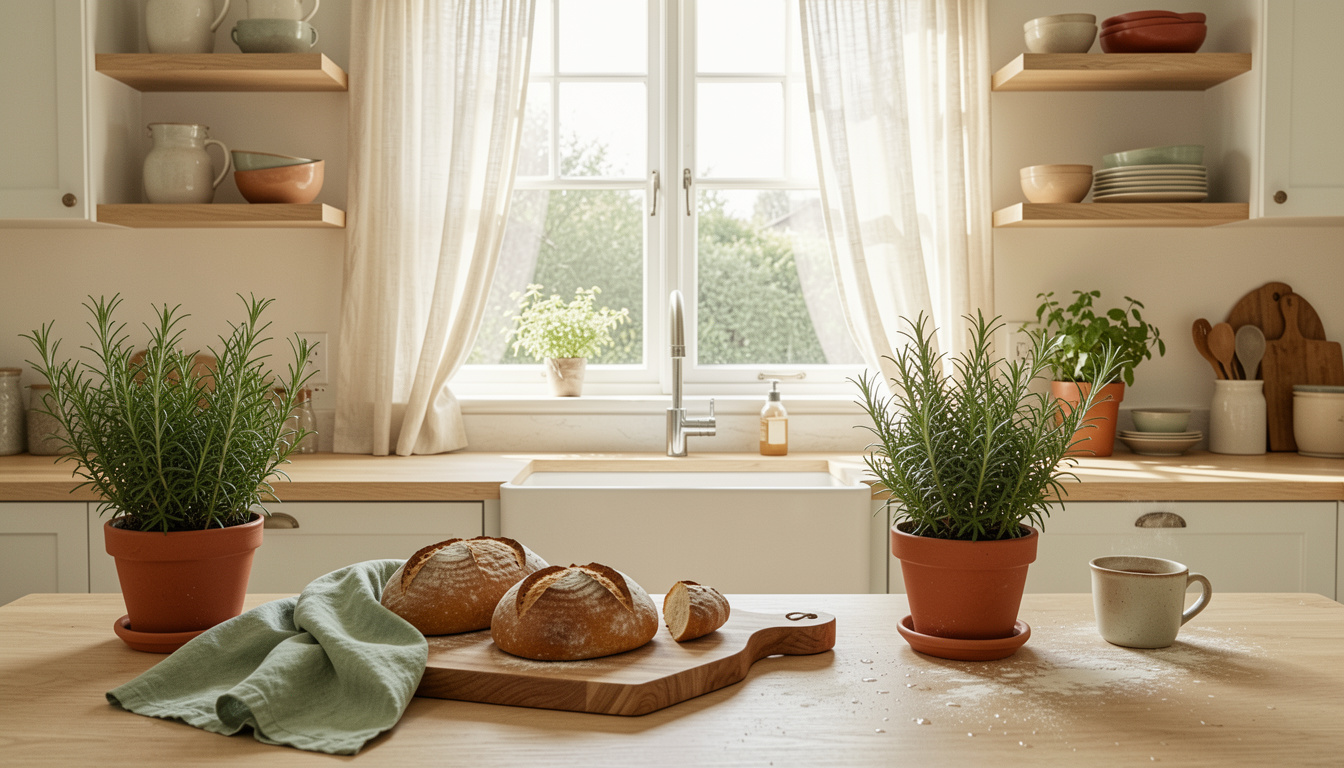
How to decorate a kitchen window without blocking natural light was the question that saved my small galley kitchen.
I swapped heavy curtains for layers that actually let light in. You will learn high-impact swaps, where to spend, and what to skip for under $300 to $500 total.
My kitchen is compact. These moves suit bright modern farmhouse or coastal styles, and they also work in darker kitchens if you choose warm finishes.
I noticed everyone is leaning toward open shelving and woven textures in 2025. Keep that in mind as you plan.
1. Start with the Foundation: Counter and Cabinet Reset
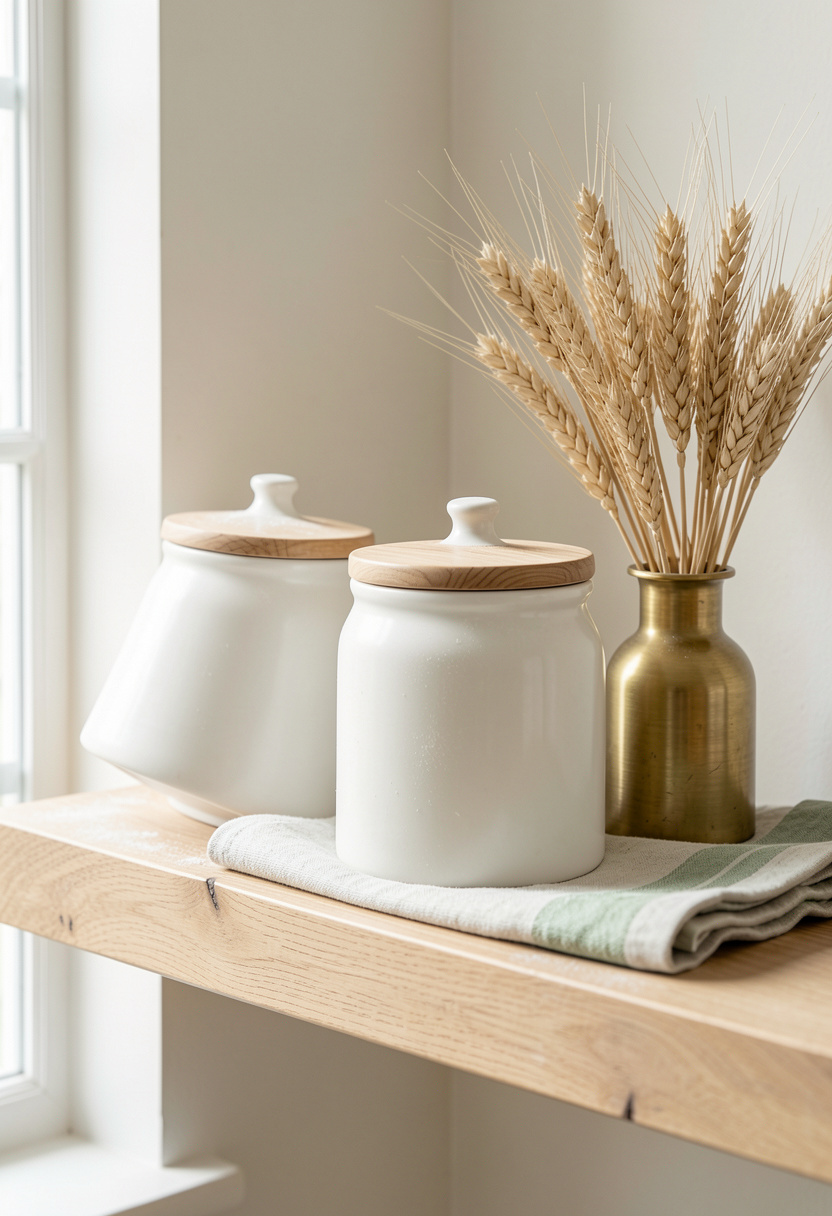
Start by clearing the window area and the counter run under it. Visual breathing room keeps sunlight from feeling obstructed.
Place one large statement piece rather than a row of small objects. I use a large acacia cutting board to anchor the space and a matte ceramic canister set for utensils.
Matte white ceramic canister set with acacia wood lids around $35 to $50 and a Large acacia cutting board 24 inch around $30 to $60 keep the line clean.
The visual principle is negative space. One tall item plus one low item creates a diagonal for the eye to travel toward the window.
Mistake people make: lining up four items of the same height across the sill. It blocks sight lines and light. Instead place one tall, one low, and one flat object in a 2:1:1 ratio.
2. Layer Warmth with Wood and Linen Textures
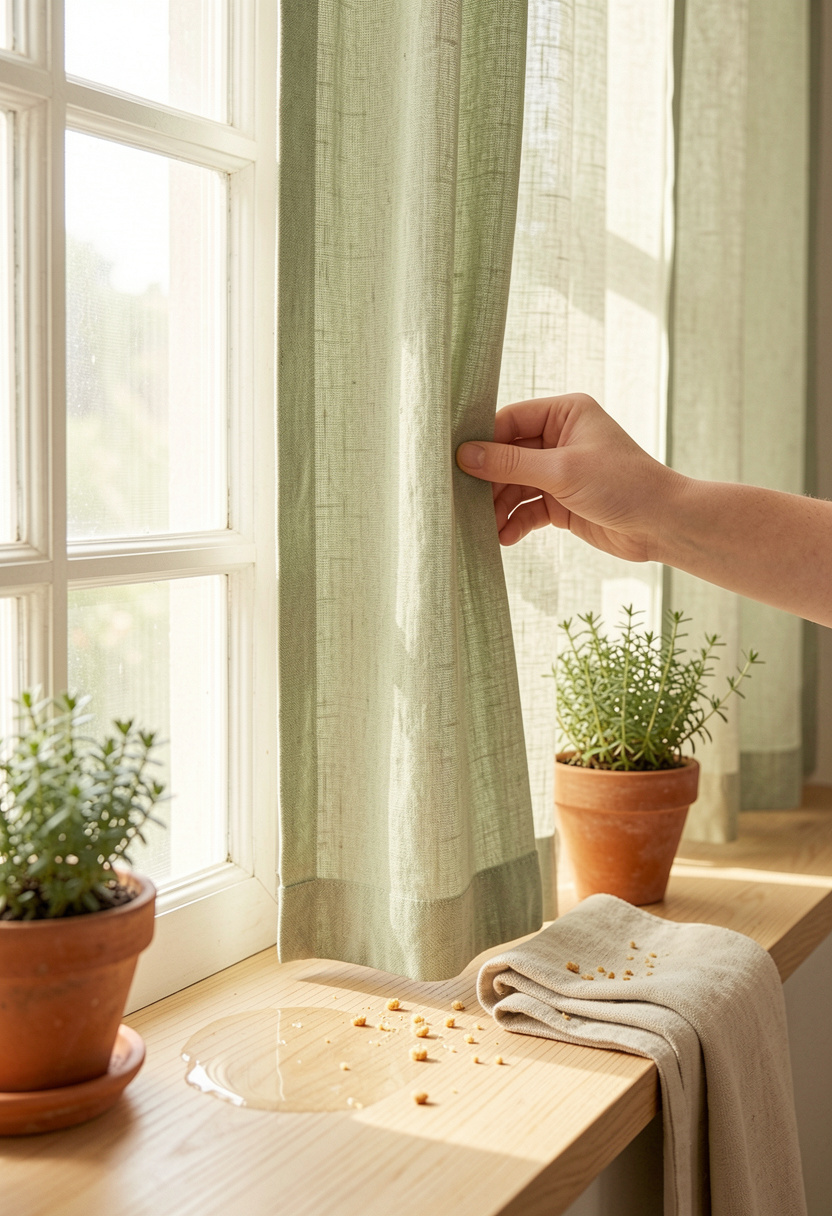
The trick is soft filters that diffuse light without closing it off. I favor half-height cafe curtains in lightweight linen.
Use a linen cafe curtain or a sheer panel hung low on the frame, not the wall. I pair Sage linen cafe curtains 24×36 inch set around $25 to $45 with a simple tension curtain rod 18 to 36 inch approx $10 to $20.
Warm finishes matter. Pale oak or acacia absorbs glare, while linen adds texture without mass.
Mistake people make: full-length heavy drapes. They look dramatic but steal light and make the sink area feel smaller. Use half-length linen and keep the top of the window frame visible.
3. Add Height and Drama with Open Shelving
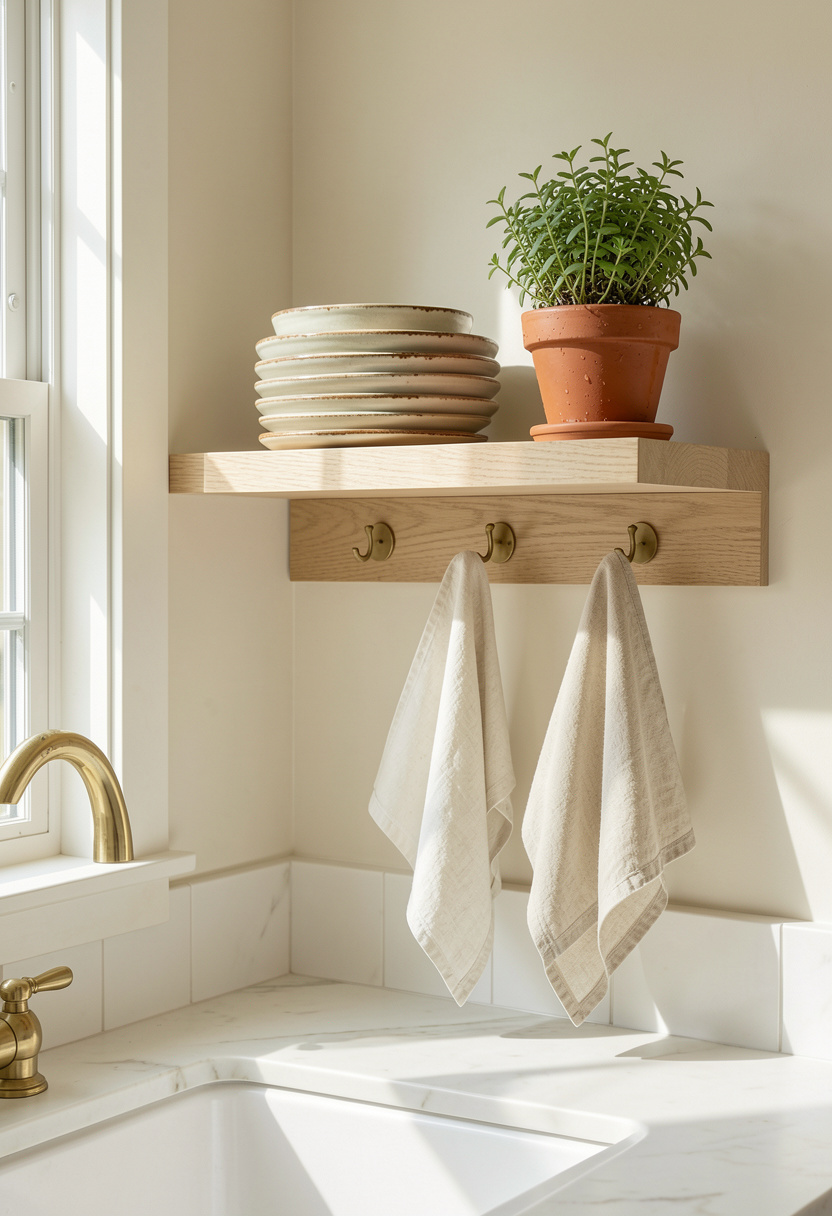
Open shelving keeps sight lines open and offers a frame for the window. Place the shelf 12 to 18 inches above the sill so you keep space for plants and clear sight through the glass.
I installed a single 24 inch oak floating shelf and styled it with a stack of stoneware plates and a small herb pot.
24 inch oak floating shelf around $35 to $70 and speckled stoneware dinner plate set of 4 approx $30 to $60 are my go-tos.
Visual principle: scale and balance. Keep one side heavier (three objects) and the other lighter (one or two) to create tension.
Mistake people make: overloading shelves up to the window frame. That creates clutter and blocks light. Leave 6 to 8 inches of clear space on the glazing plane.
4. Create Ambiance with Warm Diffused Lighting
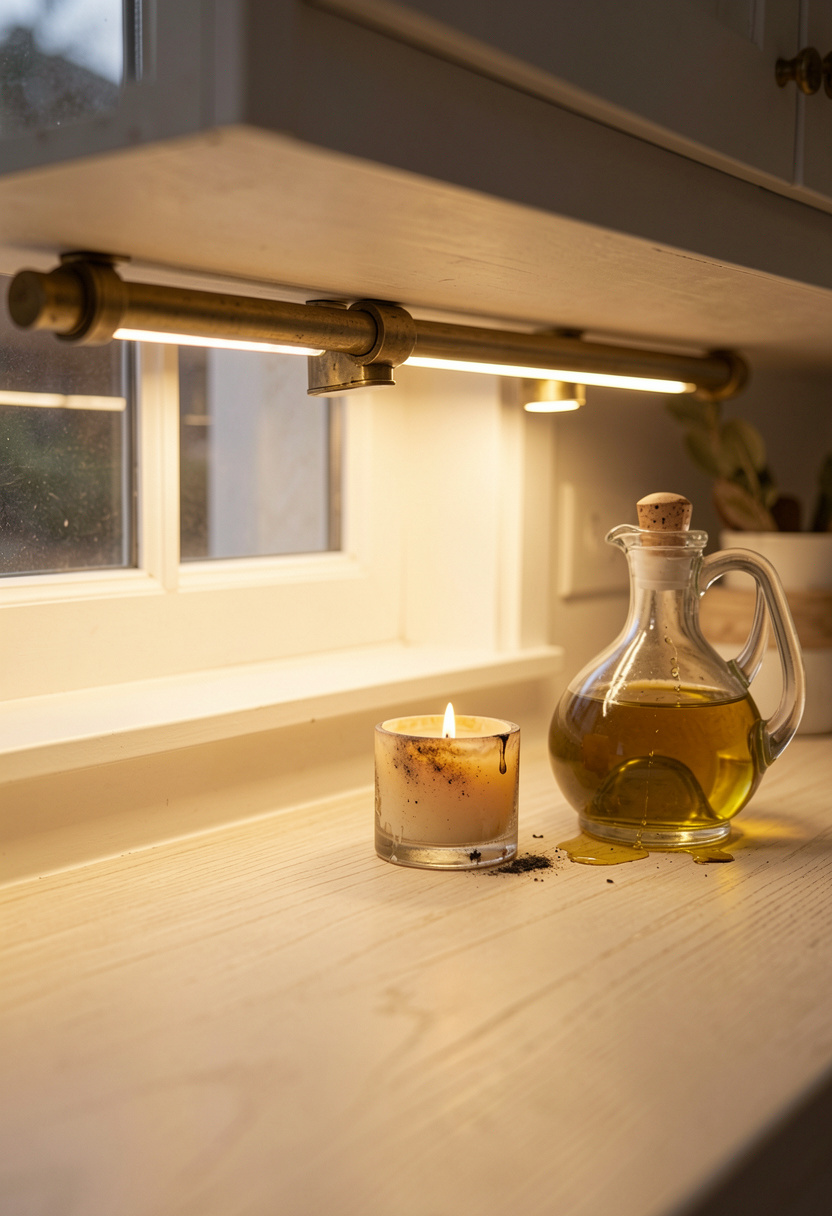
Natural light changes during the day. Add warm, dimmable sources to keep the window area inviting in the evening without competing with daylight.
I use slim under-cabinet LED strips and a single rattan pendant to the side. The LEDs add a soft wash and keep the window the star at daybreak.
Under cabinet LED strip warm white 12 inch around $15 to $30 and rattan pendant light 15 inch approx $45 to $120 are practical picks.
The visual principle is layering light. Keep bulbs warm (2700K to 3000K) and hide fixtures so the glow is what's visible.
Mistake people make: too many cool-toned LEDs. Cool light fights daylight and makes linoleum look harsh. Use warm LEDs and dimming where possible.
Common Styling Mistakes to Avoid
Mistake: Heavy full-length curtains at the sink
Why it doesn't work: They block the window and shrink the space.
Do this instead: Use half-height linen cafe curtains like Linen cafe curtain set 24×36 inch around $25 to $45.
Mistake: Matching every item to the faucet finish
Why it doesn't work: It reads flat and staged.
Do this instead: Mix finishes. Add aged brass vase 4 inch approx $12 to $30 for warmth.
Mistake: Overcrowding the sill with plants and jars
Why it doesn't work: Visual clutter reduces perceived light.
Do this instead: Keep one healthy herb pot like Terracotta herb pot 4 inch around $8 to $20.
What You'll Need for This Look
Foundation Pieces
Large acacia cutting board 24 inch around $30 to $60
Matte white ceramic canister set with acacia wood lids around $35 to $50
24 inch oak floating shelf around $35 to $70
Textiles & Soft Goods
Sage linen cafe curtains 24×36 inch set around $25 to $45
Sage linen dish towels set of 4 approx $18 to $30
Small woven kitchen rug 20×36 inch around $25 to $60
Lighting
Under cabinet LED strip warm white 12 inch around $15 to $30
Rattan pendant light 15 inch approx $45 to $120
Finishing Touches
Terracotta herb pot 4 inch around $8 to $20
Speckled stoneware dinner plate set of 4 approx $30 to $60
Aged brass small vase 4 inch approx $12 to $30
Budget Swaps
Thrifted cutting board (local) or acacia cutting board 24 inch $30 to $60 (similar at thrift for less)
Secondhand glass cruet or glass olive oil cruet approx $10 to $25
Shopping Guide for This Look
Time It With Plant Sales: Buy herb pots in spring when nurseries discount starter herbs and pair with terracotta herb pot 4 inch around $8 to $20.
Mix Thrift and New: Score a thrifted cutting board or vintage plate and fill gaps with speckled stoneware dinner plate set of 4 approx $30 to $60.
Follow the 2025 Texture Trend: Add woven and linen pieces like sage linen dish towels set of 4 approx $18 to $30.
Splurge vs Save: Splurge on one tactile wooden board like Large acacia cutting board 24 inch $30 to $60 and save on utensils with matte utensil holder ceramic $12 to $25.
Seasonal Swap: Swap sheer panels for decorative cafe curtains in fall to keep privacy without blocking light; try linen cafe curtain set 24×36 inch around $25 to $45.
Conclusion
Start with one small change: clear the sill and add a single large cutting board or a linen cafe curtain. That tiny move makes the window feel intentional and keeps natural light the focal point.
Natural light also saves energy. The U.S. Department of Energy notes daylighting can reduce lighting energy use by about 20 percent to 60 percent in many spaces, which is worth remembering when you choose fixtures.
Which window swap will you try first?