A small kitchen can feel full of life with the right plants. You do not need a lot of space. A sunny windowsill or a spare corner will do. These ideas are simple to start. They add color and clean the air. Many are easy to care for. You can grow your own herbs for cooking. Let us look at some great options for your tiny kitchen.
1. Herbs on Your Windowsill
Growing herbs on your windowsill is practical. You get fresh flavors for your meals. Basil, parsley, and chives grow well indoors. They need a sunny spot. Water them when the soil feels dry. Snip what you need for cooking. For a budget-friendly start, use empty yogurt cups as small pots. Just poke holes in the bottom for drainage. This is a simple way to begin.
2. Succulents for Sunny Spots
Succulents thrive in bright light. They are perfect for a warm windowsill. These plants store water in their leaves. This means you can forget to water them sometimes. Echeveria and jade plants are good choices. They ask for very little care. Create a mini garden by grouping a few small succulents in one wide, shallow pot. This makes a big visual impact without using much space.
3. Trailing Vines for High Shelves
Use your vertical space with trailing plants. A high shelf is a great place for a vine. English ivy or a String of Pearls will spill over the edge. This adds a soft, green touch to your kitchen. They do not need direct sun. Let them drape down for a beautiful effect. You can make more plants for free. Simply cut a piece of the vine and place it in water until roots grow.
4. Petite Pothos for Low Light
If your kitchen does not get much sun, try a pothos. This plant is very tough. It can handle lower light conditions. The leaves are heart-shaped and often variegated. It helps clean the air. It is one of the easiest plants to keep alive. You can grow new plants easily. Cut a stem below a leaf node and put it in a jar of water. It will grow roots in a few weeks.
5. Compact Citrus Trees
A small citrus tree brings a sunny feeling inside. Dwarf varieties of lemon or lime trees can grow in pots. They need a very bright spot. You might even get fruit. The white flowers smell wonderful. Enjoy the scent of citrus blossoms. Save money by buying a younger, smaller tree. It will grow to fit your space over time. Water it when the top inch of soil is dry.
6. Aloe Vera for Burns & Beauty
Keep an aloe plant near your cooking area. Its gel soothes minor burns and cuts. Just break off a leaf tip and apply the gel. The plant itself is sculptural and modern. It likes bright, indirect light. The gel inside is a natural healer. This plant is a practical first-aid kit. You can separate baby plants from the main one and pot them individually to share with friends.
7. Air Plants for Zero-Space
Air plants do not need any soil. You can place them almost anywhere. Tuck them into a seashell or hang them in a glass orb. They take up no counter space. They get their nutrients from the air. To water them, just mist them with water once a week. Or, soak them in a bowl of water for about 20 minutes. Then let them dry completely.
8. Fiddle Leaf Fig Focal Point
A fiddle leaf fig makes a big style statement. Its large, dramatic leaves draw the eye. It works well in a corner to fill vertical space. It prefers bright, filtered light. Wipe the leaves with a damp cloth to keep them shiny. This helps the plant breathe and absorb more light. Let the soil dry out a bit between waterings to keep the roots healthy.
9. Snake Plant for Air Purification
The snake plant is a champion air cleaner. It works hard to remove toxins from your kitchen air. It is almost impossible to kill. It tolerates low light and irregular watering. It even produces oxygen at night. This makes it a good plant for a bedroom, too. You can find these plants at most garden centers for a low price. They are a great value for their looks and function.
10. Spider Plant for Easy Propagation
Spider plants are fun and easy. They grow long stems with little baby plants on the ends. These babies can be potted to make new plants. They are safe for pets. They grow quickly and are very forgiving. Share your plant with neighbors. Simply snip off one of the baby plantlets, place it in a small pot with soil, and water it. You will have a new plant in no time.
11. A Mini Kokedama Moss Ball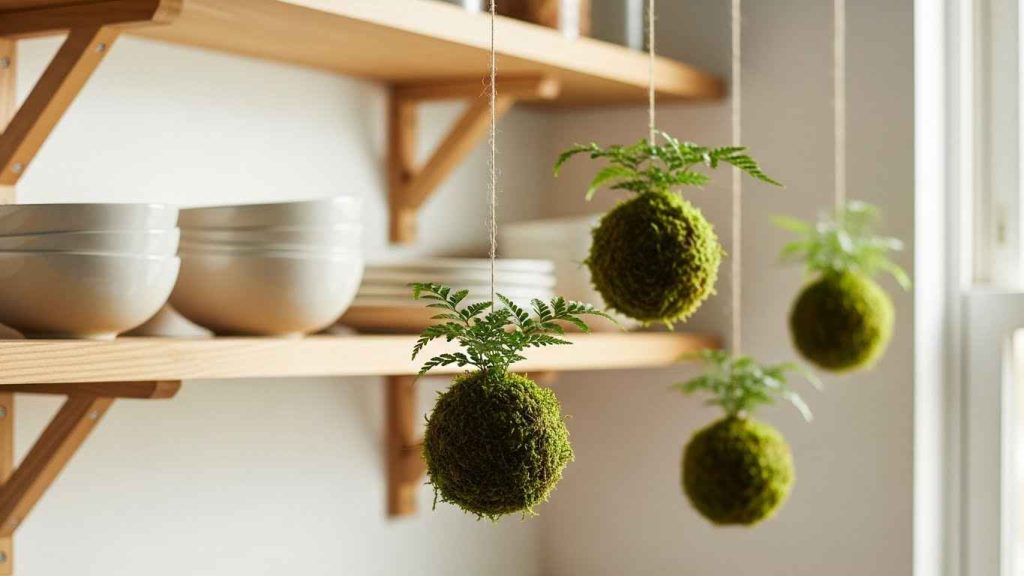
A kokedama is a plant grown in a ball of moss. It is a beautiful, soil-free way to display a small plant. You can hang it from the ceiling or place it in a bowl. It adds a touch of Japanese style. It is a living sculpture. Make your own with sphagnum moss, peat soil, and a small plant like a fern. Wrap it all with string. Soak the ball in water when it feels light.
12. Aromatic Lavender by the Sink
A small lavender plant adds a lovely scent to your kitchen. Place it near the sink where you will brush against it. The smell is calming. It also looks pretty with its purple flowers. The fragrance can help you relax. Dry the flower buds and use them in a small sachet for your drawers. This plant likes lots of sun and well-draining soil. Do not overwater it.
13. Culinary Mint in a Pot
Mint is wonderful for teas, desserts, and savory dishes. It grows very easily, sometimes too easily. It is best to keep it in its own pot. This stops it from taking over other plants. You can grow it from a cutting from the grocery store. Just put a stem in water until roots appear, then plant it. It prefers moist soil and some sun.
14. Colorful African Violets
African violets bring continuous color with their sweet flowers. They bloom often, even indoors. They like warm spots with indirect light. Water them from the bottom to avoid spots on the leaves. They flower for months at a time. You can start new plants from a single leaf. Place a healthy leaf with its stem in water or soil. A new tiny plant will grow from the base.
15. Lucky Bamboo for a Corner
Lucky bamboo is not a true bamboo, but it is very easy to grow. It is often grown in water with pebbles for support. It adds a vertical element to a bare corner. It is said to bring good energy. It needs only water and indirect light. Change the water every couple of weeks to keep it clean. You can often find these plants at grocery stores for a small amount.
16. A Living Wall of Herbs
Turn a blank wall into a garden. A vertical planter holds many herbs in one footprint. You can buy a system or make your own. Grow a full herb garden without using counter space. A DIY version can be made with a wooden pallet and landscape fabric. Attach it securely to the wall. This is perfect for a cook who wants fresh flavors within easy reach.
17. A Tiny Terrarium Under Glass
A terrarium is a miniature world under glass. It is low maintenance because it creates its own water cycle. You can use a jar, a cloche, or any clear container. It is a self-contained ecosystem. Make one with layers of small stones, charcoal, and soil. Add small, slow-growing plants like moss or baby’s tears. It needs only indirect light and occasional misting if the glass looks dry.
18. Flowering Orchids for Elegance
An orchid adds a touch of elegance. Moth orchids are common and can bloom for months. They do well in indoor light. They are more resilient than they look. Water them with an ice cube once a week. The slow melt gives the roots just the right amount of moisture. Place them away from direct sun and drafts to keep the flowers lasting longer.
19. Peperomia for Patterned Leaves
Peperomia plants are loved for their beautiful leaves. The patterns can be striped, marbled, or wrinkled. They stay small and are easy to care for. They like medium light and to dry out between waterings. Their foliage is the main attraction. Group a few different types together for a display of textures. They are slow growers, so they will not outgrow their spot quickly.
20. A Hanging Macrame Planter
A hanging planter frees up all your surface space. A macrame hanger adds a bohemian touch. It is perfect for a trailing plant like a fern or ivy. It turns empty air into a garden spot. You can learn to make a simple macrame hanger with just a few knots. Use cotton cord and a small pot. This is a fun weekend project that adds personality.
21. A Countertop Cactus Garden
A collection of small cacti is perfect for a bright spot. They need very little water and care. Their shapes are sculptural and modern. They add graphic interest to your kitchen. Create your own garden by planting several tiny cacti in one wide, shallow container. Use a sandy, fast-draining soil mix. Wear gloves when you handle them to protect your hands from the spines.
Start with just one plant that fits your light and routine. A small pot of herbs or a tough pothos is a great beginning. See how it makes your kitchen feel. Then, you can always add another. Even the smallest green thing can make your daily space feel more alive and personal.

