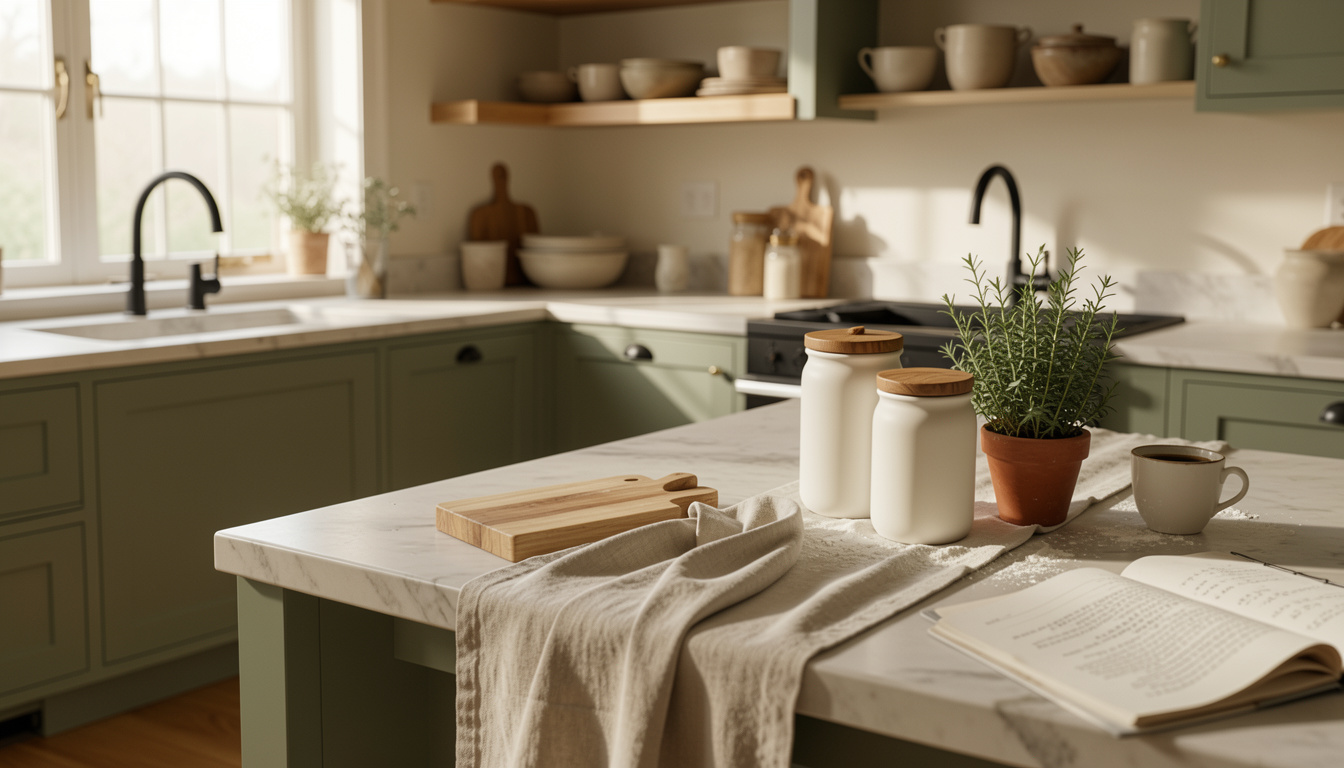
My kitchen looked wrong for months. The cabinets were a calm sage; the flooring read orange in certain lights.
How to match kitchen flooring with cabinets was the only question that fixed it. I spent about $350 swapping textiles, samples, and hardware until the room felt like one place.
You’ll learn which flooring undertones work with common cabinet colors, what to test in natural light, and how to get a cohesive look for roughly $200 to $700 depending on swaps.
Modern farmhouse to coastal minimal works best with these moves. I’ve noticed wood-look vinyl plank and warm neutrals dominating remodels lately, so this approach fits both DIY refreshes and full renos.
1. Start with the Foundation: Counter and Cabinet Reset
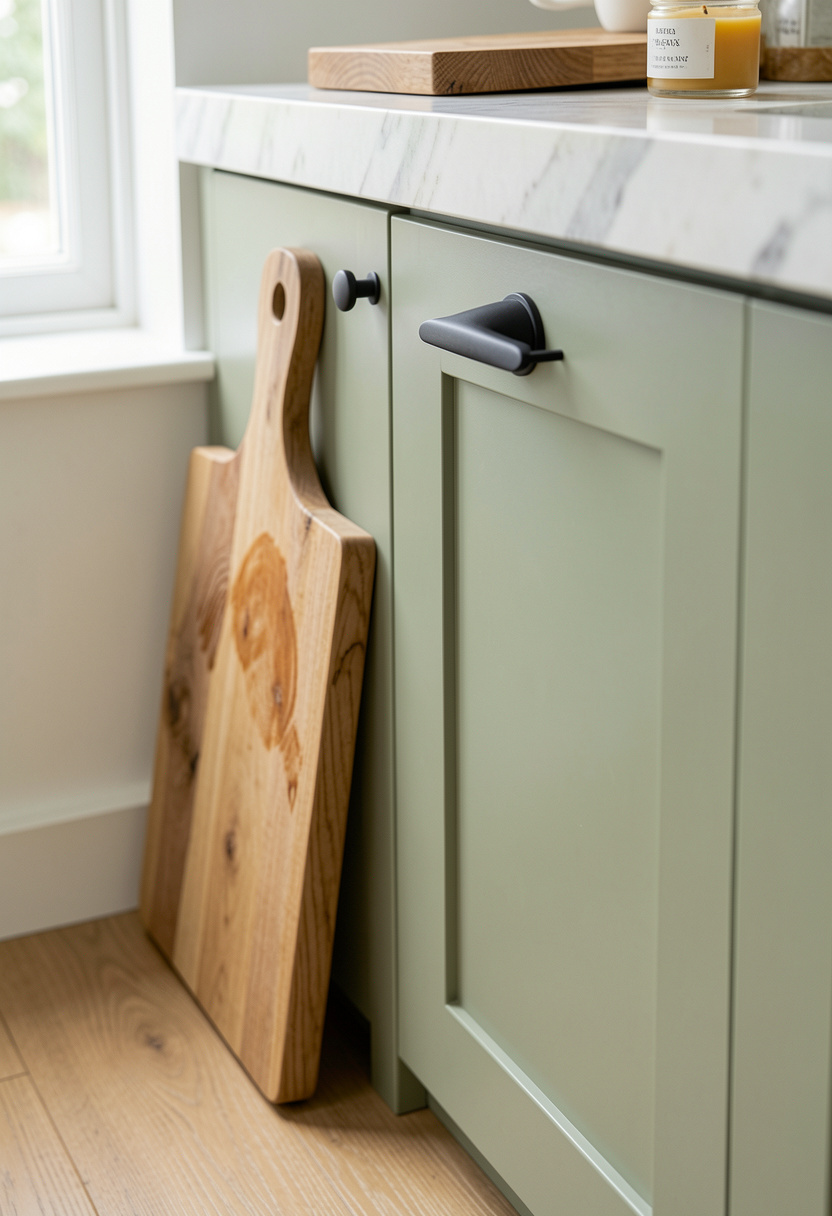
Begin by letting cabinets and counters set the rules. Cabinets establish undertone (warm or cool); counters confirm contrast.
If your cabinets are warm (honey, sage, cream), test flooring samples with warm undertones. I ordered an acacia floating shelf 24 inch and a luxury vinyl plank flooring sample oak to compare against my honed marble counter in morning and evening light.
Visual principle: keep a 3-tone palette (cabinet, floor, counter) with one dominant and two supporting tones. Aim for the floor to sit visually between cabinet and counter in lightness so nothing fights.
Exact styling: place three 6×6 samples on the counter, hold under both morning and warm evening light. Look for undertone match, not exact grain. Mistake: matching grain instead of undertone. That’s why my first floor read orange at dusk.
2. Layer Warmth with Wood and Linen Textures
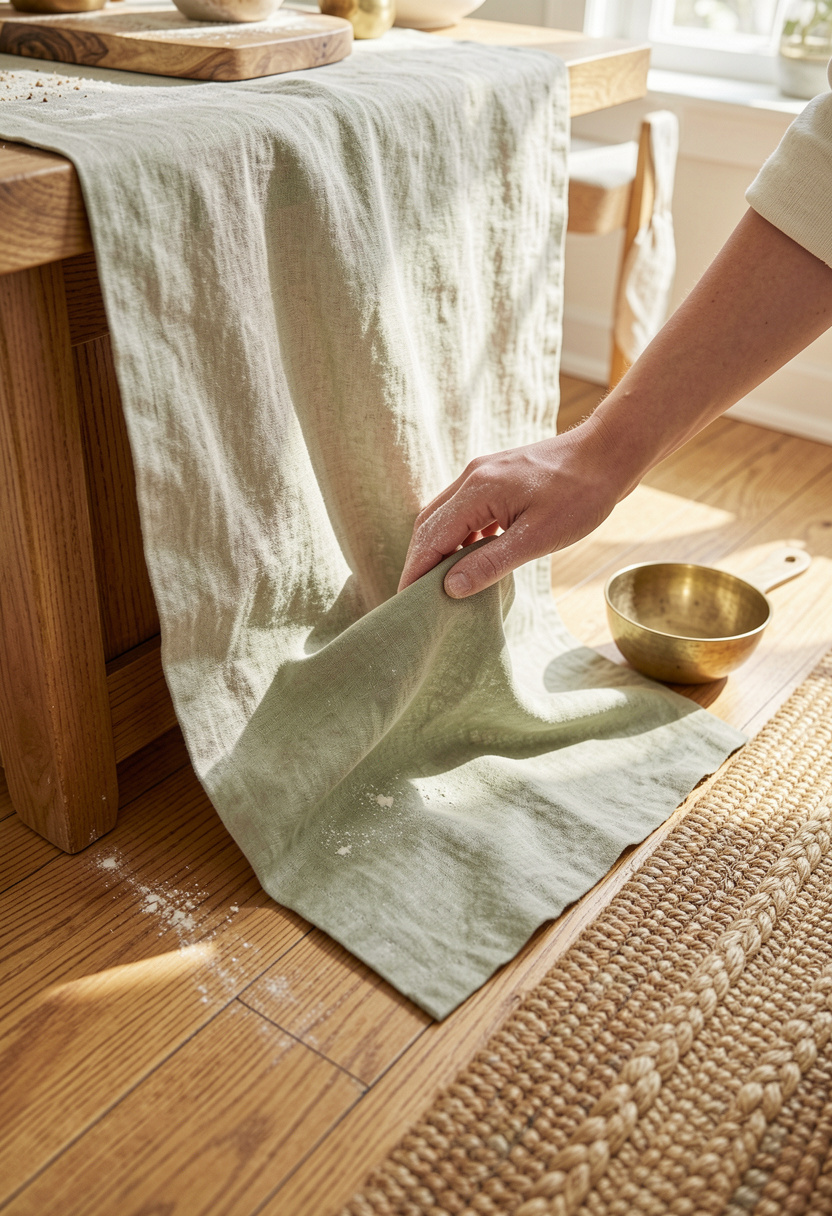
Once the foundation reads right, add wood and textile layers to bridge floor and cabinet tones. Rugs, runners, and a large cutting board tie materials together.
I use an acacia large cutting board and a sage linen runner 2×6 to pull warm oak toward cooler green cabinets.
Visual principle: texture softens contrast. A neutral woven runner occupies about one third of the visible floor near the sink to reduce glare and add depth.
Styling specifics: place the runner so 2/3 sits in front of appliances and 1/3 under the cabinet toe-kick. Layer a jute mat under the rug in heavy-traffic spots for durability.
Mistake most people make: picking textiles by pattern, not by undertone. The wrong beige towel will read pink against sage cabinets. Swap for linen with an explicit sage or warm cream tag.
3. Add Height and Drama with Open Shelving
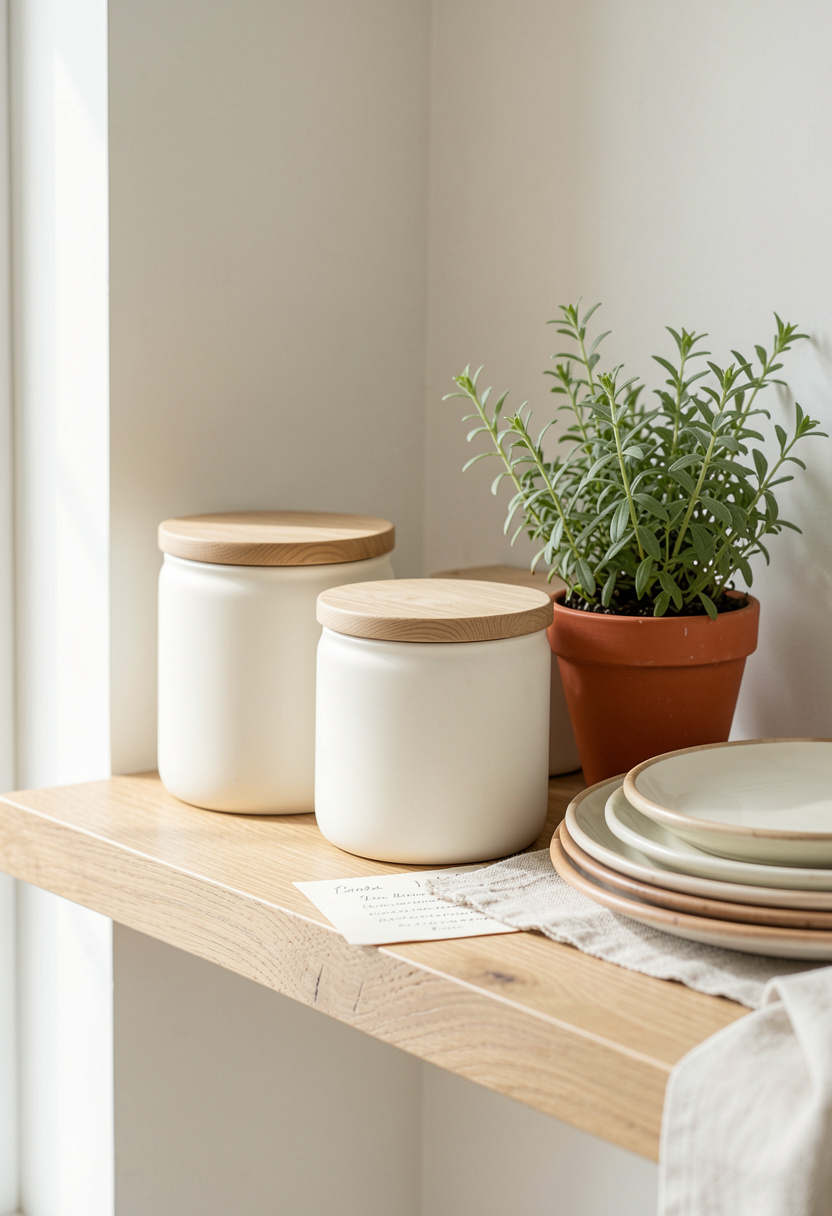
Open shelving changes how your floor and cabinets read by adding vertical texture. It’s where color echoes land.
Install 24-inch shelves at about 18 inches above the counter for balanced sightlines. I styled mine with a matte white ceramic canister set with acacia lids and a small terracotta herb pot 4 inch so the shelf palette mirrors the counter and floor.
Visual principle: repetition. Use two or three repeated finishes (ceramic, acacia, brass) so the eye ties floor and cabinet together.
Exact styling: group items in odd numbers, leave one negative space for breathing room. Mistake: overfilling shelves. They become visual noise and disconnect the floor-cabinet dialogue.
4. Create Ambiance with Warm Diffused Lighting
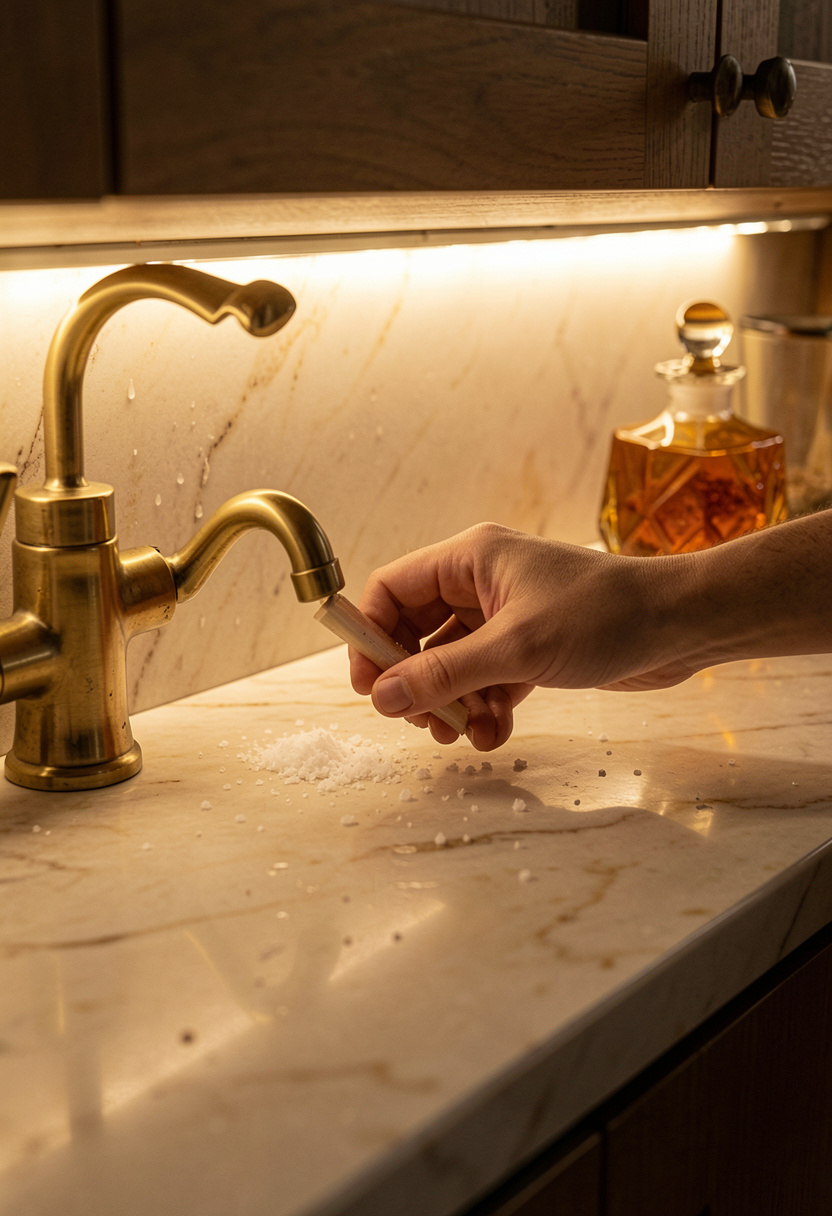
Lighting decides whether flooring matches or clashes. Warm LEDs soften blue-gray floors with warm cabinets; cool LEDs make warm floors read too yellow.
I installed an under cabinet LED light strip warm white and swapped pendants to a rattan pendant light 15 inch to introduce soft, warm light that flatters both cabinet paint and wood-look planks.
Design principle: maintain consistent color temperature across overhead and task lighting. Keep pendant bottoms 30 to 34 inches above an island for proportion.
Common error: mixing cool under-cabinet strips with warm bulbs. That creates a two-tone room. Match kelvin values or use warm white for cohesion.
Common Styling Mistakes to Avoid
Mistake: Picking flooring by photo alone
Why it doesn't work: Photos hide undertones and light direction.
Do this instead: Order a flooring sample swatch kit oak collection and view at different times of day.
Mistake: Matching cabinet color to floor grain pattern
Why it doesn't work: Grain is texture, not undertone; it can clash in real light.
Do this instead: Match undertones and balance texture with a large acacia fruit bowl to bridge both.
Mistake: Using too many metallic finishes
Why it doesn't work: Competes with cabinet and floor tones, makes the room feel disjointed.
Do this instead: Pick one metal (matte black or aged brass) and add a matte black cabinet pull 3 inch for coherence.
What You'll Need for This Look
Foundation Pieces
Luxury vinyl plank flooring sample oak around $0 to $15 per sample
Honed marble trivet 8 inch around $20 to $45
Acacia large cutting board 18×12 around $25 to $60
Textiles & Soft Goods
Sage linen runner 2×6 around $30 to $70 (similar at Target for less)
Linen tea towels neutral set around $18 to $35
Washable kitchen rug 2×3 around $25 to $50
Lighting
Under cabinet LED light strip warm white around $15 to $40
Rattan pendant light 15 inch around $60 to $150
Finishing Touches
Matte white ceramic canister set with acacia lids around $35 to $60
Terracotta herb pot 4 inch around $6 to $18
Brass pinch bowl set around $12 to $30
Budget Swaps
Vintage ceramic canister set thrift first; Amazon backup around $25 to $70
Magnetic knife strip walnut affordable alternative to a block, around $18 to $40
Shopping Guide for This Look
Test in daylight: Order a luxury vinyl plank flooring sample oak and view it near your cabinet in morning and evening light.
Thrift hack: Hunt for a vintage ceramic canister set at thrift stores; match lids with new acacia accents if needed.
2025 trend pick: Wood-look flooring remains strong; try a wood look tile sample oak if you want durability and a warm color story.
Splurge vs save: Splurge on a high-quality acacia large cutting board 18×12 that anchors visuals; save on textiles with a linen tea towels neutral set.
Seasonal timing: Buy pendant lighting off-season (late fall) for 20 to 40 percent savings; I scored my rattan pendant that way.
Conclusion
Start with one visible swap: samples on the counter, or a new runner. That small change will reveal whether your floor and cabinets are friends or frenemies.
One last tip: keep a small swatch kit (floor, cabinet paint chip, countertop sample) in a drawer so future purchases coordinate.
Which cabinet color are you working with right now?