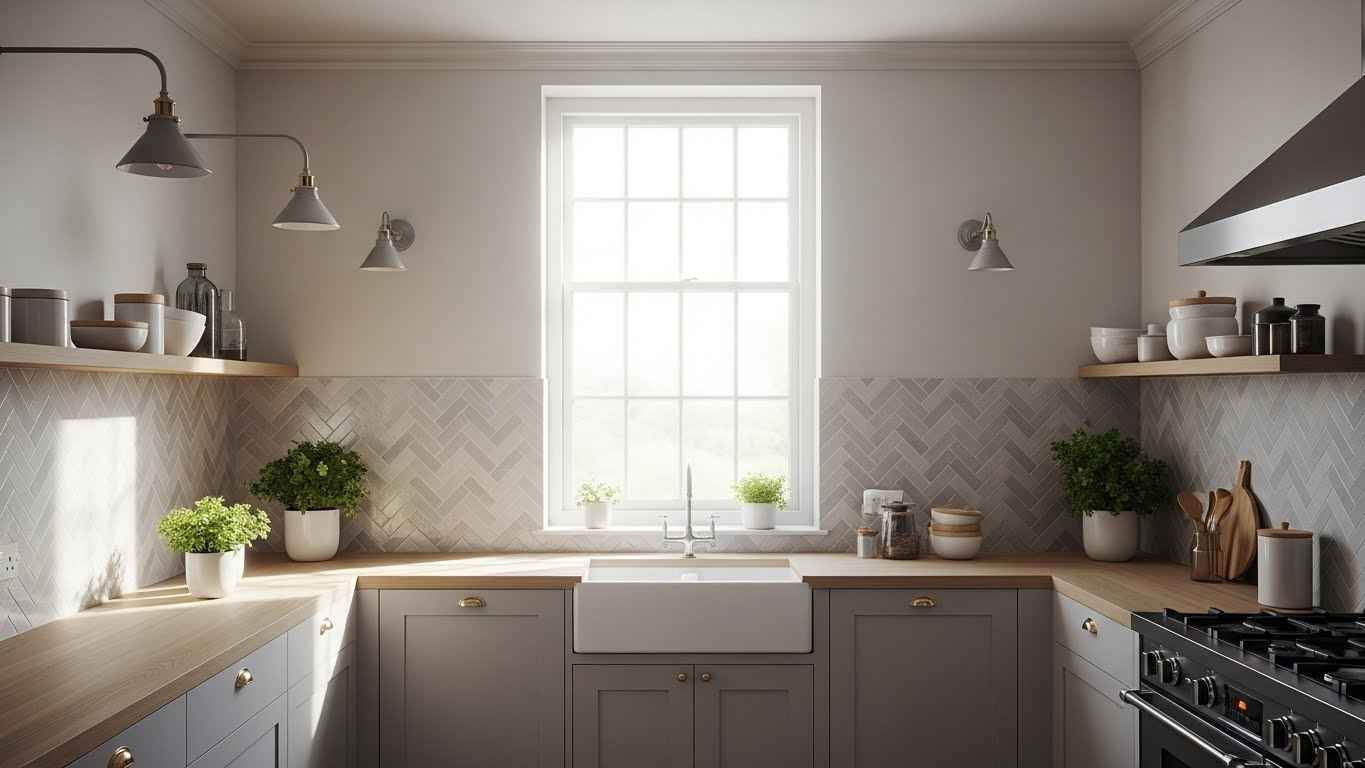
A herringbone backsplash brings classic style to any kitchen. Its zigzag pattern adds movement and texture. This design works with many materials, from ceramic to marble. You can create a look that is modern or rustic. It is a simple way to make your space feel special. Here are twenty-five ideas to help you find the right style for your home.
1. Classic White Subway Herringbone
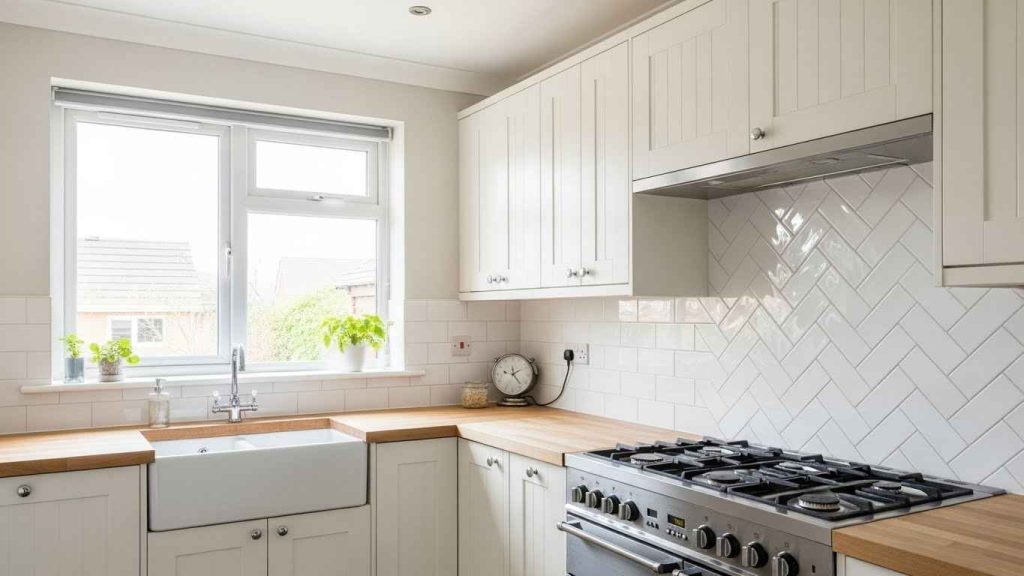
White subway tile in a herringbone layout is a timeless choice. It makes a small kitchen feel larger and brighter. The pattern adds interest without being too bold. This style pairs well with any cabinet color. For a budget-friendly update, use affordable ceramic tiles. You can install them yourself with a simple tile adhesive. It is a project that can be completed over a weekend.
2. Bold Black Marble Herringbone
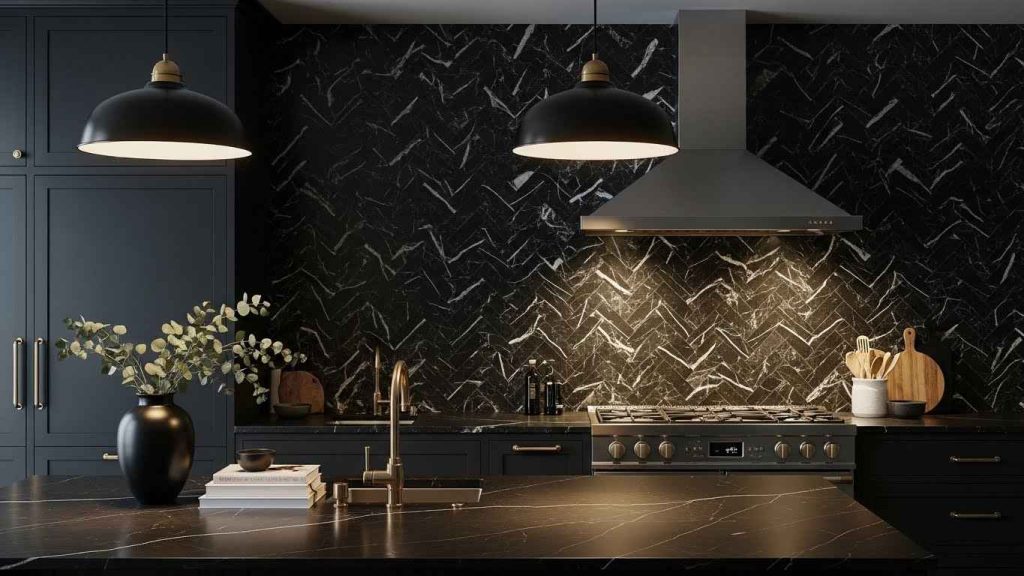
Black marble makes a powerful style statement. Its natural veining ensures no two backsplashes are the same. This look brings a sense of luxury and depth to a kitchen. To get the look for less, consider black porcelain tiles that mimic marble. They offer the same dramatic effect at a lower cost. Pair it with light countertops to keep the space from feeling too dark.
3. Warm Terracotta Herringbone Tile
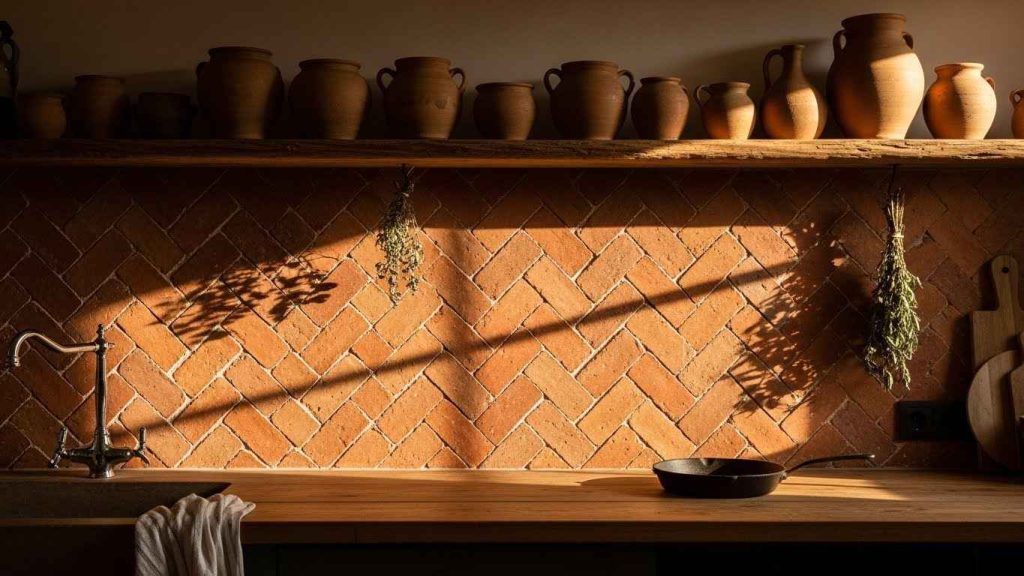
Terracotta tiles bring warmth and a rustic charm. Their rich, earthy color creates a cozy and inviting kitchen. The herringbone pattern gives this traditional material a fresh feel. For a DIY approach, source reclaimed terracotta tiles. They often have a beautiful, aged patina. Seal the tiles properly to protect them from moisture and stains. This makes them practical for a backsplash.
4. Sleek Gray Glass Herringbone
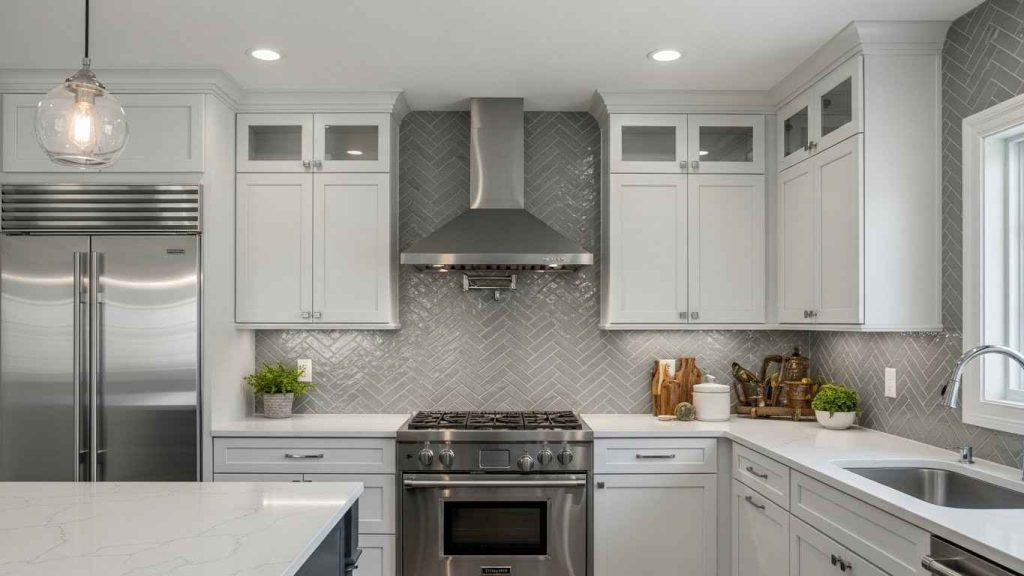
Gray glass tiles offer a sleek, modern appearance. They reflect light, helping to brighten the kitchen. This material is also very easy to clean and maintain. For a budget-friendly option, look for glass mosaic sheets. They come in a herringbone pattern, making installation much faster. The reflective quality of glass can make a small space feel more open and airy.
5. Textured Brick Herringbone Backsplash
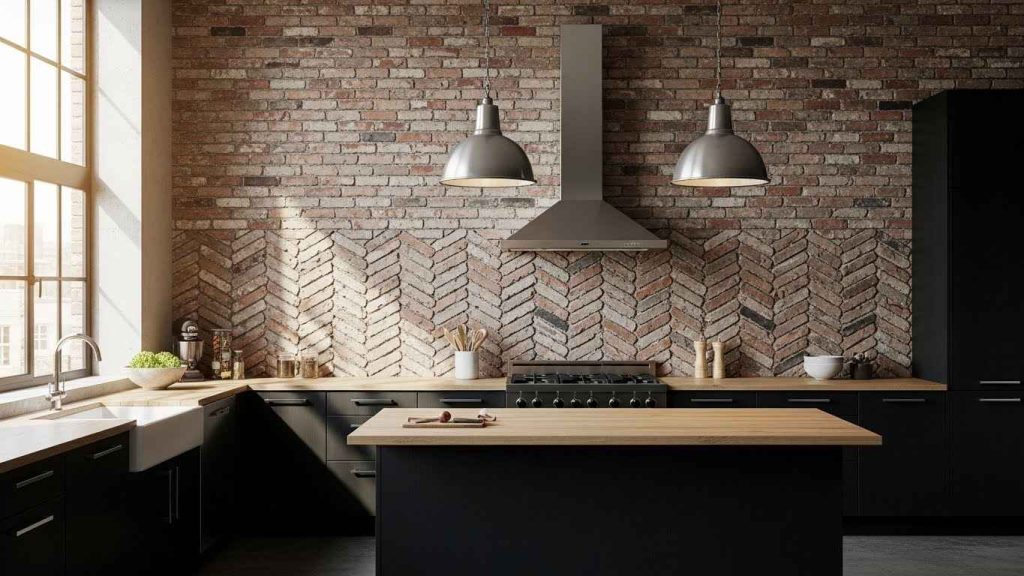
Thin brick tiles create an industrial, textured look. The herringbone pattern adds a dynamic twist to this classic material. It brings character and a sense of history to a space. You can achieve this style on a budget with brick veneers. They are lightweight and easy to install directly onto the wall. A clear sealant will protect the surface while keeping its raw look.
6. Coastal Blue Fish Scale Herringbone
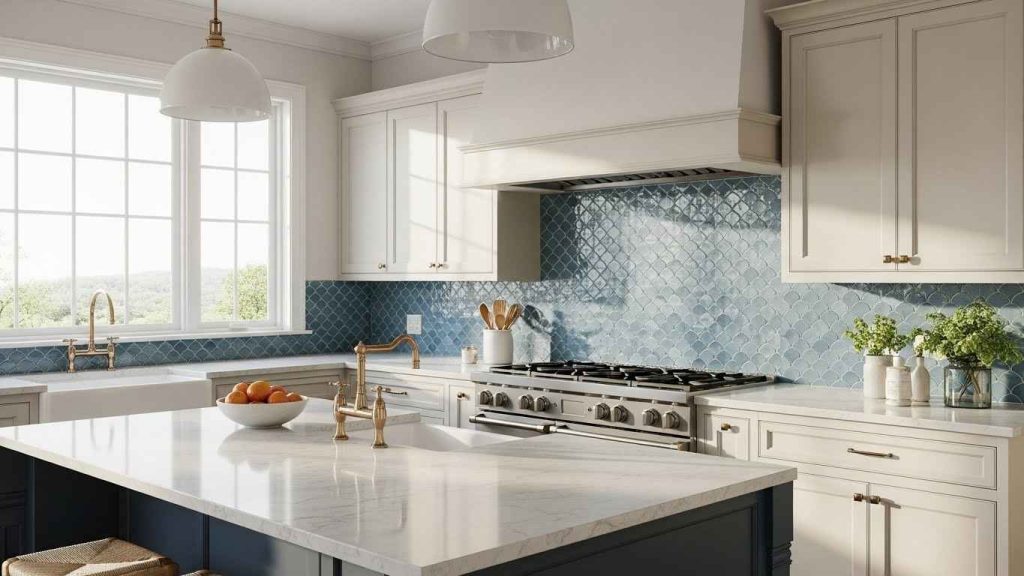
Combine fish scale shapes with a herringbone flow for a unique backsplash. The soft blue color evokes a calm, coastal feeling. This design is playful yet elegant. To save money, focus the pattern behind the stove as an accent. Use simpler tiles for the rest of the backsplash. This reduces cost and labor while still making a big visual impact.
7. Modern Metallic Herringbone Patterns
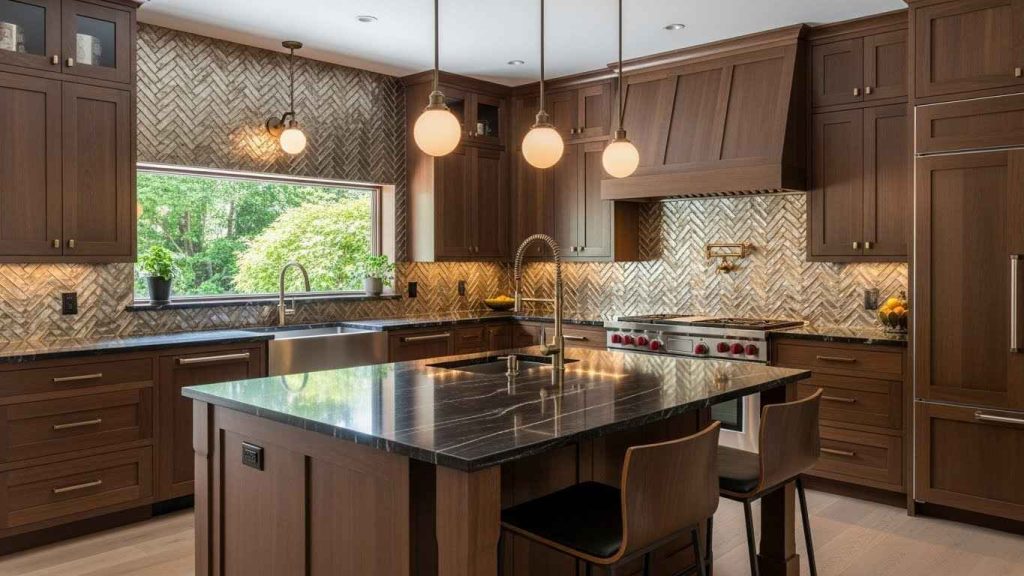
Metallic tiles add a touch of glamour and reflect light beautifully. Bronze, copper, or stainless steel finishes can warm up a modern kitchen. The herringbone pattern keeps the look from feeling too cold. For a budget-conscious update, use metallic-look peel-and-stick tiles. They are an easy DIY project that delivers high-impact style without a major renovation or cost.
8. Hand-Painted Ceramic Herringbone
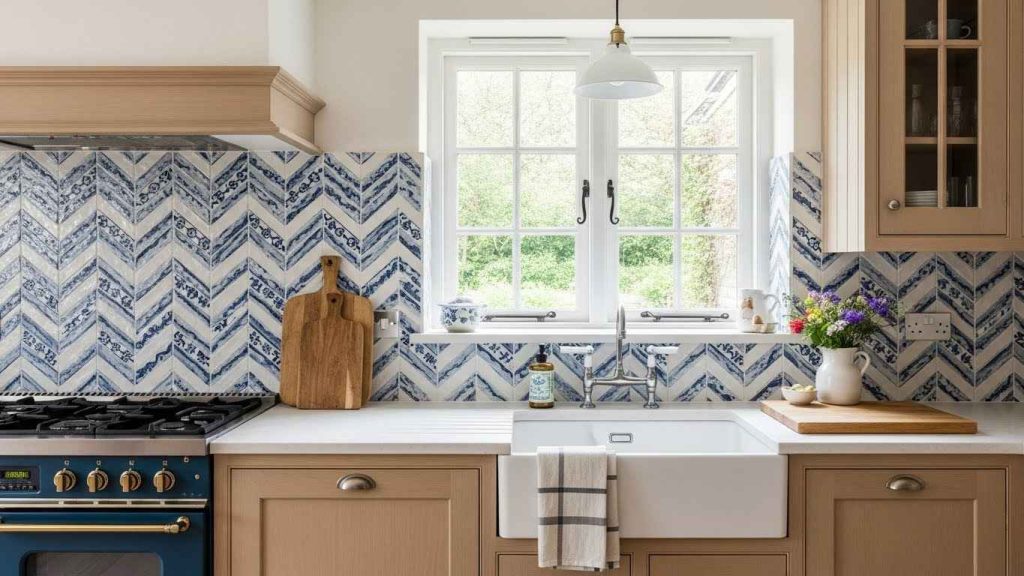
Hand-painted tiles bring artisanal character to your kitchen. No two tiles are exactly alike, creating a one-of-a-kind backsplash. This approach adds personality and a handmade feel. To incorporate this look affordably, use hand-painted tiles as a focal point behind the range. Fill in the surrounding area with plain, inexpensive subway tiles. This gives you the custom look for a fraction of the price.
9. Rustic Wood-Look Herringbone
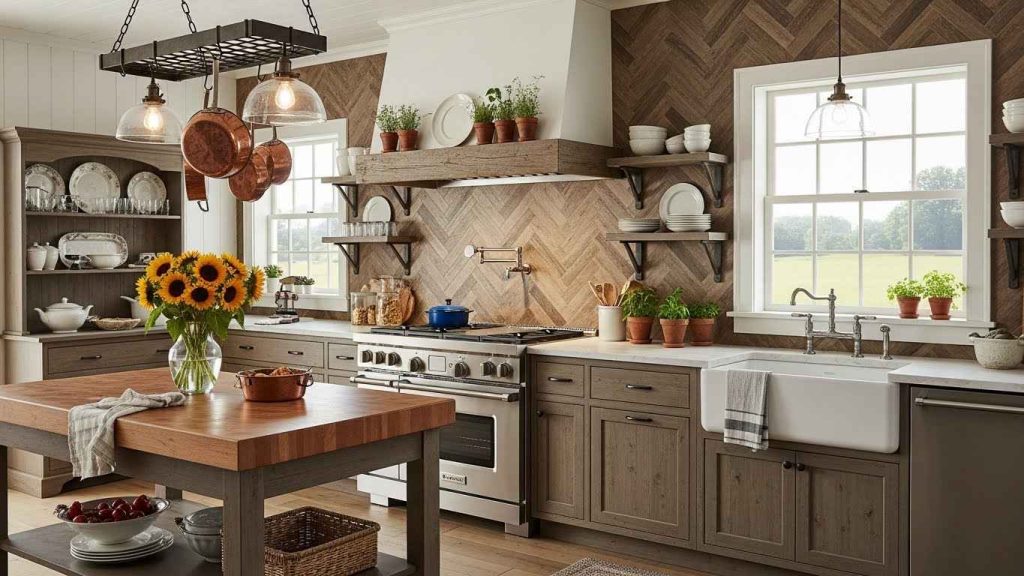
Wood-look porcelain tiles give you the warmth of wood with the durability of tile. They are perfect for a backsplash because they are water-resistant and easy to clean. The herringbone pattern enhances the rustic appeal. This is a practical choice for a busy kitchen. It provides the cozy feel of wood without the maintenance worries.
10. Emerald Green Zellige Herringbone
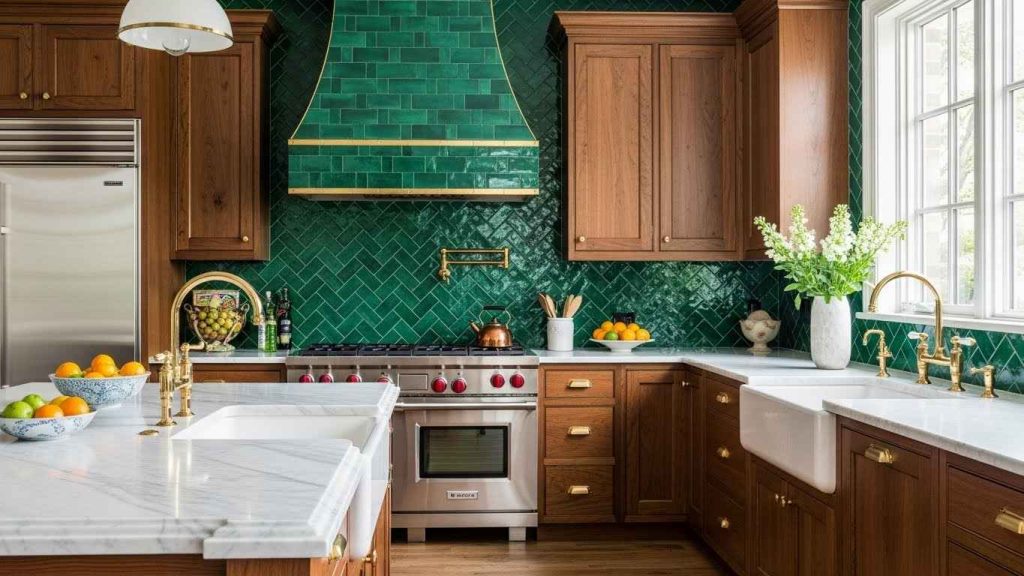
Zellige tiles are known for their variations in color and texture. An emerald green backsplash makes a bold and luxurious statement. The handmade quality of each tile adds depth and interest. For a similar effect, look for glazed ceramic tiles with slight color variations. This captures the artisanal spirit of zellige without the high cost. It creates a dynamic, light-catching surface.
11. Mosaic Penny Tile Herringbone
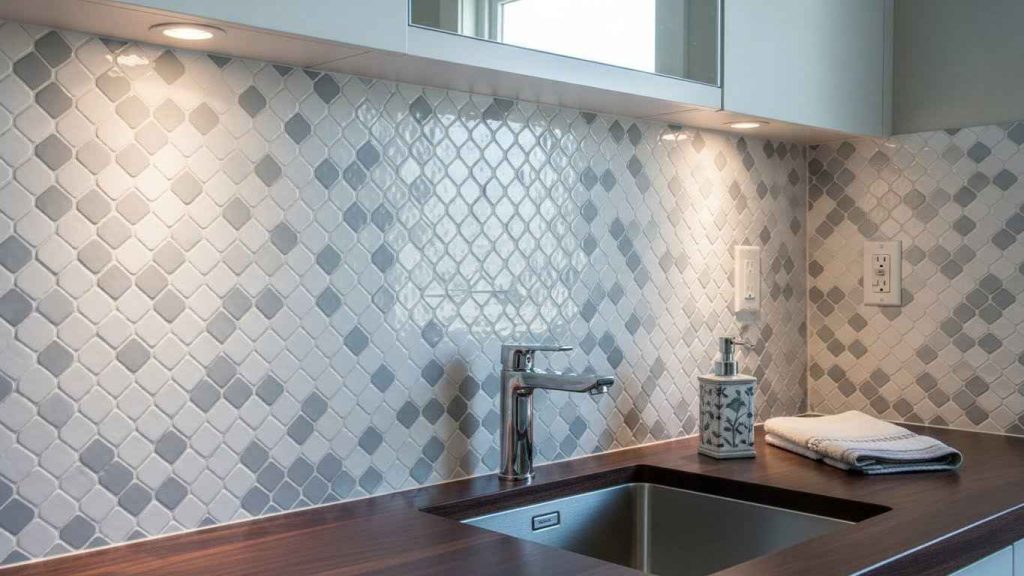
Penny tiles offer a classic, textured look. Arranging them in a herringbone pattern creates movement and visual interest. These small tiles are often sold on mesh sheets, which makes installation simpler. This is a great DIY-friendly project. The sheets are easy to handle and cut. Choose a classic color like white or black for a look that will stay in style.
12. Industrial Concrete Herringbone
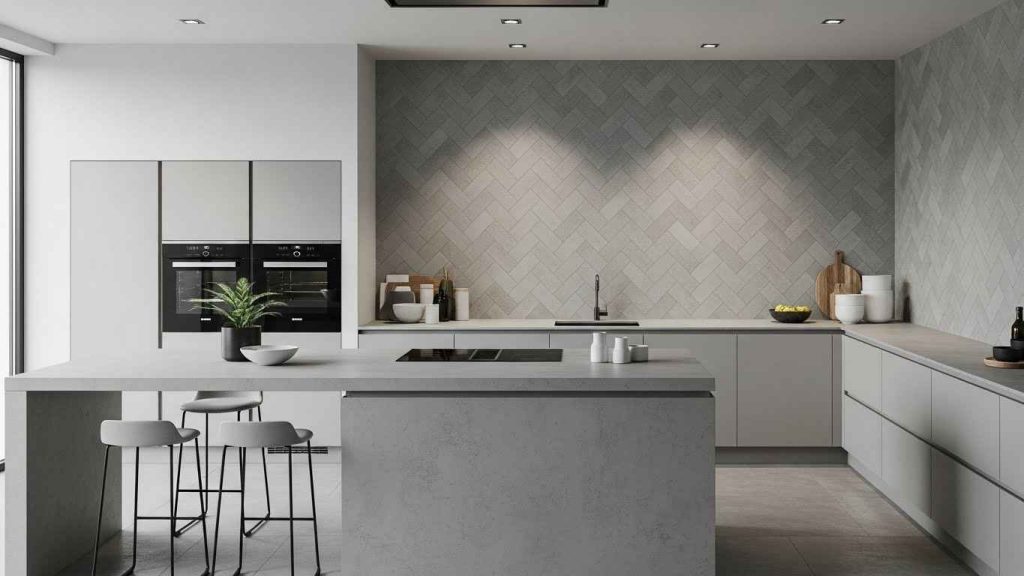
Concrete-look tiles bring an urban, modern edge to a kitchen. They have a cool, neutral tone that works with many color schemes. The herringbone pattern softens the industrial feel. You can find affordable concrete-look porcelain tiles that are easy to maintain. They are a practical choice for creating a sleek, contemporary look without the cost and weight of real concrete.
13. Calming Sage Green Herringbone
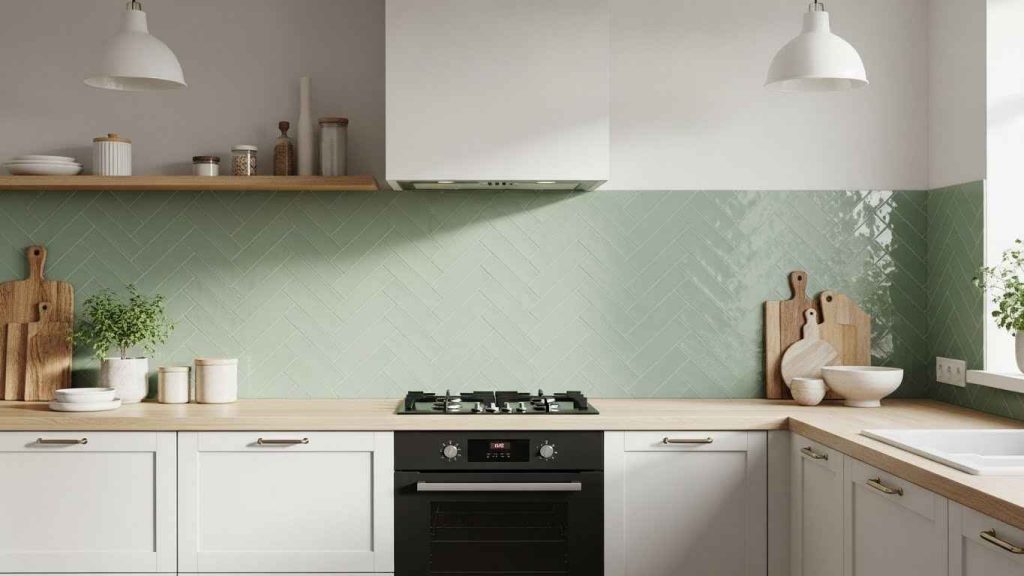
Sage green is a calming, nature-inspired color. It works beautifully in a kitchen, creating a relaxed and welcoming environment. A matte finish on the tiles enhances the soft feel. This color pairs well with natural wood and white accents. For a simple update, paint your existing cabinets a crisp white to make the green backsplash stand out.
14. Luxurious Calacatta Gold Herringbone
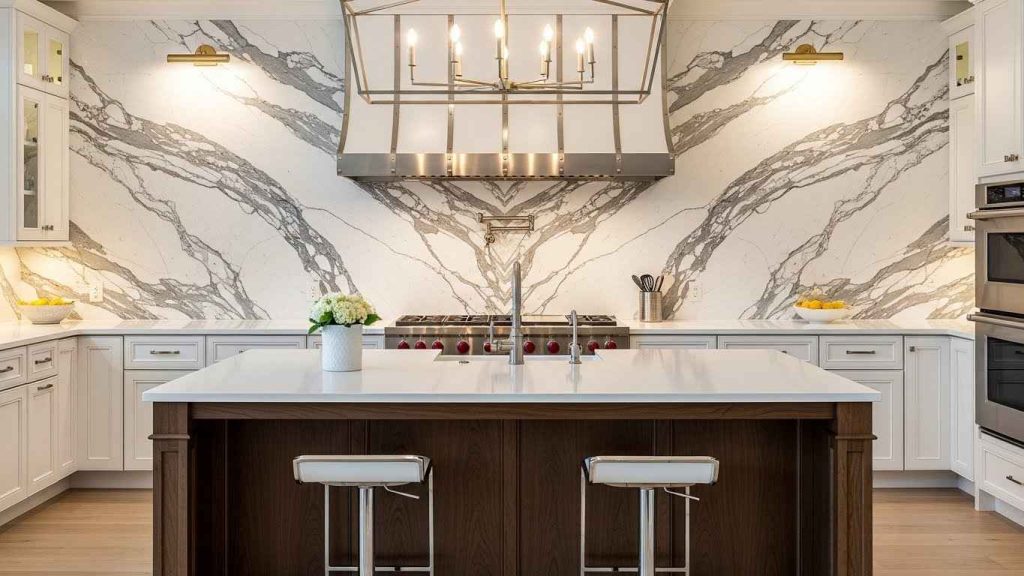
Calacatta gold marble is the epitome of luxury. Its dramatic veining makes a powerful style statement. Using it in a herringbone pattern adds even more visual interest. To achieve this look without the high cost, choose high-quality marble-look porcelain tiles. Modern printing technology can create a very realistic imitation. This gives you the luxurious aesthetic with better durability and a lower price.
15. Dynamic Diagonal Herringbone Layout
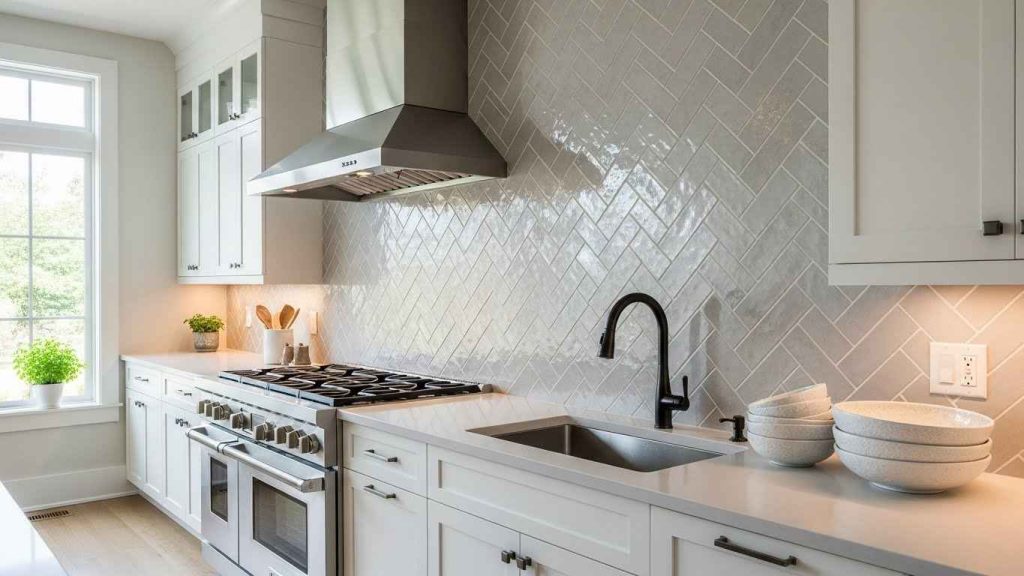
Installing a herringbone pattern on a diagonal adds extra dynamism. It draws the eye across the wall and can make a ceiling feel higher. This layout is a great way to make a simple tile color more exciting. While it requires more precise cutting, it is still a manageable DIY project for someone with patience. Use a laser level to keep your lines straight.
16. Mixed Material Herringbone Design
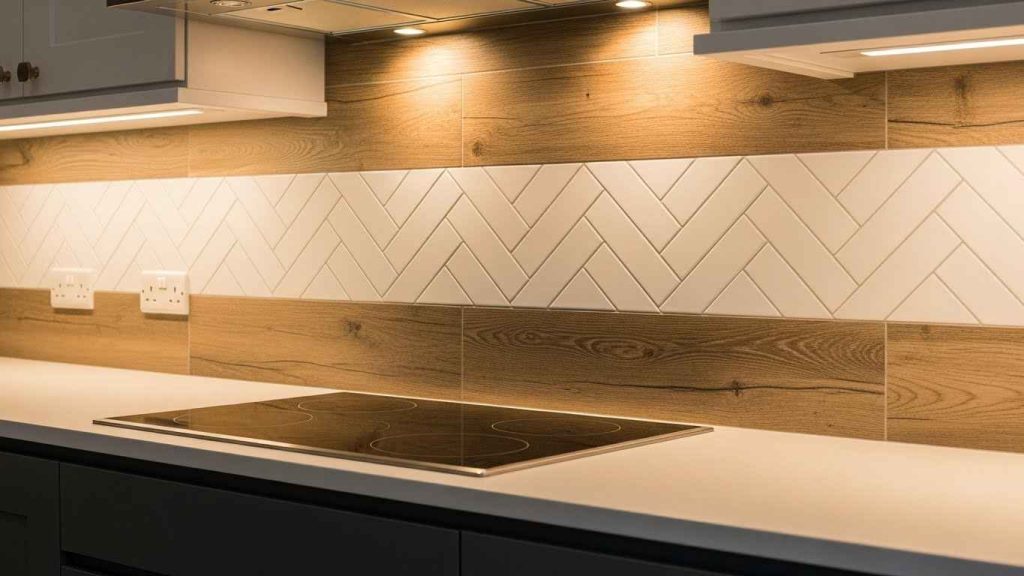
Mixing two different materials in one herringbone pattern creates a custom design. For example, combine wood-look tiles with white ceramic. This adds texture and visual depth. To keep it cohesive, stick to a limited color palette. Using two neutral colors ensures the pattern remains stylish and not too busy. This is a creative way to personalize your space.
17. Vintage Crackle Glaze Herringbone
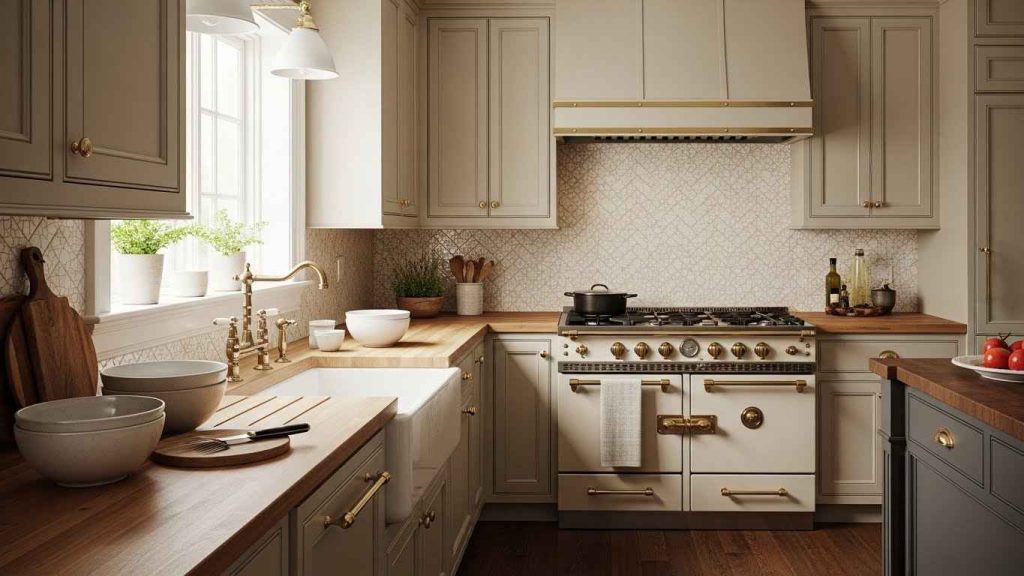
Crackle glaze tiles have a fine, web-like pattern that gives them a vintage, aged look. They bring instant character and a sense of history to a kitchen. The herringbone pattern complements this traditional style. You can often find affordable crackle glaze ceramics at tile outlets. Sealing them is important to prevent dirt from settling into the textured glaze.
18. Subtle Beige Stacked Herringbone
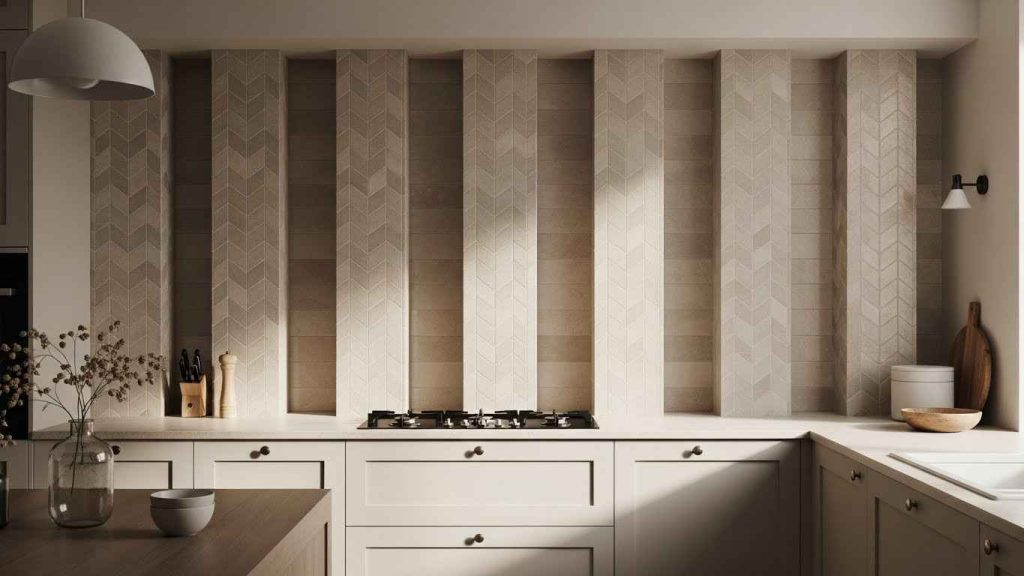
A stacked herringbone layout creates a more subtle, linear pattern. Using a soft beige color keeps the look neutral and calming. This style is versatile and works with both modern and traditional decor. It is a great choice for creating a quiet background that lets other elements in your kitchen, like artwork or countertop decor, take center stage.
19. Dramatic Floor-to-Ceiling Herringbone
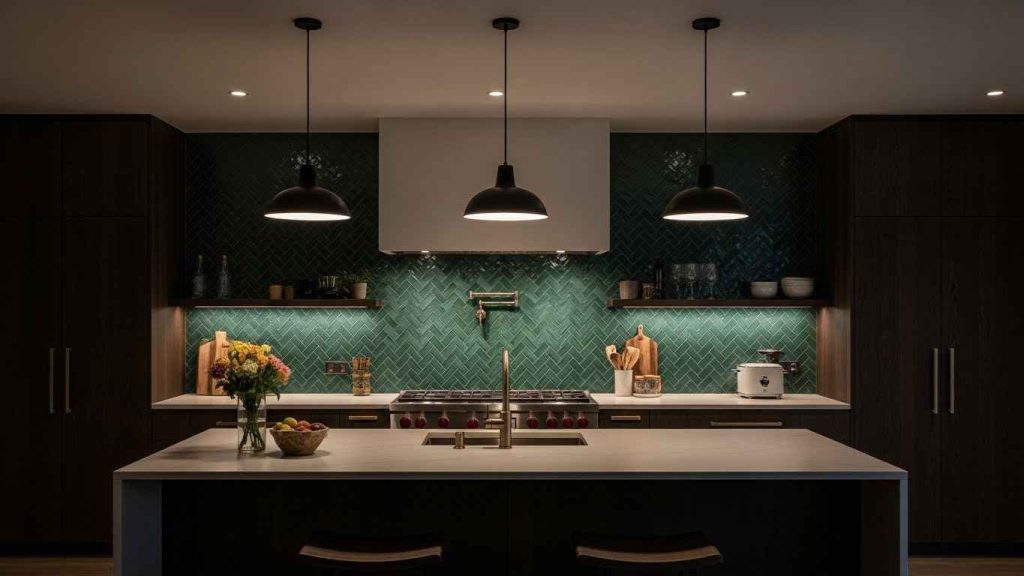
Taking a herringbone backsplash all the way to the ceiling creates a dramatic, immersive effect. It makes the kitchen feel more designed and intentional. This works particularly well with bold colors or interesting textures. To try this without commitment, use a removable wall covering in a herringbone print. It allows you to test the tall, bold look before installing permanent tile.
20. Artisanal Moroccan Herringbone
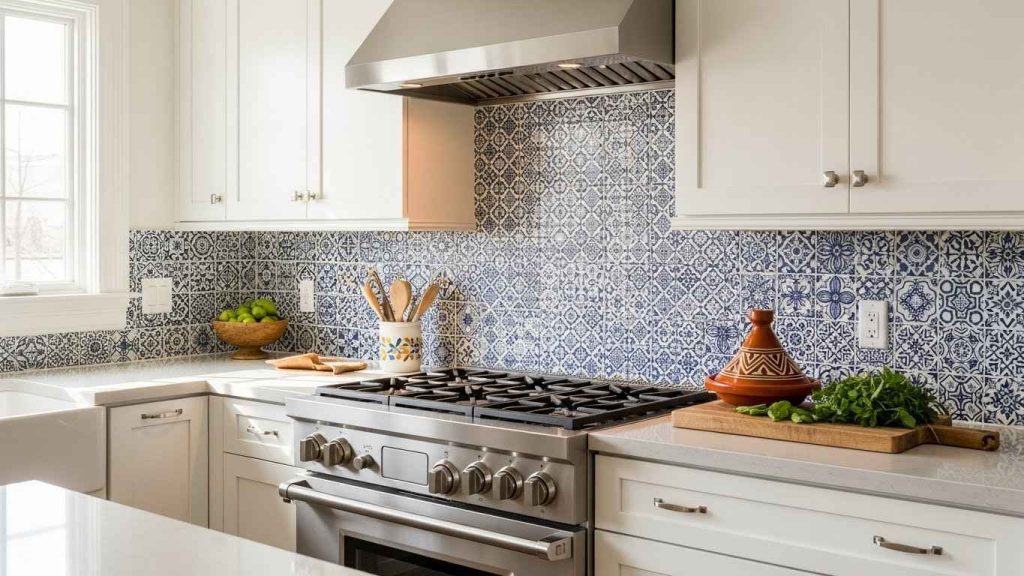
Moroccan tiles are known for their intricate geometric patterns. Laying them in a herringbone layout adds another layer of complexity and beauty. This creates a truly unique and artistic backsplash. To incorporate this style, use patterned tiles as an accent strip within a field of plain tiles. This reduces cost and keeps the overall look from becoming overwhelming.
21. Iridescent Pearl Herringbone Tile
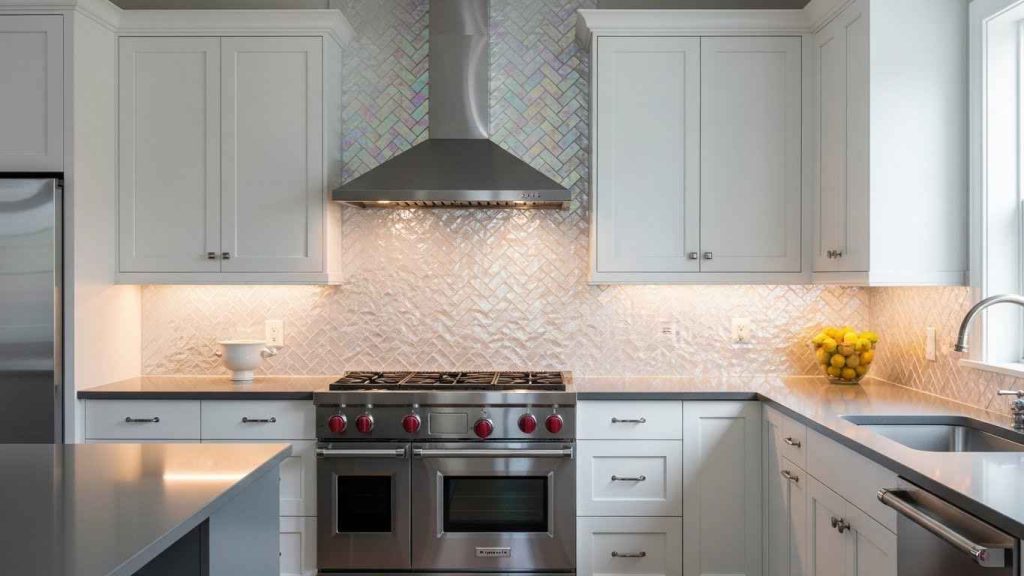
Iridescent tiles change color depending on the light and viewing angle. They add a magical, ethereal quality to a kitchen. A pearl finish brings softness and glamour. For a subtle touch of iridescence, use these tiles just behind the stove or sink. This creates a beautiful focal point without making the entire backsplash feel too flashy.
22. Earthy Tumbled Stone Herringbone
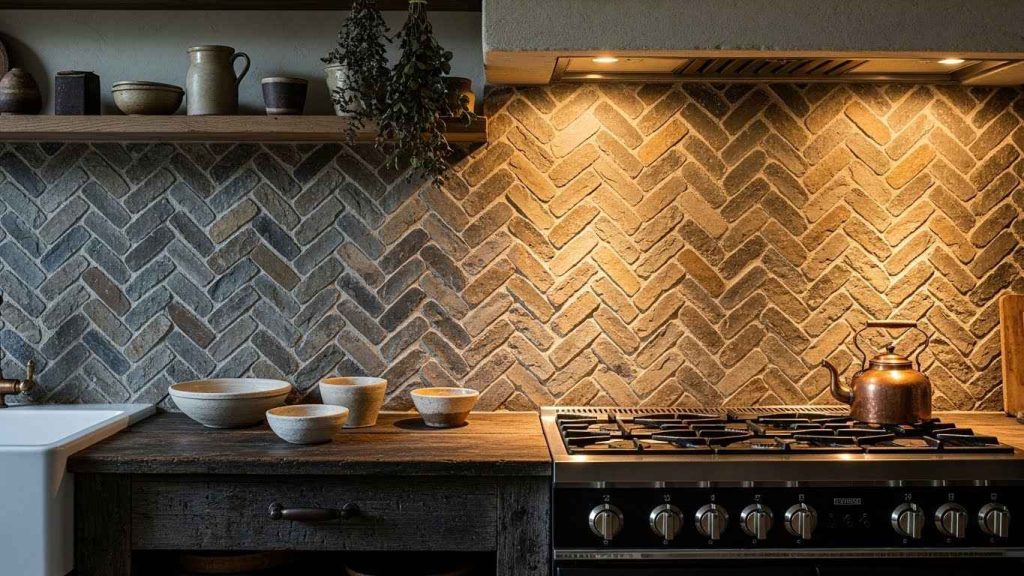
Tumbled stone tiles have softly rounded edges and a matte, textured surface. They bring a natural, organic feel to a kitchen. The herringbone pattern works well with the rustic character of the stone. These tiles are naturally forgiving for a DIY installation because their uneven edges hide small imperfections in the grout lines.
23. Geometric Patterned Herringbone
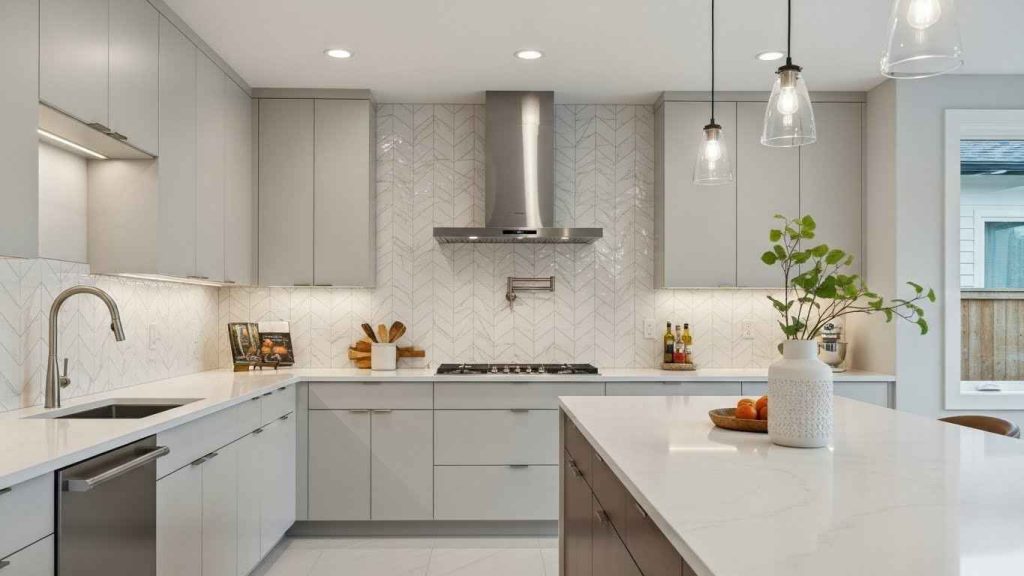
Using geometric tiles, like hexagons, in a flowing herringbone pattern creates a modern twist. It combines two popular trends for a fresh look. This design is eye-catching and contemporary. Many geometric tiles come on mesh sheets, which makes them easier to install than placing each small tile individually. This simplifies the process for a DIYer.
24. High-Contrast Black and White Herringbone
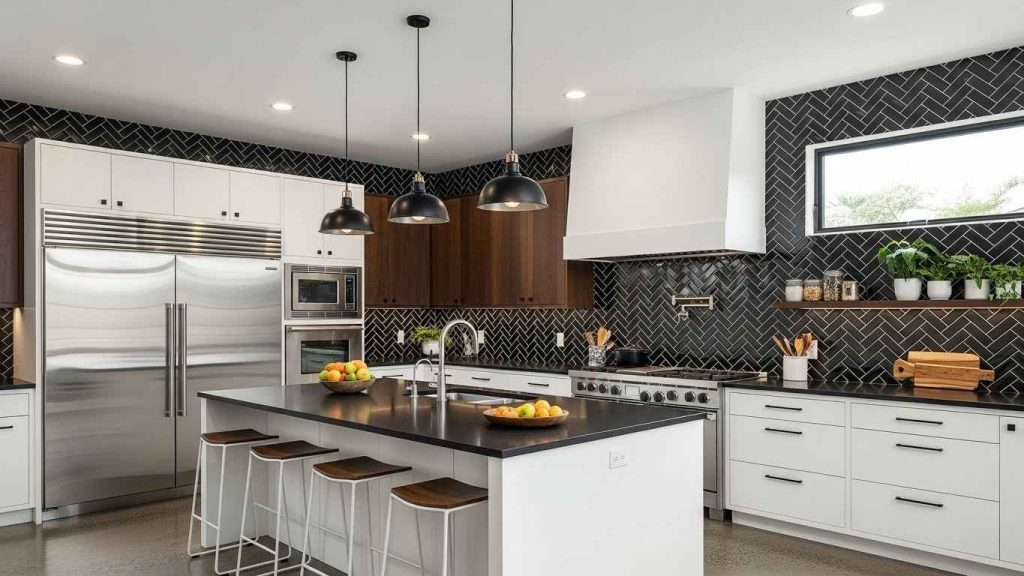
A black and white herringbone backsplash is graphic and timeless. The high contrast creates a bold statement that is both classic and modern. This pattern never goes out of style. For a budget-friendly version, use classic ceramic subway tiles in black and white. The materials are inexpensive, and the dramatic result comes from the pattern itself.
25. Soft Blush Pink Herringbone Backsplash
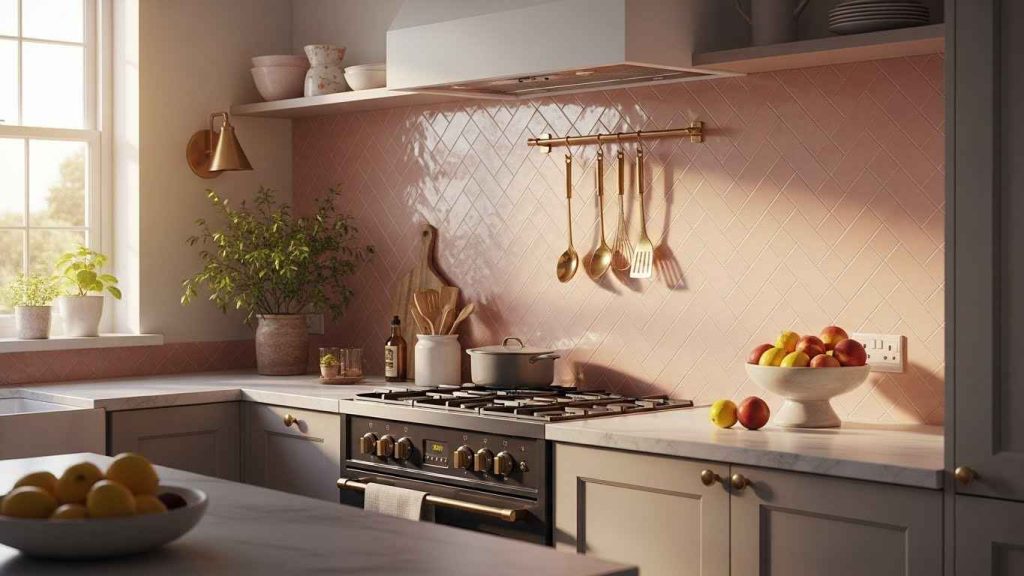
Blush pink adds a soft, warm, and modern touch. It is a surprising yet versatile color for a kitchen. Paired with brass fixtures and white marble, it feels sophisticated and fresh. To introduce this color gently, start with a small section of backsplash, like behind a coffee bar. This lets you enjoy the trend without a full commitment.
Choose one idea that fits your style and budget. Start with a small sample or a single accent wall. A simple change to your backsplash can refresh your entire kitchen.