
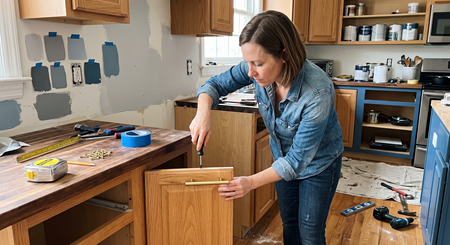
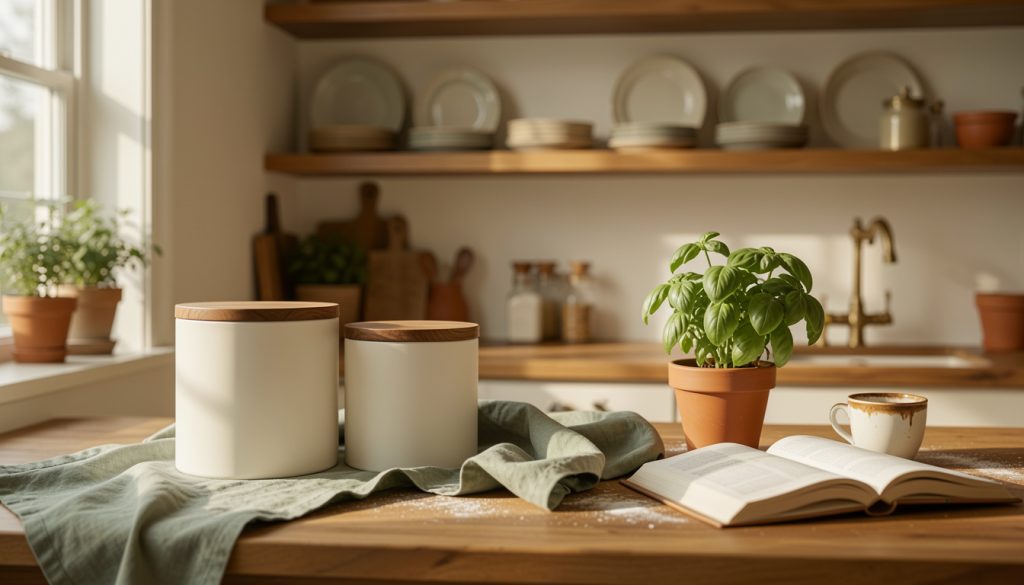

How to make a kitchen look beautiful was the question I asked myself after living with bland builder-grade counters for two years. I swapped three things and suddenly people asked how much I had remodeled.
I’ll show you the same low-cost sequence I used, roughly $300 to $600 if you shop smart, with renter-friendly options and one clever under-used trick that stopped my shelves from looking dusty.
I styled a small galley and a medium island kitchen the same way. The trick is an edited base, warm materials, and one strong focal point.
1. Start with the Foundation: Counter and Cabinet Reset
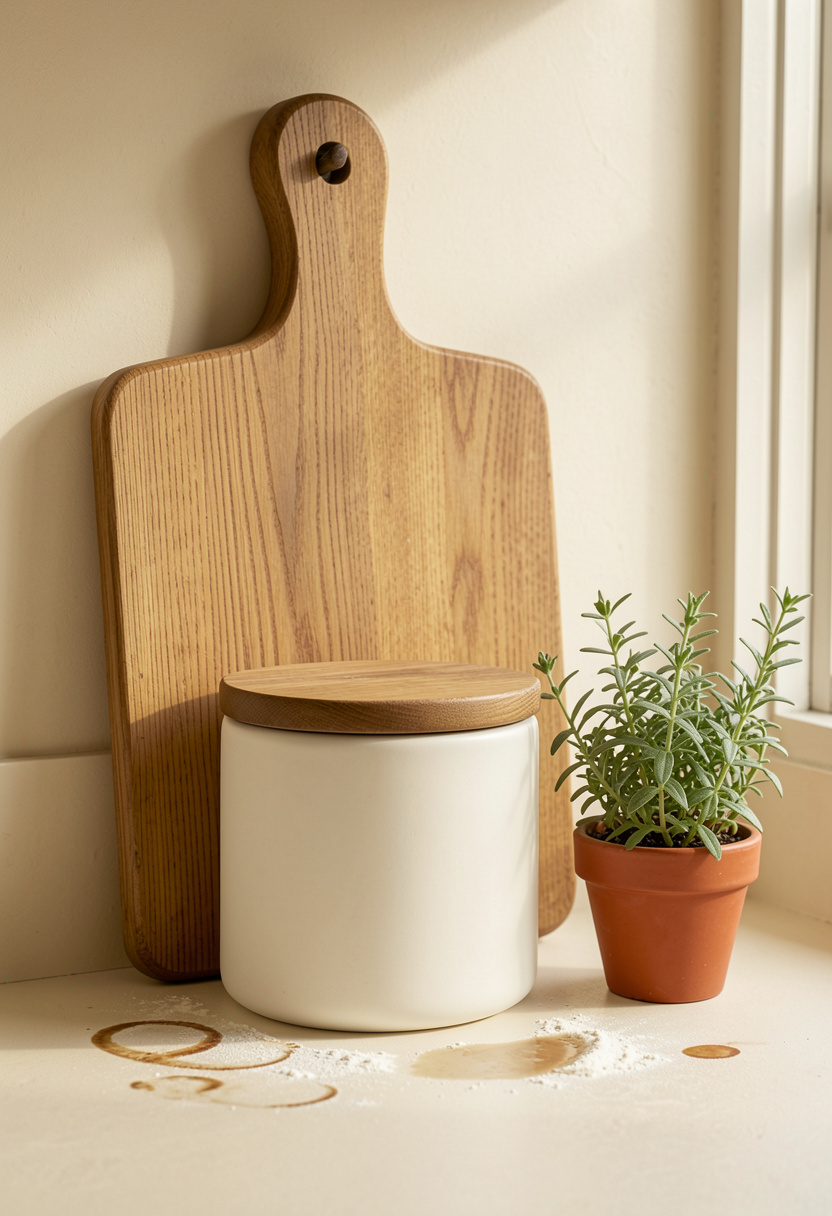

Clear counters first. This is where kitchens read messy or curated.
My rule: one practical cluster per 3 to 4 linear feet of counter. That’s your negative space rule.
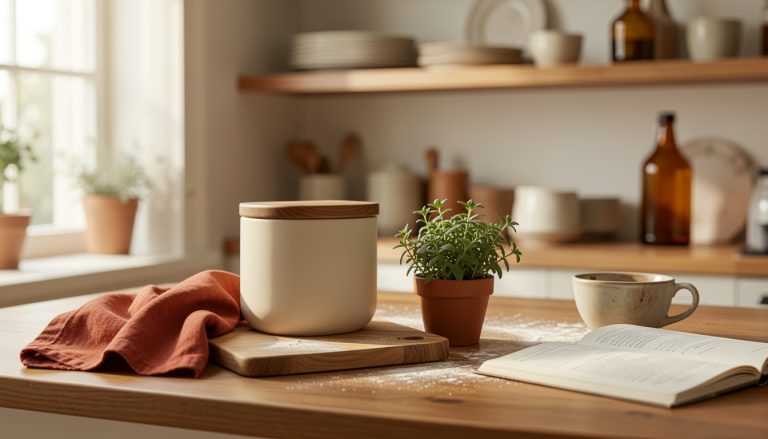
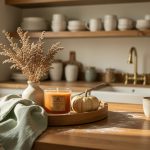
Put a large cutting board at the back, a matching canister, and a small plant. I use an Acacia cutting board with juice groove 18 inch around $25 to $40 and a Matte white ceramic canister set with acacia wood lids around $35 to $50.
Visual principle: rule of three plus negative space. Heights should vary—large board (tall), canister (medium), plant (low). Leave two-thirds of the counter empty.
Common mistake: trying to show every appliance. Do this instead: hide the toaster and keep one visible tool like a stoneware utensil crock. I found a Stoneware utensil crock in cream approx $18 to $35 works well.
2. Layer Warmth with Wood and Linen Textures
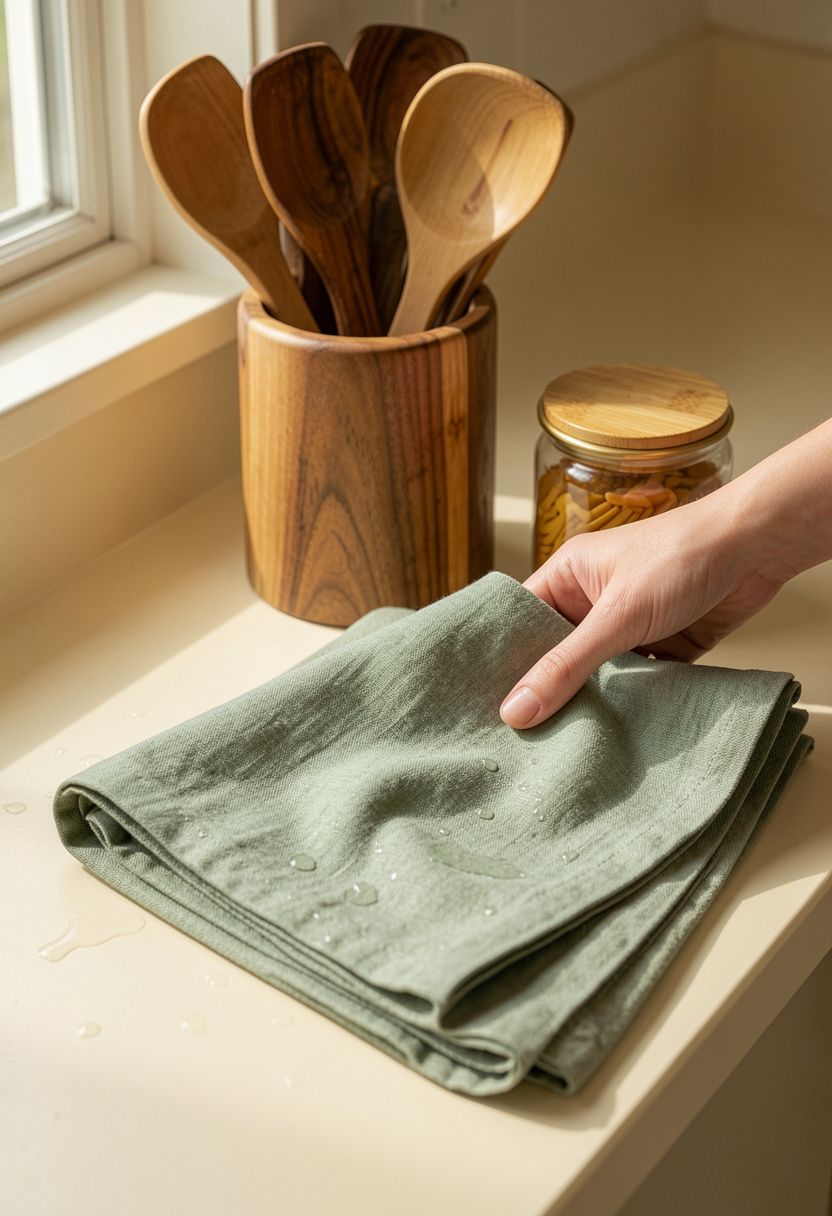

Warm wood and linen stop an all-white kitchen from feeling flat.
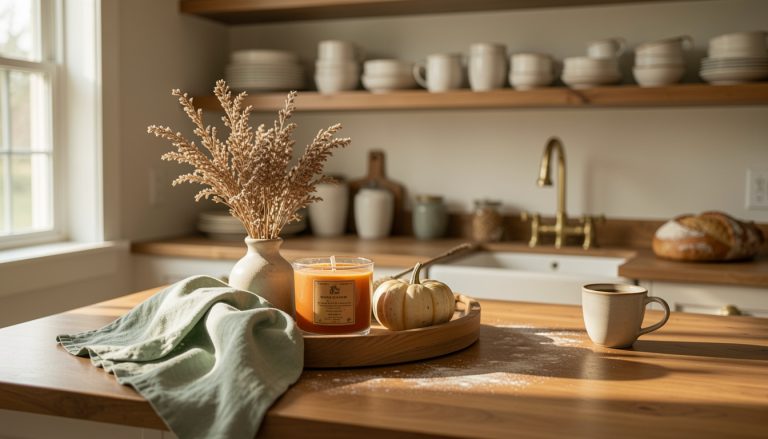
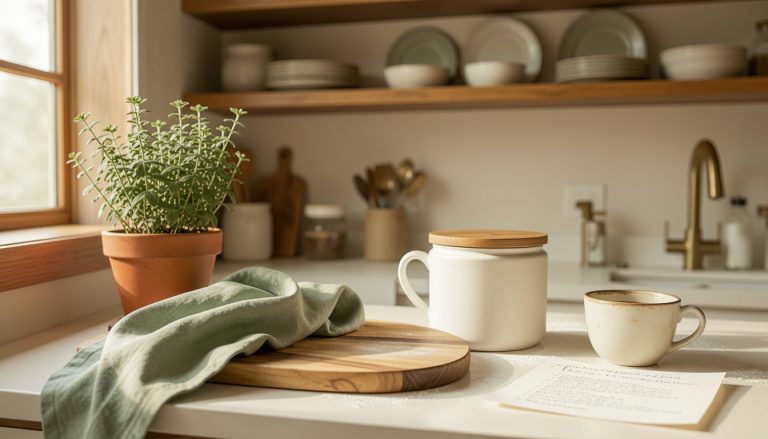
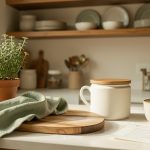
I layered an oversized oak board with a acacia utensil holder and linen towels to create texture contrast.
Grab a Acacia wood utensil holder with divider around $20 to $40 and a Sage linen tea towels set of 4 approx $18 to $30.
Place towels folded on the counter near the sink, not sprawled. Stack boards in threes leaned 2 to 4 inches apart for a layered silhouette.
Ugly truth: shiny surfaces read cheap without warm materials. Wood and linen fix that immediately. Don’t overmatch woods; pick one dominant tone like acacia or oak and repeat it.
3. Add Height and Drama with Open Shelving
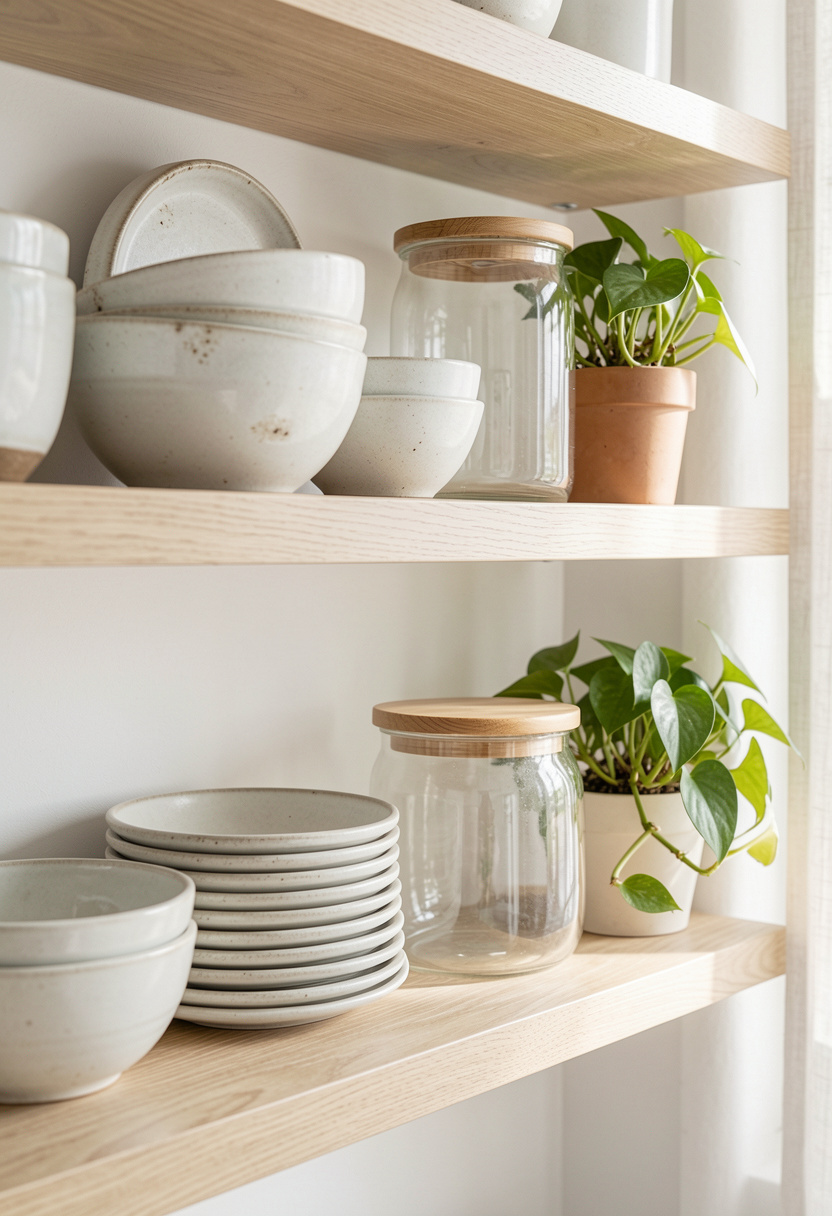

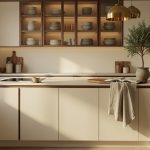
Open shelving is powerful—when curated. I swapped one upper cabinet for two floating shelves and it made the room breathe.
Start with matching jars and 2-3 stacks of plates. I use Glass storage jars with bamboo lids set of 6 approx $25 to $45 and a Natural wood floating shelves set of 2 around $50 to $120.
Visual principle: height variation and rhythm. Place taller items at one end of the shelf, medium stacks in the middle, low objects at the opposite end. Keep one shelf with negative space—don’t fill every inch.
What most people get wrong: too many small items. Do this instead: display tableware as decor—stacked stoneware plates and a single herb pot read intentional, not staged.
4. Create Ambiance with Warm Diffused Lighting
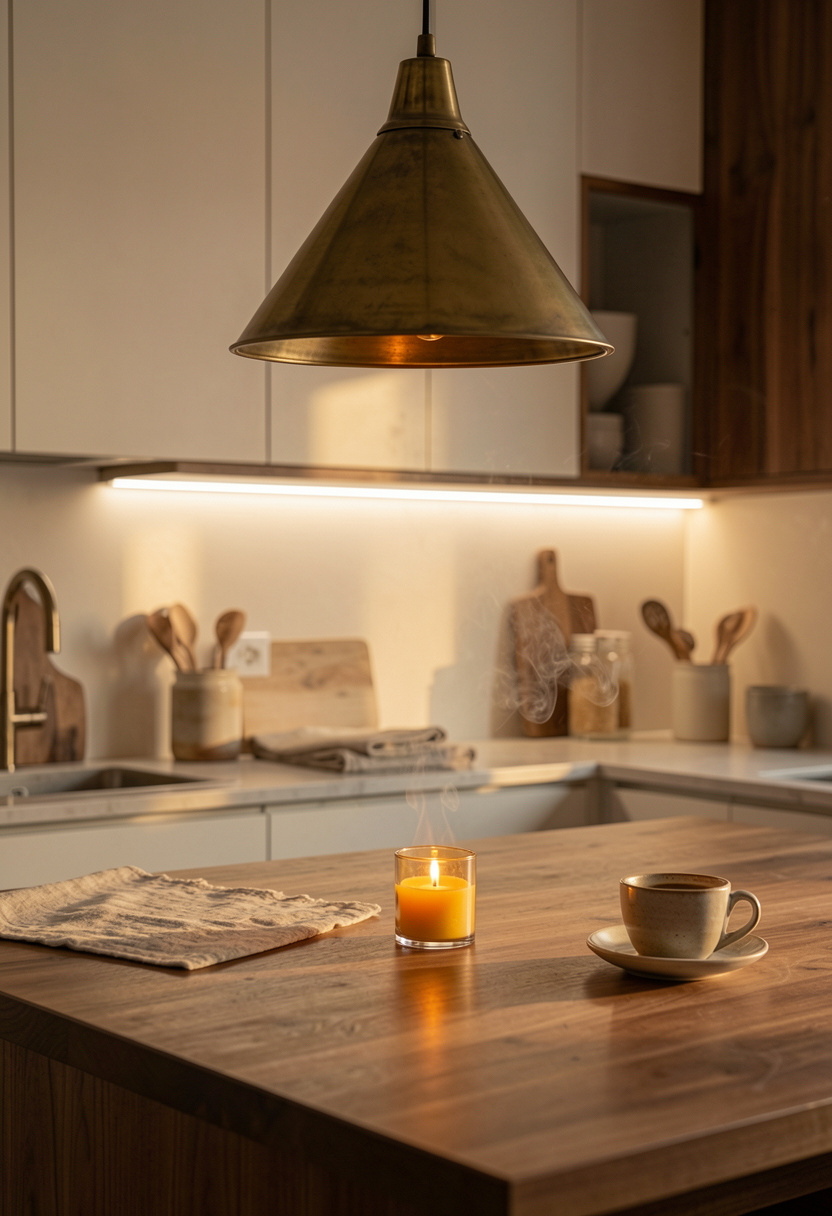

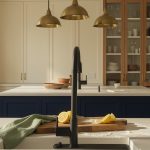
Lighting makes a kitchen feel editorial or clinical. I swapped cold bulbs and added a pendant over the sink to create a focal point.
Try a Brass cone pendant light for kitchen island approx $80 to $200 and Under-cabinet LED strip lighting warm white around $20 to $45.
Layer three sources: overhead, task (under-cabinet), and a small lamp or candle. Use warm-tone bulbs to avoid a flat look.
Common mistake: treating lighting as only functional. Instead pick one statement pendant and repeat its metal elsewhere, like with cabinet pulls, for cohesion.
Common Styling Mistakes to Avoid
Mistake: Leaving every appliance on the counter
Why it doesn't work: The room reads cluttered and cheap.
Do this instead: Hide extras and keep one visible appliance on a small tray approx $12 to $30.
Mistake: Open shelves filled edge to edge
Why it doesn't work: Shelves look dusty and busy.
Do this instead: Use matching jars and one plant per shelf, like Glass storage jars with bamboo lids approx $25 to $45.
Mistake: Mixing too many metal finishes
Why it doesn't work: The eye has no anchor.
Do this instead: Pick one main metal and one accent, for example Solid brass cabinet pulls 5 inch around $8 to $20 each.
What You'll Need for This Look
Foundation Pieces
Acacia cutting board with juice groove 18 inch around $25 to $40
Matte white ceramic canister set with acacia wood lids around $35 to $50
Sage linen tea towels set of 4 approx $18 to $30
Textiles & Soft Goods
Striped kitchen runner 2×3 ft washable cotton approx $35 to $60
Jute kitchen mat runner neutral tone around $70 to $150
Lighting
Brass cone pendant light for kitchen island approx $80 to $200
Under-cabinet LED strip lighting warm white around $20 to $45
Finishing Touches
Terracotta herb pots set of 3 approx $15 to $30
Small pothos plant in ceramic planter around $12 to $25
Minimal abstract art in neutral tones approx $30 to $120
Budget Swaps
Glass storage jars with bamboo lids set of 6 approx $25 to $45 (similar finds at HomeGoods)
Matte black cabinet knobs set of 10 around $12 to $30
Shopping Guide for This Look
Buy the pendant on sale: Look for end-of-season lighting clearance; I found a brass pendant at Pottery Barn in October sale. Brass cone pendant light approx $80 to $200.
Thrift hack: Hunt for wooden cutting boards and bowls at thrift stores, then pair with new Matte white ceramic canister set approx $35 to $50.
Follow the 2025 trend: Add one warm wood anchor—acacia or oak—across two zones to echo current palettes. Acacia cutting board around $25 to $40.
Splurge vs save: Splurge on good lighting, save on jars and towels. Under-cabinet LED strips around $20 to $45.
Conclusion
Start with one counter vignette and a change in lighting. People notice those two things first.
Repeat a wood tone and a metal finish across the kitchen for cohesion. Try the acacia board plus brass pendant combo and see what happens.
Which corner of your kitchen will you style first?